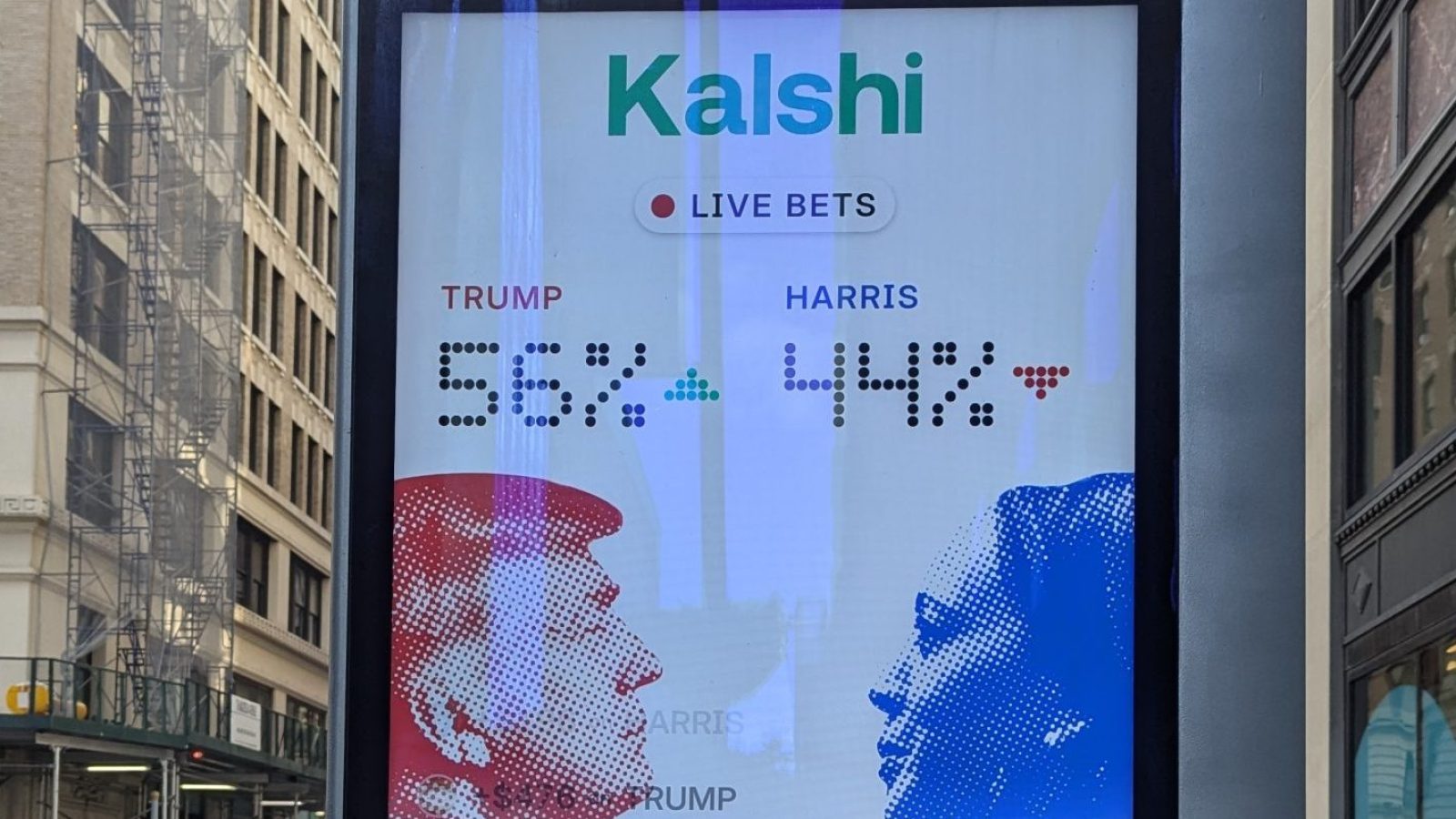
Four tribes, including one in California that partnered with sweepstakes company VGW before such platforms were banned in the state, have partnered with Kalshi, the company announced Wednesday. That brings the total number of tribes that have broken from Indian Country’s majority anti-prediction market stance in the fight to keep the platforms off tribal lands to five. The Tunica-Biloxi Tribe of Louisiana was the first.
The latest tribes to partner with Kalshi say they their geography isn’t conducive to development and Kalshi is offering a chance to get in on the ground floor of a new industry, stay in control, and build for their future. A Kalshi spokesperson told InGame that the agreements are “standard revenue sharing” deals.
The Kletsel Dehe Wintun Nation of the Cortina Rancheria Tribe in California is making its second foray into what national tribal representatives — and the California Nations Indian Gaming Association (CNIGA) — consider to be illegal gaming. In August 2025, it announced plans to partner with VGW, but the partnership never came to fruition as state lawmakers passed a ban on sweepstakes-model gambling platforms that went into effect Jan. 1, 2026. At the time the partnership was announced, Kletsel Economic Development Authority (KEDA) Chief Executive Officer Eric Wright wrote to the California state legislature opposing a bill that would outlaw sweepstakes.
“For tribes like ours — far from high‐traffic tourism corridors — geography has always limited traditional economic development,” he wrote. “Large, well‐established gaming tribes already benefit from these geographic advantages and decades of success. It is self‐serving for them to advocate for policies that restrict emerging digital commerce opportunities for others, effectively holding smaller and less‐advantaged tribes hostage to their location.”
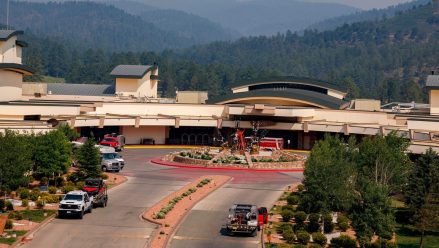
None of the tribes joining with Kalshi are located in urban areas. The Alabama-Quassarte Tribal Town of Oklahoma is located in central Oklahoma, about 90 miles northeast of Oklahoma City. The tribe does not operate a casino and has 350 members. In California, the Alturas Indian Rancheria of California own a rural slots casino in the northeast corner of California in the Shasta Cascade region, Greenville Rancheria is a non-gaming tribe in the Sierras, and the Kletsel Dehe Wintun Nation is a non-gaming tribe in the town of Williams (population 5,500). The Alturas and Greenville Rancheria have 20 or fewer enrolled members, while the Kletsel Dehe Wintun Nation has 259 members.
The tribes will have branded platforms — the Alabama-Quassarte will launch PokkeTrades, the Alturas will launch AIR Markets, Inc., Greenville Rancheria will launch Greenville, and the Kletsel Dehe Wintun Nation will launch Sovereign Edge through its economic development arm.
“Each of these tribes owns its platform, its brand, and its relationship with customers, backed by the liquidity of a unified, nationwide exchange,” Kalshi CEO Tarek Mansour said via press release. “The future of this industry doesn’t have to be organized around conflict. It can be organized around opportunity, with Tribal nations participating as owners and helping shape what it becomes.”
OIGA: Prediction markets ‘undermine’ IGRA
Oklahoma has more tribal casinos than any other U.S. state. The more than 35 federally recognized tribes there operate more than 110 gaming locations, ranging from slots parlors to the massive WinStar Casino, owned by the Chickasaw Nation. But not every tribe benefits from location — WinStar is right off the I-35, 90 miles or less from Dallas and Fort Worth, Texas, and just over 120 miles from Oklahoma City.
“Geography has kept many tribes from sharing in the prosperity that gaming created,” Alabama-Quassarte Tribal Town Chief Wilson Yargee said in the Kalshi press release. “Prediction markets offer an opportunity to reach beyond those limits and build revenue for our people. We will respect every other tribe’s authority on its land, and we expect the same respect for our authority to make this decision.
The Alabama-Quassarte Tribal Town is not a member of the Oklahoma Indian Gaming Association (OIGA), and per a press release, the organization has “no comment on their action.”
But Chairman Matt Morgan released a statement Wednesday saying, “We view sports prediction market apps as undermining the Indian Gaming Regulatory Act (IGRA) and Oklahoma/Tribal State compacts by allowing illegal Class III gaming to infringe upon the sovereignty of Tribal nations, and as undermining revenue streams that are critical to Tribal government programs and services.”
California: Tribes want chance to grow
In California, the Alturas and Greenville Rancheria are members of CNIGA, whose public stance is anti-prediction market. Underscoring the divide among tribes on prediction markets, two other California tribes — Blue Lake Rancheria and Chicken Ranch Rancheria Me-Wuk Indians — last month won a critical court battle when the Ninth Circuit overturned a lower-court opinion that Kalshi should be allowed to operate on reservations.
The California tribes pointed to the limitations of geography, but also the chance to be part of an “emerging industry” that could help change their futures.
“Our Tribe has always looked for ways to build an economy that doesn’t depend on any one business,” a spokesperson for the Alturas Tribe said in the press release. “This is a new kind of enterprise for us, one that lets us take part in a growing industry on our own terms. Every decision we make today is about the generations that come after us, and this is an investment in their future.”
In a statement shared with InGame Thursday, CNIGA acknowledged the sovereign rights of every tribe, but also wrote that “the decisions of a few outlier tribes should not come at the expense of another tribe’s sovereign rights.” CNIGA also wrote that the partnerships don’t “change the fact that this activity is still illegal. The Ninth Circuit recognized that Kalshi’s sports-event contracts constitute Class III gaming under the Indian Gaming Regulatory Act and thus violate the law in California. Whoever offers the sports-betting contract is irrelevant.”
Tribes to be front facing
Per the Kalshi press release, each tribe will own its app and “control the customer-facing part of the business,” including branding and marketing.
This setup is what tribes in California are seeking from online sports betting operators should legalization happen. But the push-and-pull about branding — will tribes be front facing or will commercial operators? — has been a key sticking point in those negotiations, dating back to the early 2020s.
Kalshi will handle the technology.
“Kalshi operates the exchange layer beneath each platform under federal regulation, providing the matching, clearing, custody, and market surveillance that every trade depends on, much like a payments processor that sits underneath a bank’s app without owning the bank,” the company wrote.
It’s not clear if tribal entities will be required to register with the Commodity Futures Trading Commission. Details of the deals were not released, nor was timing of app launches. In California, none of the apps appeared to be live Thursday morning.