Polymarket US launched parlays to the public on the same day as Kalshi started charging market makers on its own multi-leg bets.
Despite self-certifying parlays in May, Polymarket only started testing the product for its CFTC-regulated U.S. site on Aug. 5. Testing volume then ramped up starting on Aug. 12. Through its beta test, API users — usually more sophisticated market makers or professional traders — could trade parlays but regular customers using the Polymarket U.S. app could not. Polymarket US does not currently have a live desktop site for trading.
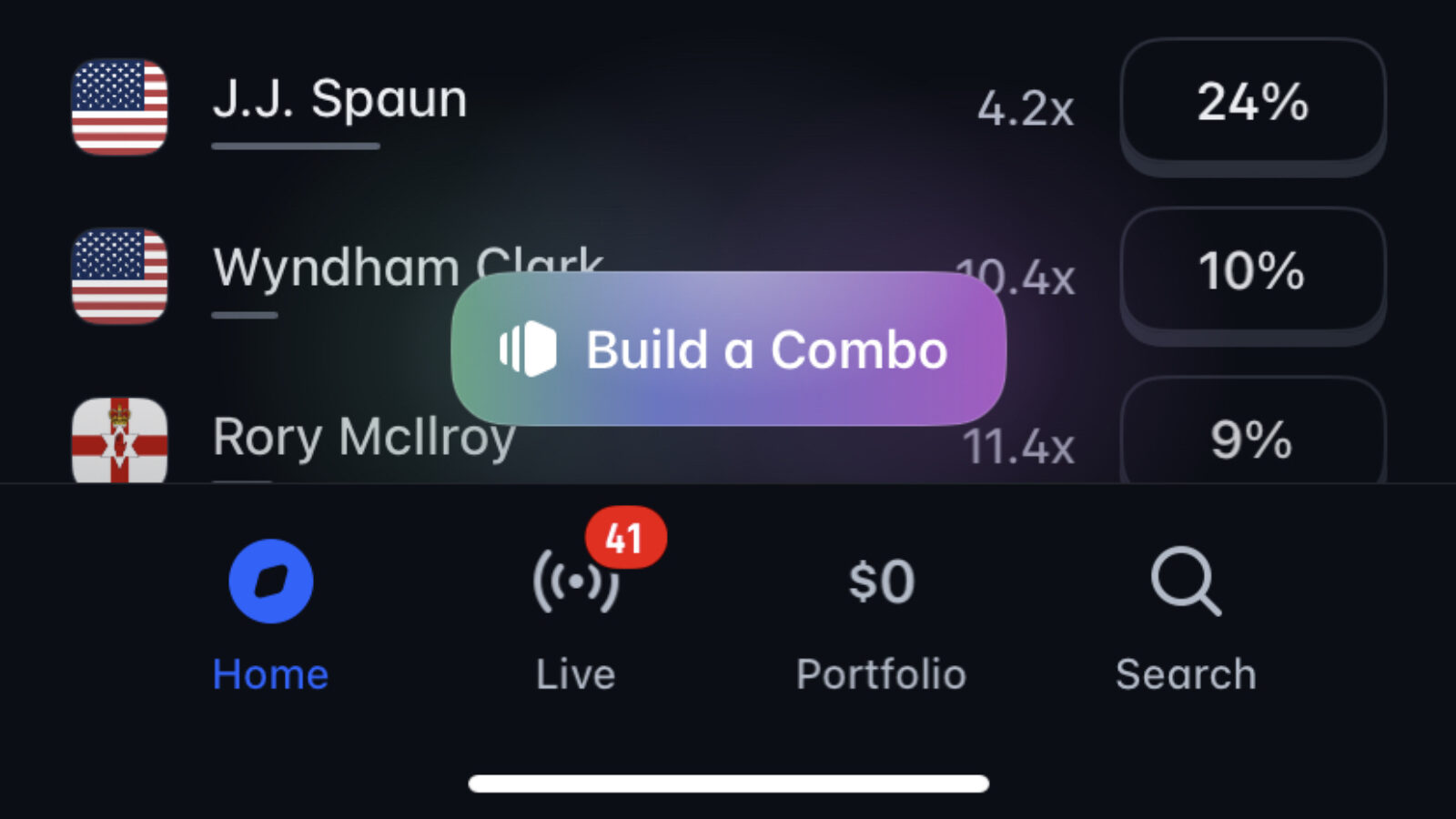
With a new app update that went live Thursday, parlays are now available to ordinary Polymarket US customers. In the latest version of the app, a “build a combo” button appears at the bottom of the screen on the app home page.
Polymarket US allows users to parlay up to 10 legs, across both correlated and non-correlated events. Like other prediction markets such as Kalshi, Polymarket US uses a request-for-quote system for parlays. A trader who wishes to place a parlay trade can put out a request for market makers to price the combination hitting. Market makers must respond within a time limit, and the original parlay bettor is then shown the best offer, which they can accept. All of this happens in seconds, with the parlay taker largely not seeing what goes on behind the scenes.
Polymarket US parlay volume on Thursday up until 7 p.m. ET was $8.7 million, with takers staking $1.2 million. Polymarket publishes its daily data based on UTC timing, meaning the remaining hours of trading on Aug. 20 were not included in its data file for the day. As a result, this only includes a few hours of data in which parlays were actually live.
Kalshi starts charging maker fees
The launch coincided with Kalshi introducing maker fees for its own parlays. Previously, market makers on Kalshi did not have to pay fees. Parlay takers — who do pay a fee — on Kalshi generally lose more than they win in the long run, meaning that no-fee market making on parlays was a lucrative opportunity for some traders that could offer competitive prices.
The Kalshi maker fees will be priced at half of the rate of Kalshi’s taker fees, which is higher than most other maker fees on Kalshi. Like all Kalshi fees, the exact rate depends on the price of the conracts involved. There will still be no maker fees for uncorrelated NFL parlays.
The largest market makers on Kalshi generally receive fee rebates or other incentives, while smaller market makers may be more affected by the fees.