As Kalshi continues to fight for its right to offer sports event contracts across the U.S., one issue that it has brought to the attention of courts is the cost of geofencing. In particular, while arguing its case in October in a lawsuit brought by three California tribes, Kalshi’s lawyers suggested that the cost of geofencing for every tribal nation in the U.S. could become prohibitive.
Traditional sports betting operators licensed by U.S. jurisdictions are required to use geofences — virtual fences that separate legal and non-legal areas. In some jurisdictions, like Washington, D.C., where there is federal land on which sports betting is not legal, the number of geofences required is high. In others, fewer geofences are required because wagering is legal in all or most locations in the jurisdiction. But even in those situations, one sports betting operator told InGame that it also voluntarily geofences elementary, middle, and high schools.
When DraftKings and FanDuel announced last month that they would launch prediction markets, both said they would geofence out tribal land. If DraftKings and FanDuel can afford to do that, why can’t Kalshi or any other prediction market?
The real cost of geofencing is not in the number of virtual fences needed. It is in the number of location checks.
“This is really not that complicated of a subject,” an expert in gaming geolocation told InGame. “Even if you did it in the least efficient way possible, and did 11 checks per user per month (for a prediction market), let’s say pricing is a penny per check. That’s 11 cents per user per month, times 5 million users. So that’s $550,000 per month, or about $6 million per year.”
Kalshi advertises that is has 5 million users — and an $11 billion valuation. The above example assumes that every user will buy at least one event contract every month.
Exactly how much geofencing costs is hard to pin down. Another industry source told InGame that wagering and iGaming operators pay an average of $1 per customer per month for geofencing. But several sources said that betting operators spend more on geofencing than a prediction market would. Under this scenario, with 5 million users, that means Kalshi would spend $60 million per year for geofencing if every customer was active every month.
For comparison, FanDuel has about 3 million active wagering users and DraftKings in its third-quarter earnings report pointed to 3.6 million “monthly unique payers” across its wagering and iGaming platforms. Using the $1 per customer per month metric, and assuming that every active customer placed a bet every month, FanDuel would spend $36 million per year. DraftKings would spend $43.2 million, though likely less for wagering because the 3.6 million active users is across all gaming verticals. Using the 1 cent per check or 11 cents per month metric, those numbers would be more like $4 million and $4.75 million. The two metrics are not apples-to-apples comparisons, but do give a window into the potential range of cost.
Even at the high end, such amounts are just the cost of doing business for a traditional sportsbook. Prediction markets do not currently incur costs for geofencing as they are regulated by the federal Commodity Futures Trading Commission, which mandates equal access to prediction markets across the U.S. Prediction markets are not currently subject to state regulation — an issue that has multiple prediction markets in court across the U.S.
How does geofencing work?
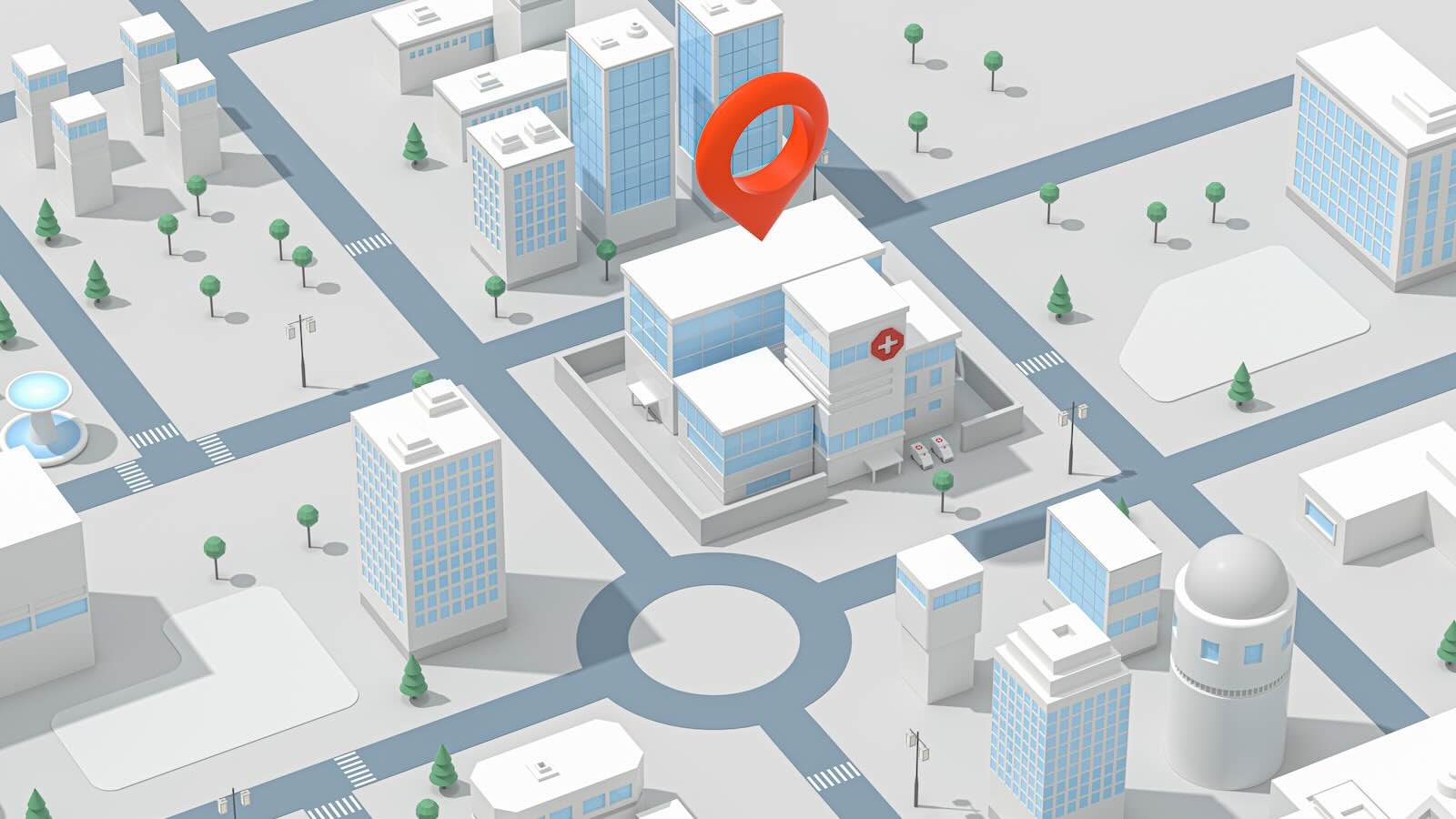
A geofence is exactly what it sounds like — a virtual fence, or wall, around a specific area. Three companies provide geofencing services to most of the U.S. sports betting industry — GeoComply, OpenBet, and XPoint. GeoComply had a near monopoly on geofencing when sports betting became a states’ rights issue in 2018. OpenBet and XPoint have since begun offering similar services, and each provides geofencing to at least one state-licensed sports betting company.
State-regulated sportsbooks are required to locate their customers within a legal jurisdiction. To do this, a geofencing company would ping a customer’s mobile device to determine its location. A device would be pinged when the customer signs in, and again at different intervals while the bettor is active. In some cases, a company may ping a phone on a time schedule — say, every 30 minutes.
In others, a company may ping the device at login, at which point it can determine how close the device is to a geofence or border. If a device is located in Denver, the closest geofence would be at the Colorado-Wyoming border, about 90 minutes away. Some companies have factored this information into their software and then might re-ping the device every 75 minutes to make sure it’s not near the Colorado-Wyoming border, rather than pinging it every 30 minutes.
In that scenario, checks are less frequent. As some companies bill per location check, fewer location checks means less money spent.
In addition, some geofencing companies are able to determine if a device is on the move. If so, the speed at which the device is moving and the distance to the next nearest geofence are calculated, and checks are made based on that.
Tribes and prediction markets
There are some situations, however, in which more frequent location checks are required. As an example, if a consumer lives within a few miles of an Indian reservation and that reservation is geofenced, the technology might block consumers as they get close to the reservation, even if they do not enter.
The reverse is true as well. If consumers are on a reservation, they may have to drive several miles off it in order to be allowed to place a bet.
Since sports betting became a states’ rights issue in 2018, similar situations have cropped up along state lines. Before New York legalized, residents were known to cross a bridge into New Jersey and place a bet in a parking lot before returning home. There is a restaurant just outside of St. Louis in Illinois that catered to Missouri bettors before wagering in their state went live Monday. And there is a cornfield in Iowa that is flush with activity during football season as Nebraskans cross the state border to bet.
Some Indian reservations have deals in place in which their partner platform is the only one accessible within the tribe’s borders in order for the tribe to maximize its revenue agreement with the platform. Under the Indian Gaming Regulatory Act (IGRA), tribes have exclusivity for gaming on their land and do not pay taxes, though some have revenue-share agreements with the states in which they are located.
At issue in the prediction market lawsuits with tribes and states is what exactly an sports event contract is. By definition, the contracts are financial platforms called derivatives exchanges — not Class III gaming, which includes sports betting. But sports event contracts, many in the industry say, present as sports betting even though the technology behind the contracts is not wagering technology. To complicate matters, Kalshi often uses the word “bet” in its advertising while at the same time arguing that it is not gambling.
Sports betting is not legal in California and several other key tribal states (Oklahoma, Minnesota, Wisconsin), but some tribes in those states do not want prediction markets operating on their land. Kalshi has argued that its platform is not offering gambling in Indian Country, as it is headquartered in New York. But the California tribes said that the platform is available on their reservations, which they argued is a violation of IGRA.
In her ruling on an injunction to stop Kalshi from operating on tribal land, the judge in that case ruled in Kalshi’s favor, and it is still able to operate. But the case is not yet over. Wisconsin’s Ho-Chunk Tribe similarly sued Kalshi to keep it off its lands, and no ruling has been made. In both cases, Kalshi leans into the argument that it is not technically sports betting and therefore not subject to IGRA.
States take issue, too
Many states also want prediction markets banned. Traditional sports betting and other forms of Class III gaming are highly regulated and are the purview of states, not the federal government. A Nevada judge is the only one so far to deem it illegal for Crypto.com and Kalshi to offer their platforms in that state. Crypto.com has complied and is not available while Kalshi continues to operate despite the court order.
In a somewhat unexpected twist, tribes, state regulators, and the trade organization American Gaming Association (AGA) — groups that have been at odds on some issues in the past — are now lobbying together against prediction markets.
The AGA has what appears to be a new “predictions markets” page on its site that reads “prediction market platforms are using sports event contracts to evade state regulations.” It includes a section titled “Championing State and Tribal Authority in the Press.” The page also includes comments from state regulators, tribal leaders, professional sports teams, lawmakers, and law enforcement speaking out against the legality of prediction markets.
Geofencing ‘not expensive at all’
One industry source said that geofencing is “not expensive at all” and that geofencing out individual locations like federal lands, tribal nations, or schools may be included in a geofencing contract. Contracts may contain a per-check price or a price for a certain number of checks, similar to bulk pricing that may be found at a Costco or wholesale vendor online.
The expert in gaming geolocation told InGame that there are ways to make geofencing more affordable. He referred to “efficiencies,” which could come from technology, but also could come from how consumers buy contracts or place bets.
If, for instance, a person is placing sports bets or purchasing event contracts of any kind, there is the possibility that the consumer will log in once and place multiple bets or buy multiple contracts in one sitting. That means that if a consumer makes an average of 10 bets or buys 10 event contracts in a month, that likely won’t result in 10 individual location checks.
The expert also said that geofencing tribal lands won’t have a “material effect” on the overall cost of geofencing.
“They [Kalshi] are sort of not properly understanding,” the expert in gaming geolocation said. “Or they have gotten a quote that is a lot more expensive.”