
Kalshi’s lawyers are arguing that a district judge agreed with their stance that the Commodity Exchange Act preempts state gambling laws, but used a “gerrymandered” definition of a swap to rule against the business anyway, in an appeal of the decision to dissolve a Nevada injunction.
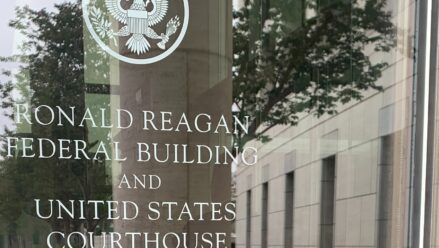
The appeal brief — filed in the U.S. Court of Appeals for the Ninth Circuit Dec. 26 — follows District Judge Andrew Gordon’s decision last month to dissolve an injunction he had granted to Kalshi in April. The injunction had prevented Nevada from enforcing a cease-and-desist against Kalshi.
Gordon decided to dissolve the injunction because he determined that Kalshi’s sports event contracts were not “swaps” — a type of financial instrument regulated by the Commodity Futures Trading Commission (CFTC) that is traditionally used for hedging risk. If sports event contracts are not swaps, then they would not be subject to the “exclusive jurisdiction” of the CFTC as Kalshi claims they are.
In the Commodity Exchange Act (CEA), a swap is defined as “any agreement, contract, or transaction … that is dependent on the occurrence, nonoccurrence, or the extent of the occurrence of an event or contingency associated with a potential financial, economic, or commercial consequence.”
Gordon’s decision rested mostly on the definitions of “event” and “occurrence.” He wrote that while the words may appear to have similar meanings, the fact that both are used suggests Congress intended there to be a distinction between the two. After consulting four dictionaries, he determined that an “occurrence” refers to whether or not an event happens, but cannot refer to the details of how something happens, such as the winner of a sporting contest.
In addition, he said that the phrase, “associated with a potential financial, economic, or commercial consequence” suggests that any financial, economic, or commercial consequences should be direct consequences of the event itself, not “downstream” consequences such as the economic consequences of a Super Bowl winner parade.
Kalshi’s lawyers say judge used ‘workaround’
Kalshi’s lawyers wrote that Gordon also believed the CEA prevented states from regulating exchanges like Kalshi, but, in finding that sports event contracts weren’t swaps, “accepted a workaround” to ban them anyway.
“Citing policy concerns, the court embraced a gerrymandered understanding of CFTC jurisdiction to conclude that Kalshi’s contracts are not swaps or futures, and therefore do not fall within the CFTC’s exclusive jurisdiction,” they wrote.
“The court effectively rewrote the CEA, adopting a results-oriented interpretation it acknowledged ‘isn’t perfect’ and that it repeatedly noted raises ‘serious questions’ on the merits.”
Kalshi’s lawyers also questioned Gordon’s use of the term “I know it when I see it” to describe sports event contracts as sports wagers. They said that this approach, as opposed to relying on the text of the law, was one that the Supreme Court has criticized.
They added that the characterization of sports event contracts as bets or gambling would not automatically mean that they must be banned, as they argue the law also allows for swaps that are gambling, as long as the CFTC permits them.
“Rather than excluding ‘gambling’ contracts from the CFTC’s jurisdiction, Congress instead made the CFTC’s jurisdiction over such contracts unmistakably clear in the Special Rule, which provides that the CFTC ‘may determine’ that contracts involving ‘gaming’ are ‘contrary to the public interest,’” the brief said.
The brief continued with Kalshi’s lawyers arguing the plain meaning of an outcome is simply an event.
“The district court held that an ‘outcome’ — such as an outcome of a sporting event or election — is not an ‘event’ or ‘contingency’ that may underlie a swap,” they wrote. “But an outcome plainly is an event. Dictionaries define ‘event’ to include ‘the outcome, issue, or result of anything.’ The 2024 U.S. presidential election happened, but so did Donald Trump’s victory.”
The brief also argued that Gordon was not using the definition in the CEA when determining that the financial or economic consequences required to make a contract a swap must be direct. It added that sports events have direct financial consequences for teams, players, sponsors, and sportsbooks.
Andrew Kim, a partner at Goodwin Law who has observed the case but is not directly involved, said that the question of financial consequences could be crucial to the case. It appeared to play a central role during oral arguments in a case in the Third Circuit between New Jersey and Kalshi.
Kalshi’s lawyers pointed to other details in the CEA, such as a reference to a “weather swap,” which appears to contradict the idea that the financial or economic consequences of an event must be inherent to the event itself.
Kalshi calls on history
Kalshi’s legal team also reiterated some arguments that it had made before a number of other courts. For example, the lawyers pointed to the long history of states attempting to regulate traditional commodities trading as gambling. They argue that this is evidence that Congress specifically intended for the CEA to overrule state gambling laws.
They also argued that it would not be possible to comply with the CEA and state gambling laws at the same time, and as a result the CEA should overrule state laws.
The brief also attempted to dismiss Nevada’s argument that if the CFTC has exclusive jurisdiction over sports event contracts then all bets would be unregulated event contracts in violation of federal law. It said that the CFTC can have jurisdiction over on-exchange trading while off-exchange contracts are still governed by state law, and pointed to insurance contracts as an example of an area where a similar system already exists.
Nevada: Kalshi’s harms are self-inflicted
While Kalshi awaits its decision on an appeal, it is also petitioning for an emergency stay to prevent Nevada from enforcing its cease-and-desist, after Gordon also denied a motion to stay enforcement of the order after he dissolved his earlier injunction.
Nevada on Monday submitted a response in the Ninth Circuit arguing that a stay should not be granted.
The state argues that any harms that Kalshi may face from not being allowed to operate in Nevada are simply “self-inflicted.”
“The district court and the CFTC warned Kalshi of the risks of expanding its business, and Kalshi did it anyway,” the state wrote.
It went on to argue that Kalshi could not cite a single case in which a court “enjoined a State from enforcing a presumptively valid law to allow a private business to continue profiting from violating that law,” and that the Ninth Circuit should not make an exception.
On the other hand, it said that Kalshi was causing “irreparable harm to Nevada, its gaming industry, and the public,” as long as it remained active in the state, and therefore should be banned.
The case against Nevada is one of two appeals concerning Kalshi being heard in the Ninth Circuit. The same court is also hearing an appeal from three California tribes, after the U.S. District Court for the Northern District of California denied an injunction that would have banned Kalshi from operating on tribal lands.