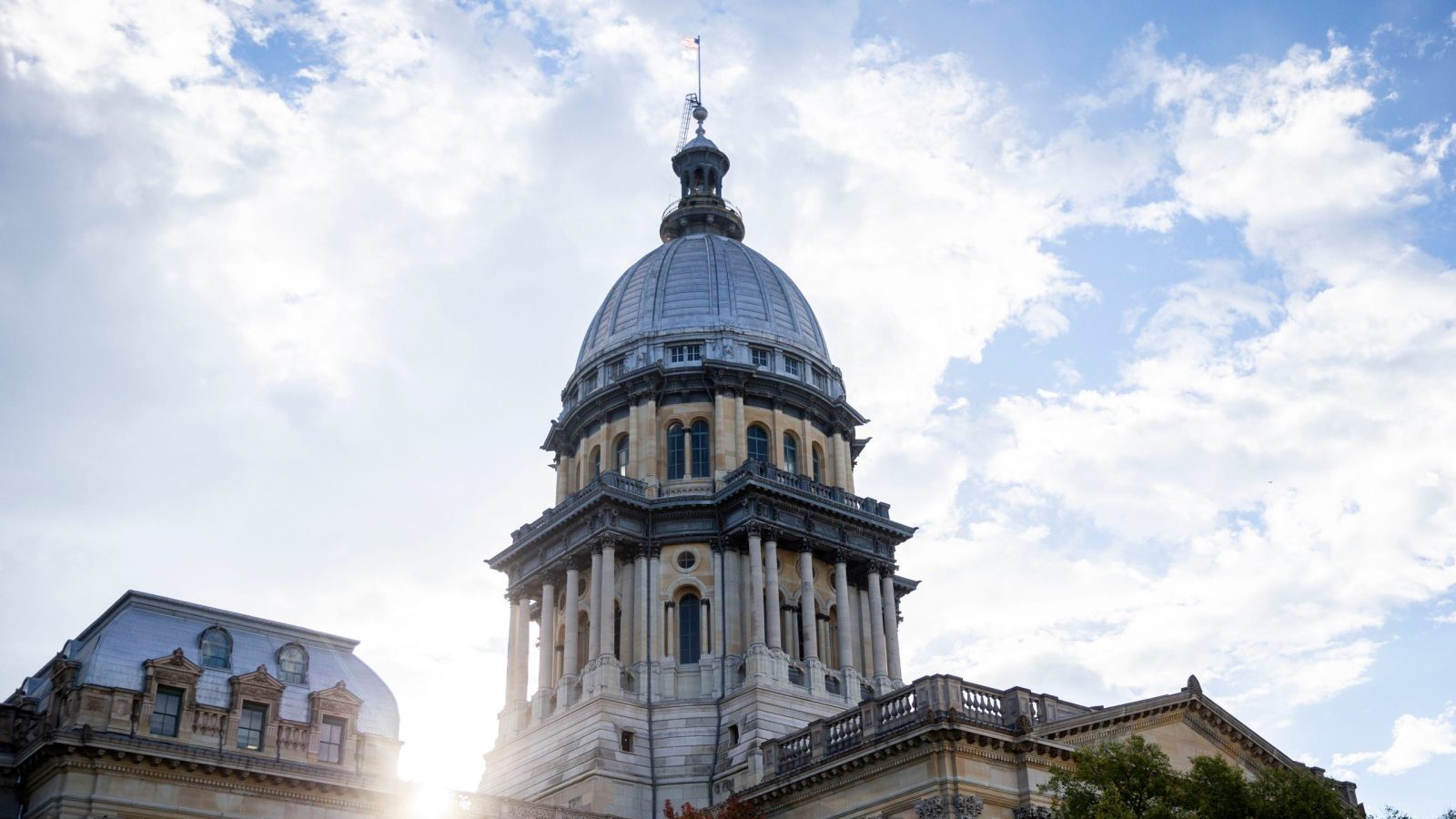
Illinois state Rep. and House Gaming Committee Chairman Daniel Didech has submitted a bill to repeal the sports wagering surcharge as part of a raft of legislation filed for the gambling vertical.
HB 5143, submitted in Springfield last Thursday, would end the $0.25 and $0.50 surcharges each mobile licensee pays at the conclusion of the fiscal year, June 30. The much-loathed surcharge, a surprise and late addition to Illinois Gov. JB Pritzker’s budget last May, has generated $62.2 million in the first half of fiscal year 2025-26.
That is well above the $40 million estimated for the entire fiscal year when Pritzker signed the budget into law.
Didech also filed HB 5142 on Thursday, which proposes to amend the definition of “sports wagering” in the state to include “participation in any prediction market.” The bill goes on to list the multiple types of wagers that would be acceptable in those markets, with precise terminology that includes the “transaction, whether described as a derivative, option, binary contract, or similar instrument.”
The bill also would make such wagers acceptable “whether the contract, agreement, or transaction is entered into on a peer-to-peer basis, whether participants take positions against one another rather than against the operator, whether the operator is not a counterparty to the transaction, or whether the operator describes the activity as an investing opportunity, exchange, marketplace, or prediction market.”
Operator pleas answered?
Illinois is the No. 2 sports betting market in the United States behind New York, but the overhaul of tax rates and added taxes the past two years has left operators grousing and bettors agitated. Operators took the bigger lumps with the 2024-25 budget that made Illinois the first state to adopt progressive tax rates for all sports wagering, with levies ranging from 20% to 40% based on revenue thresholds, after remitting 15% since launch in March 2020.
The per-wager surcharge has been met with derision and aggravation, mainly from FanDuel and DraftKings, which bear the brunt of the financial burden. Bettors also appear fatigued by the inconvenience. The volume of wagers in December was down nearly 25%, sharper than the 15% declines reported in September, October, and November.
The two colossuses accounted for 85% of the total wagering surcharge in December, with FanDuel paying $5.5 million and DraftKings nearly $5 million. That maintained the status quo in terms of the total amount: The two have paid a combined $51.2 million in wagering surcharges, 82.3% of all receipts generated.
Operator countermeasures, including bet minimums and surcharge pass throughs, have lessened the impact on handle. Illinois set all-time monthly handle records in October and November, surpassing $1.6 billion each month. The $1.44 billion wagered in December was down 3.4% from the final month of 2024, but the decline was in line with nationwide trends.
The saving grace for the state’s 10 mobile sportsbooks has been performance: The $762.8 million in overall adjusted gross revenue for the first six months of fiscal year 2025-26 is up 25.3% from the comparable period last year, easily outpacing the 8% rise in handle.
That has also been good for state coffers; the $291.7 million in receipts is running a whopping $118.7 million ahead of the previous fiscal year’s pace. Revenue-based receipts are currently $56.5 million higher compared to the first six months of FY 2024-25. Both figures will likely maintain those paces, since FanDuel and DraftKings both will pay the maximum 40% tax on revenue and the higher $0.50-per-wager surcharge the remainder of the fiscal year.
And don’t forget the city tax
HB 5143 does not address Chicago’s recently enacted 10.25% tax on city-based sports betting revenue, but Didech last fall filed HB 4171 preemptively to prohibit the levy. That bill would enact a home-rule clause preventing local jurisdictions from taxing, regulating, or imposing fees on gambling. It would not, however, impact the 2% tax that Cook County, which includes Chicago, collects on county-based receipts.
There is an alternate measure for Illinois legislators to consider via State Sen. Patrick Joyce. He submitted SB 2760, which would reduce the state’s budget allocation payouts to Chicago equal to the amount the sports wagering tax generates.
Hedging for the future?
Didech’s filing to include prediction markets comes as the Illinois Gaming Board has taken a relatively cautious approach to how it deals with the likes of Kalshi, Robinhood, and Polymarket. That began in April 2025 when the state agency sent cease-and-desist letters to Kalshi, Robinhood, and Crypto.com.
The IGB followed up in October with a warning letter to licensed sports betting operators in Illinois, stating that even partnering with a prediction market could put their licenses at risk. It sent Polymarket a cease-and-desist letter Jan. 27, but also has yet to file any lawsuits against a prediction market, opting to watch the process play out in other states.