Many in Congress believe something should be done to rein in prediction markets, but are ”not ready” to take on the administration on the topic, Indian Gaming Association Chair David Bean said Wednesday.
Bean — who took on the role of chair in October after Ernie Stevens’ death last year — discussed the battle to protect tribal sovereignty with Victor Rocha on an episode of The New Normal, titled “On the Road with Chairman Bean — What Tribes Are Saying Nationwide about Prediction Markets.”
Bean said the IGA and individual tribes have been speaking to federal legislators, trying to convince them to limit prediction markets’ ability to offer contracts on sports, or potential future contracts on casino games.
“There’s genuine concern,” Bean said. “While this is a new topic, it’s a complex topic and tribes across the nation are concerned. They view it as an incredible intrusion on tribal sovereignty and we concur.”
Earlier this month, Bean and National Congress of American Indians (NCAI) President Mark Macarro led a tribal-commercial briefing before the Senate Committee on Indian Affairs saying, “Tribal nations are unified with states to stop this illegal betting market. We are asking Congress to step in before irreversible damage is done to state and tribal budgets and our citizens’ livelihoods.”
Legislators supports tribes, but …
Bean said that he believed there was widespread support for the views of tribes on this subject, but political factors made some figures reluctant to take a stand.
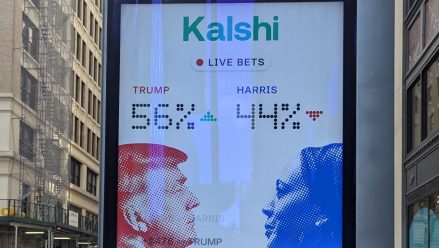
“I think many of them are aware of it, but they’re simply not ready to take on the administration, or the family of the administration,” he said, in an apparent reference to Donald Trump Jr.’s roles as an advisor to both Kalshi and Polymarket.
“When we met with [Senate Committee on Agriculture, Nutrition, and Forestry] Chair [John] Boozman, he said, ‘Can you create a coalition, can you gather folks?’ and I know what that means. I think that’s code for, ‘I’m not going to stand up by myself, I’m not going to take on the administration,’” Bean continued.
Bean added that many in Congress “recognize it’s a problem, but they’re not going to take action unless they see other folks screaming at the top of their lungs.”
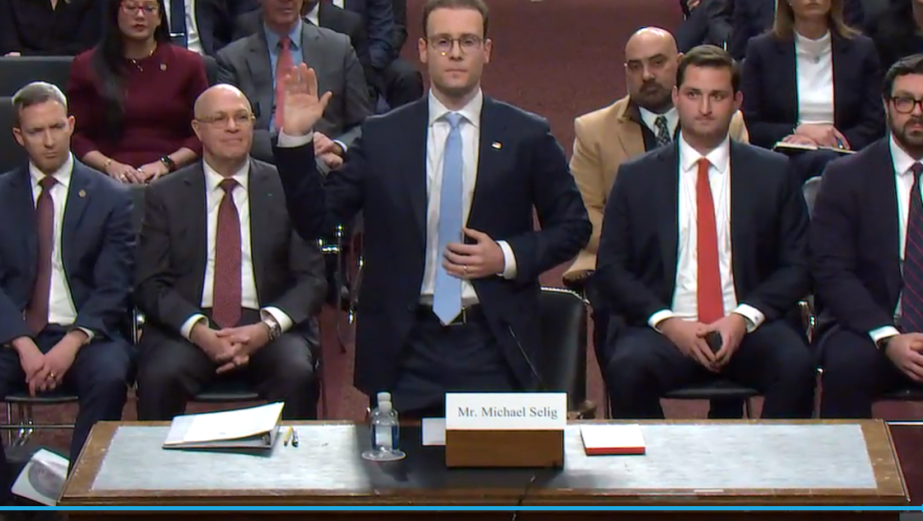
On Feb. 12, a group of 23 Democratic Senators sent a strongly worded letter about prediction markets to Commodity Futures Trading Commission (CFTC) Chair Michael Selig.
Bean noted that tribes are not alone in petitioning congressmen for a change. The commercial gaming industry and the NCAA are among the other groups that oppose the rise of sports event contracts.
‘We support people who support us’
Bean noted that the IGA will work to support politicians who support tribal interests, and said the body’s ability to support politicians is not just about spending money, as it can also educate Native American voters about which candidates are listening to their interests on key issues.
“We support people who support us,” he said. “They can commit to sporting us, and we can commit to supporting them.
“And it doesn’t end with a campaign contribution, that’s just the beginning.”
Rocha noted that despite the stance of the CFTC and Trump Jr.’s role, the issue of sports event contracts is not a partisan one, as many Republicans oppose their rise as well.
“This is not a partisan issue,” he said. “This is not a Republican/Democrat issue. It’s pretty red in Utah, and they see this as a pure violation of their state sovereign rights.”
However, he noted that the CFTC’s recent decision to submit an amicus brief in the Ninth Circuit shows that the groups with the most direct power over prediction markets are actively working against tribes’ interests.
“But the fix is in,” he said. “The thumb is on the scales. The thing that we’ve always feared, that the man and the system is fighting against us. That’s what’s happening now, and they’re fighting to cement their profits.”
Rocha added that there appeared to be a shift recently where more people have become concerned about prediction markets.
“I feel like everyone is finally waking up to the threat of prediction markets, the threat not only to tribal sovereignty but to state sovereignty,” he said.
This shift, he argued, has prompted prediction markets like Kalshi to move rapidly before effects of a backlash hit them.
“They want to move this very quickly before everyone wakes up,” he said.
Dual strategy
Both Rocha and Bean expect that the issue of prediction markets will eventually go to the Supreme Court, given the level of disagreement in judicial opinions about the topic.
Until then, Bean said that the IGA would continue to fight a dual strategy — in court and on Capitol Hill — to try to protect tribal sovereignty.
“We’re going down a legislation route, but we’re also going down a litigation route,” he said.
“We see this decided by the Supreme Court. There’s just too many conflicting positions, too many conflicting parties.”