
NEW YORK — Prediction markets could reach scale fast enough to hit “exit velocity” and become an accepted part of the legal gambling ecosystem, according to industry investors on a panel on the rising vertical Wednesday.
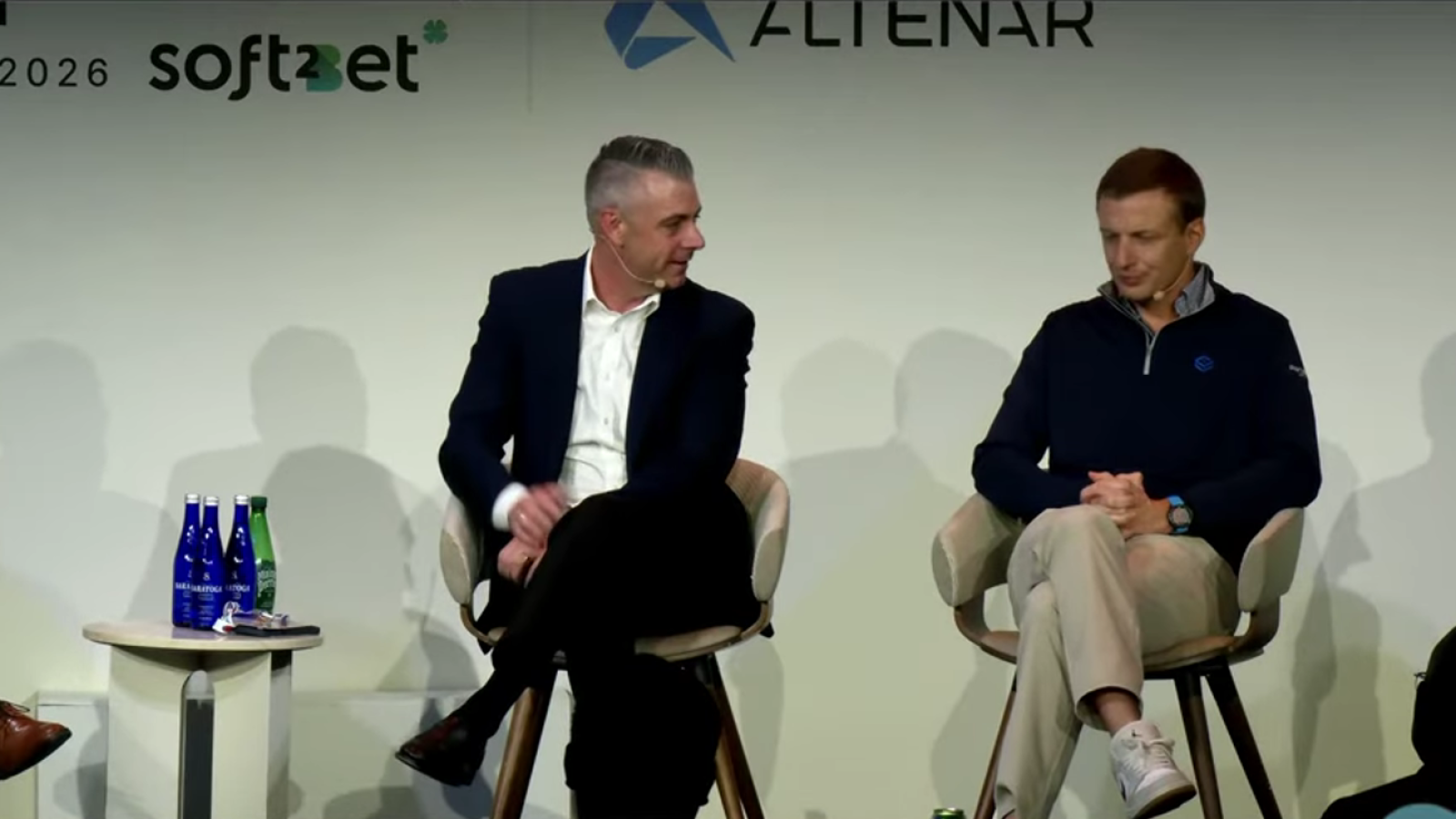
At the Next.io conference in New York, nVenue Chief Operating Officer Quinton Singleton and Discerning Capital Managing Partner Davis Catlin spoke on a panel titled “Pardon the D̶i̶s̶r̶u̶p̶t̶i̶o̶n̶̶ Predictions.”
The discussion focused mostly on prediction markets and the potential for investment opportunities in the space. It came days after a report claiming that both Kalshi and Polymarket were seeking fundraising at valuations of $20 billion. That would make both companies more valuable than Flutter Entertainment, which owns FanDuel alongside a number of other major betting brands across the world.
Catlin said that the rise of pick ‘em-style daily fantasy showed that products that have been subject to regulatory debates can become part of the mainstream if they get popular enough.
“Look at PrizePicks” he said. “When it first came out, I was like, ‘There’s no way this should be allowed. It’s gambling. It’s going to get cracked down on.’
“One of the lessons I took away from that, and I think many did, was if you innovate and reach scale fast enough, like Kalshi’s trying to, maybe you can reach an exit velocity. And this is not just a U.S. phenomenon. Look at Dream11 in India. Look at pachinko in Japan. There are different ways people have innovated around these rules, and I don’t think this is new.”
Kalshi in particular has grown rapidly within the past year. It processed more than $10 billion worth of trading volume in February, and the numbers are likely to be even higher in March, with the NCAA men’s basketball tournament set to boost volume in the second half of the month. The prediction market’s trading volume on March 12, 2026 was 100 times higher than on the same date in 2025.
Catlin added that there were still questions about whether prediction markets should be so reliant on sports. Kalshi’s volume was upwards of 95% sports on some NFL Sundays last year.
“I do think that prediction markets have a place. I think that it is a good regulatory framework,” he said. “I think the question is around whether or not it should be 97% sports betting.”
Singleton made a similar point about how the original wave of daily fantasy sports became viewed as its own product, distinct from gambling.
“In my mind, the way I look at what we’re seeing now is another point of evolution,” he said. “We went from the long, season-long fantasy to DFS. Is DFS gambling? Well, we’ve changed the law on DFS and gambling. So DFS is DFS.”
Winners and losers
Catlin added that so far, the big “losers” from the rise of prediction markets have been publicly traded sports betting companies like DraftKings and Flutter, which have lost around half their value since late August. However, he said that it was not yet clear that Kalshi would be the long-term winner, even if prediction markets continue to become more popular.
“In terms of the losers, I think obviously the public stocks,” he said. “If you work for a publicly listed gambling company, your share price is almost certainly down in the last seven months despite your business doing great. So I think the public’s perception of gambling is the greatest loss here.
“And I think the greatest risk posed by this, and the thing that I’m intrigued by, is whether or not Kalshi wins. I think that’s the real question.”
Singleton added that some of the financial companies exploring prediction markets have so many resources at their disposal that they could be difficult to compete with.
“Look who’s playing in this space,” Singleton said. “It’s not small players. I think the fintech industry and even DeFi, the size of these players are so big that even the numbers we’re seeing as valuations or money raised, may not be enough to have you win in the long term. I think we see some other major interesting groups, like Robinhood and others, where they already have a massive existing user base, and they’re gonna add another product that looks exactly like the product they have now.”