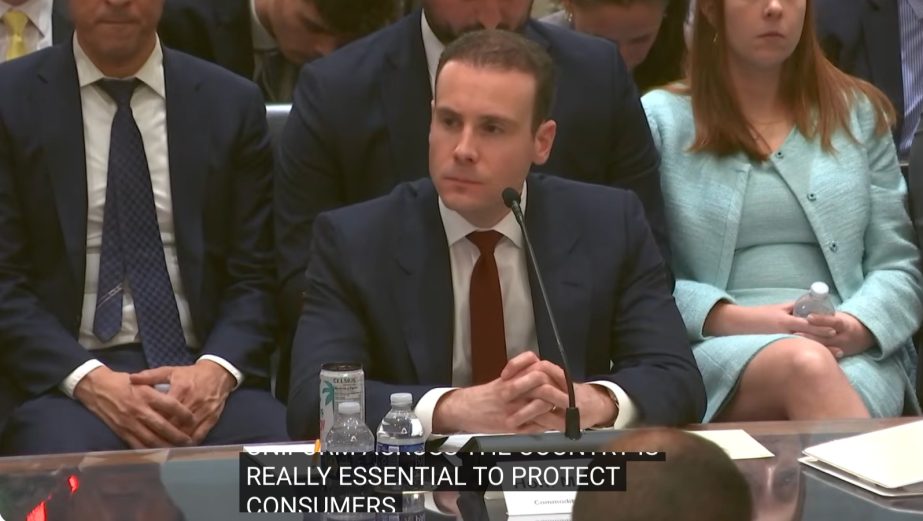
A behind-closed-doors hearing about prediction markets with the members of the House Agriculture Committee was a “mixed bag,” with some members “drinking the Kool-Aid” from event contract operators, according to Indian Gaming Association (IGA) Chair David Bean.
Bean was speaking at an IGA webinar titled “The New Normal: Regulated Gaming Pushes Back on Prediction Markets,” alongside IGA Conference Chair Victor Rocha and Executive Director Jason Giles as well as American Gaming Association (AGA) Vice President of Government Relations Tres York. The webinar took place Wednesday, hours after the House Committee on Agriculture held a non-public discussion on prediction markets. That discussion followed a public hearing with CFTC Chair Michael Selig on April 16.
Bean said that the AGA and IGA were outnumbered at the private hearing by representatives from Robinhood, the Coalition for Prediction Markets — which counts Kalshi and Crypto.com among its members — Polymarket, the NFL, and a former CFTC commissioner.
Giles noted turnout to the hearing among members of Congress was low, perhaps in part because the timing at the start of the day.
“Congress isn’t used to getting up that early unless there’s a fundraiser with a big breakfast buffet behind it, and so about 16 members showed up, about a third of the full committee,” Giles said. “It was a good discussion, but as Chairman [Bean] just alluded to, the folks testifying there, four of them were in the bag for prediction markets.
“The NFL representative was there. They did their NFL wishy-washy thing, and then it was up to AGA’s Chris Cylke and then Chairman Bean to sort of have to cut through all the euphemisms and sophistry and magic tricks that these guys are trying to lay on Congress.”
Some minds are made up
Bean said that some representatives who attended were more responsive to the AGA and IGA’s arguments than others.
“I think there was definitely a mixed bag,” he said. “There were some who were already drinking the Kool-Aid, but some who were on the fence when obviously raising concerns about integrity and talking about making sure congressional reps can engage.”
Rocha said that he got the sense that some in Congress were buying the idea that Kalshi was a neutral arbiter and that this makes it distinct from gambling companies, an idea that he argues is misleading at best.
“These prediction markets, their message, I can tell it’s seeping through to Congress that, hey, these prediction markets, they’re truth tellers, they’re price seekers,” he said. “Maybe if what they mean by peer to peer is that it’s one person that’s placing a bet and on the other side of it is Kalshi Markets or Susquehanna — these major institutional investors that are are corporate entities that are literally there to make sure that the markets are liquid. That’s who probably more often than not is on the other side of the bet.”
Rocha also noted that prediction markets appear to have come together in a more concerted lobbying effort in recent months, but that this was partly due to all the negative publicity for the products.
“There is a more united front now, but I think it’s largely in direct response to the pressure that we all have been putting on them,” he said.
Suing in state court
While the response from Congress may be somewhat mixed, York said the IGA was having a lot of success in engaging with state attorneys general.
“We’ve been working diligently, as hard as possible with state attorneys general, and what we have seen is that these AGs that sue these prediction markets in state court — not in federal court, in state court — are undefeated,” he said. “Every single time the prediction market will have to try to get it moved to federal court, and it’s always sent back.”
He added that the CFTC’s move to sue three states this month could provide states and tribes with more sympathy from legislators who feel the agency is overreaching.
“Sitting on the plane coming out here to D.C. from Arizona, I saw Congressman [Andy] Biggs, asked him how he felt about CFTC suing the state, you know, he goes, ‘We don’t like that, do we?’ And I’m like, ‘No, we don’t.’
“And so taking advantage, recognize your surroundings and take every opportunity to tell your story and jump in.”
What can tribes do?
Bean also encouraged tribes to make their voices heard.
The CFTC is currently accepting comments on its advanced notice of proposed rulemaking for event contracts. The notice consists of more than 150 questions, covering virtually every area of prediction market regulation.
Bean said that tribes should submit responses, and that the IGA was circulating a template for tribes to raise concerns about prediction markets infringing on their sovereignty. He said that this should be the top short-term priority for tribes that want their views on prediction markets to be heard.
“I think most immediately is for tribes to get their comments in,” he said. “Second, reach out to the House Ag Committee to make sure they understand that this is an erosion, a blatant disrespect of tribal sovereignty, a blatant disrespect of the Indian Game Regulatory Act and the framework that we have worked within the last almost 40 years alongside our state partners.
“And then to the tribe’s respective congressional reps, many of which may already be on this House Ag committee, so there may be some crossover, but I think the more folks we can talk to, the better.”
Bean added that those in states that are especially reliant on agriculture should ask why the CFTC — which regulated agricultural futures — is spending so much time on the issue of prediction markets rather than ensuring that farmers have economic certainty.