BetMGM CEO Adam Greenblatt says that there is a “conflict” in continuing to work with sportsbooks that now offer prediction markets in groups like the Sports Betting Alliance (SBA) and Responsible Online Gaming Association (ROGA), but remaining a member of those groups is still the best option.
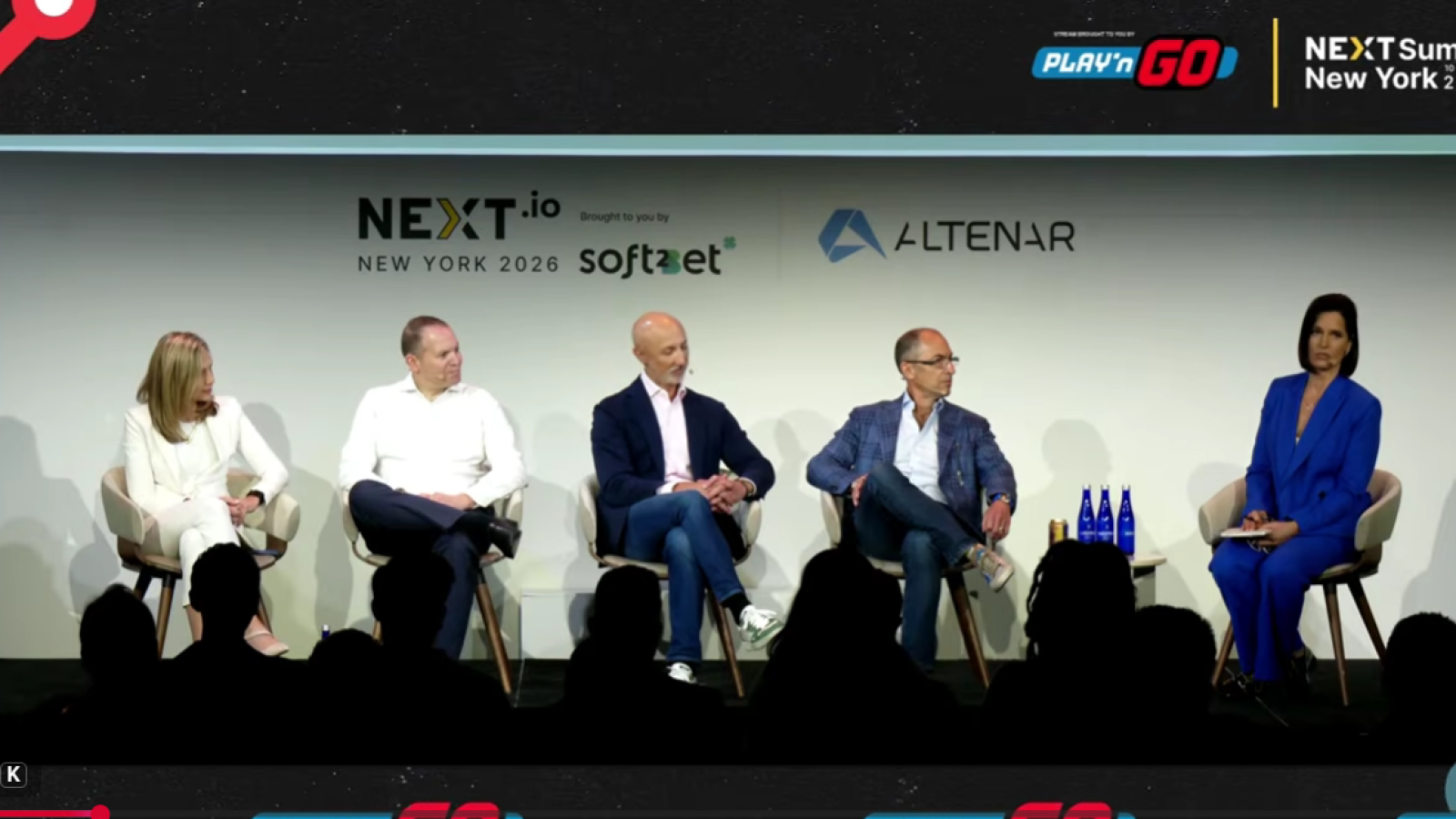
Greenblatt was speaking at the Next.io NYC Summit Tuesday, in a panel alongside Game Changers Ventures Managing Partner Roger Ehrenberg, Meredith McPherron of DraftKings’ venture capital arm Drive, and SBA President Jeremy Kudon.
The panelists discussed the rise of prediction markets, as well as AI and consumer sentiment.
BetMGM is the largest U.S. sportsbook operator that hasn’t gotten involved in prediction markets, with the company concerned about the impact that doing so would have on co-owner MGM’s casino licenses and relationships with gaming regulators.
The divide between traditional casino businesses and companies whose core product is online sports betting last year led to DraftKings, FanDuel, and Fanatics — which all offer prediction markets — leaving the American Gaming Association (AGA). However, all three remain part of the SBA as well as ROGA. BetMGM is a member of the SBA and ROGA.
Greenblatt acknowledged that there was a tension between BetMGM’s opposition to prediction markets and the company remaining a member of these groups.
“Is it a conflict? Absolutely, it is a conflict,” he said. “But actually, what’s best for our industry, what’s best for our players, let’s do that. And so we continue to put money into that organization. So this is a real commitment to us.”
SBA on AGA
Kudon said that as the AGA has focused its resources on fighting prediction markets, the SBA has handled more of the AGA’s prior responsibilities in defending the sports betting industry and working on legalization.
“I think the concern when we saw that happen is the AGA served some very important purposes,” he said. “They were focused a lot on the responsible gaming side. They were the ones who were pushing back on some of the narratives that were out there. And so that’s really, at least on the online side, falling a lot more on the SBA over the last three, four months.”
Greenblatt also said there was a difference between the sportsbooks that have stepped into prediction markets and companies like Kalshi and Polymarket, which he accused of being unconcerned about player protection.
“Many of the leaders of these prediction market entities are on record as not giving a …” he said, deliberately trialing off at the end.
He said he believes DraftKings and FanDuel still do have more commitment to responsible gambling.
“I’ve spoken directly to both DraftKings and FanDuel about this specific issue and in our commitment to this, we are very alert,” Greenblatt said.
Megatrend
Also during the panel discussion, Ehrenberg said that the rise of prediction markets was part of an inevitable “megatrend” of financialization.
“The financialization of everything is a bigger trend,” he said. “That is inevitable. And I think in many ways you’ll see gaming and financial infrastructure and Robinhood and Coinbase and companies like Betr looking more similar than they do to the Flutters and the Penns of the world.”
He said that while sports continue to make up the vast majority of revenue, the rise was about more than just sports betting as new types of markets were starting to gain traction.
“We’re in the early going,” he said. “So we talk about elections, talk about weather, talk about culture, entertainment, all of that, Bitcoin markets, it’s out there and it’s taking hold.”
McPherron said the rise had inspired Drive to make its first prediction market investment, in a company that she said offered “the Bloomberg terminal for prediction markets.”
“I think the speculation in general has just become a much more broad reaching aspect of all digital commerce,” she said. “It’s not just betting. It’s not just the ugly markets. It’s really a default behavior of this younger generation. We’re seeing it everywhere.”