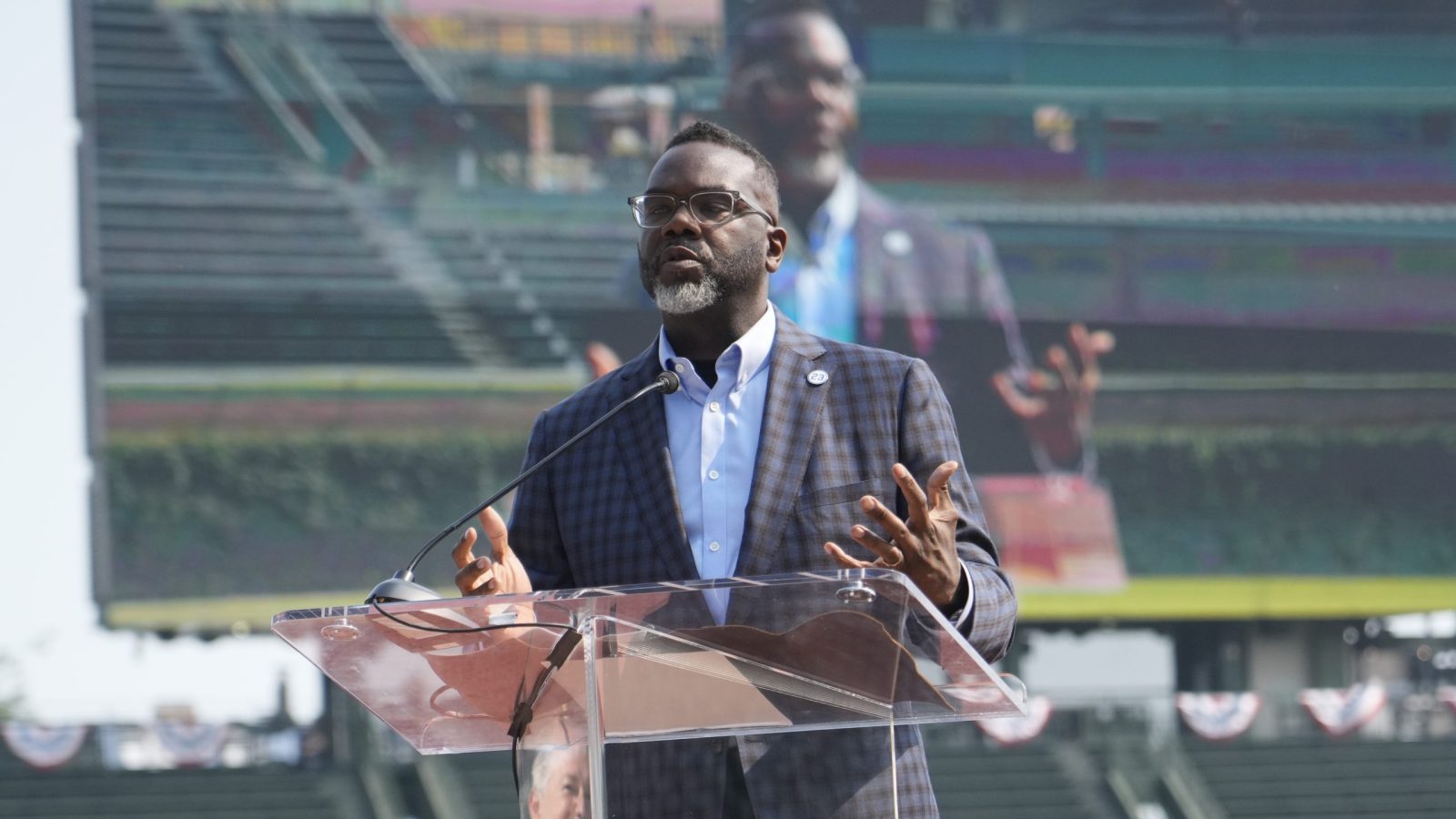
Chicago Mayor Brandon Johnson said Tuesday he would neither sign nor veto the $16.6 billion budget passed by the city council over the weekend, which includes a 10.25% tax on city-based sports betting operator revenue that would take effect Jan. 1.
Johnson initially proposed the levy in his budget proposal in October, but the first-term mayor lost control of the budget process when the city council last month refused to agree to his wish for a corporate head tax. The city’s 50 aldermen countered with an “alternative” budget that retained the sports betting tax, which could create logistical headaches for the state’s 10 mobile operators, as the budget ordinance does not have a licensing framework.
The Sports Betting Alliance (SBA), which has loudly criticized the proposed tax set to take effect, sent a letter to Johnson last week warning that operators may be forced to shut down in Chicago since the ordinance contains a requirement of being a license holder, but does not provide a pathway to become one.
“The new Chicago tax on sports wagering will drive more sports fans to illegal, predatory websites and bookies that are thriving online without any oversight or consumer protections, while avoiding tax obligations entirely,” the Sports Betting Alliance said in a statement. “Further penalizing players in the City of Chicago pushes more sports fans to unregulated, illegal alternatives and has serious implications for the sustainability of the legal market.”
The tax would create a minimum 32.25% tax on all Chicago-based operator revenue. The state has progressive tax rates in place starting with a minimum of 20% and maximum of 40% based on fiscal year revenue thresholds, and Cook County — where Chicago is located — already collects a 2% tax on all county-based revenue.
The tax proposal also will have to withstand challenges from state legislators as House Gaming Chairman and Illinois state Rep. Daniel Didech submitted a bill in October that would prevent Johnson from enacting home rule to levy taxes on sports betting by prohibiting local jurisdictions from taxing, regulating, or imposing fees on gambling.
Illinois Politico reported Thursday that state Sen. Patrick Joyce has submitted a bill that would reduce Chicago’s share of the Local Government Distributive Fund by an amount equal to whatever the city raises from a sports wagering tax.
How much could the tax generate?
The mayor’s office projected $26.3 million in annual revenue from the levy, estimating Chicago generated 40% of Cook County operator revenue based on 2024 figures.
Illinois sportsbooks, however, are doing better in 2025 with adjusted gross revenue running 20.4% ahead of last year’s pace. Using that same 40% estimate on the $610.5 million in Cook County AGR reported for the first 10 months of the year, the city would have collected $25 million.
Those estimates, of course, do not take into account operators’ growing frustration with state politicians — and now potentially city ones as well — as they are paying substantially more in taxes compared to the 15% rate that ushered in legalization.
“We urge city leaders to delay the new online sports betting license infrastructure given the extremely truncated timeline caused by the budget process,” the Sports Betting Alliance added. “The new licensing process creates regulatory hurdles that could significantly constrain sportsbook operations in Chicago and may force companies to explore all legal options.”
FanDuel and DraftKings likely would be paying a minimum 52.25% tax on all Chicago-based revenue for more than half the fiscal year given they project to reach the $200 million revenue threshold that triggers the maximum 40% state tax rate at some point during December.
And the effective tax for operators is higher following the introduction of a per wager surcharge in July passed in the FY 2025-26 budget. It has contributed to the volume of wagering going down, but the state recorded a record $1.6 billion handle for October according to figures released by the Illinois Gaming Board last Friday.
Illinois generated an additional $261.9 million in sports betting tax revenue during Fiscal Year 2024-25 with the switch to the progressive tax rates. The introduction of the per wager surcharge that took effect July 1 with the FY 2025-26 budget has already generated $35.3 million in the first four months and contributed to receipts running $65 million ahead of last year’s robust total.
This is a breaking news story and may be updated.