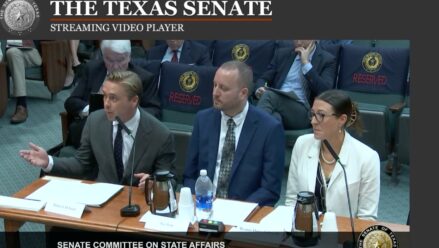
If the comments and questions asked during Wednesday’s House General Law Committee meeting were any indication, prediction markets have little if any support in Connecticut. Lawmakers held a hearing on a bill that would ban the use and advertising of prediction markets to those under 21.
“Frankly, I would outright ban it,” Committee Chair Roland Lemar said.
Said committee member Tim Ackert: “I completely agree with a full-on ban. … I think this market is something that if we even have a bill like this, we are validating, in a way, the use of it. I think any time we give credit to something like this platform by regulating it, then we’re saying it’s OK above this age. I don’t want to say supporting it, but giving it validity.”
The bill was in committee for the first time, and testimony was sandwiched around longer testimony for bills about medical credit cards and the secondary ticket market. There was no vote, but it was clear that lawmakers are aligned with the state regulator and attorney general. The Department of Consumer Protection (DCP) is among about 10 regulators across the U.S. that have sent cease-and-desist letters to prediction markets. And the state attorney general is fighting in court with Kalshi to keep it out of the state.
HB 5038 was filed at the request of Gov. Ned Lamont as part of his budget recommendations. It was filed Feb. 5. The bill has the backing of the Mohegan Tribe — one of three state sports betting licensees — which says prediction markets encroach on the tribe’s exclusive right to Class III gaming, according to the Hartford Business Journal. The Mohegans and Mashantucket Pequots are compacted with the state for exclusivity for Class III gaming. Under the compacts, the tribes operate Las Vegas-style casinos as well as offer online sports betting and casino platforms.
UConn: Maybe contracts should be illegal
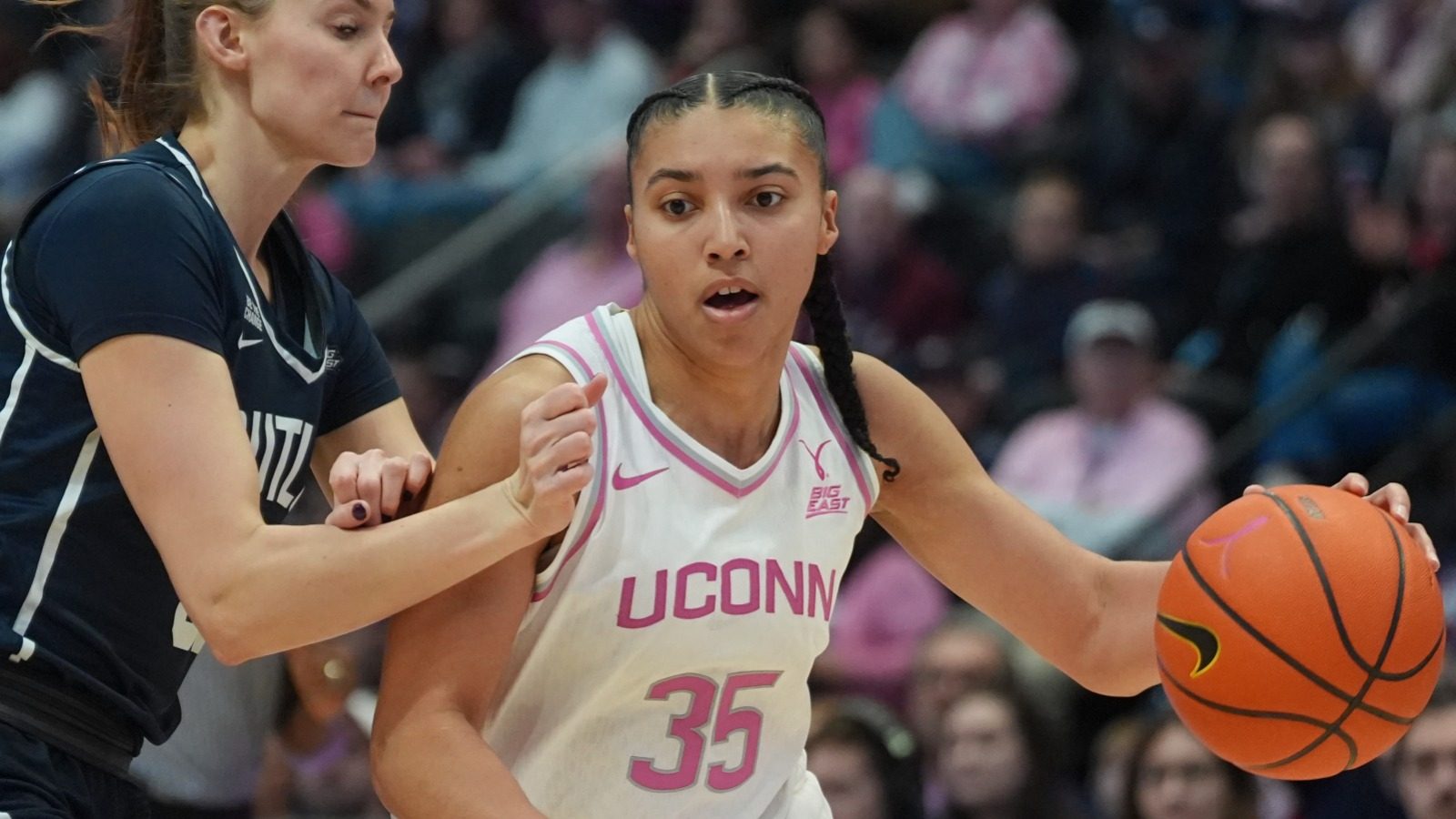
Annie Fiorvanti, the deputy director of athletics at the University of Connecticut, testified in favor of the bill.
“When people have a financial interest in how a game turns out or how a specific athlete performs, that changes how our student-athletes are treated by the public,” she told the committee. “Unlike pro athletes they don’t have layers of security, agents, or financial protection around them. … It makes them much more exposed to outside pressure.”
She went on to say, “UConn supports strong regulatory actions. … [Maybe the state] should consider if these contracts should be made legal in Connecticut at all.”
Ian Corby, the public policy director for the Connecticut office of the National Alliance on Mental Illness, pointed to the potential for addiction, particularly in “younger individuals whose brains don’t develop until the age of 25 — and recent research is indicating that could be as old as age 30.” He said his group stands in opposition alongside the state department of health and Connecticut Council on Problem Gambling.
No representative from the prediction market or gambling industries testified in person.
Prediction markets continue to disrupt
The next step will be a committee vote on the bill, which will have to pass both legislative chambers before it gets to Lamont’s desk. There is no crossover deadline, and the general assembly is in session until May 6.
Prediction markets have been shaking up the gambling industry across the country since the introduction of sports event contracts more than a year ago. The contracts are nearly indiscernible from betting markets in traditional sportsbook apps, which are heavily regulated by Connecticut. In South Carolina, where lawmakers had their first hearing about legalizing online sports betting Wednesday, the discussion got derailed by the question of how or if prediction markets fit into the equation.
“There is a lax [federal] regulatory structure, and their entrance into sports gaming, particularly in a state that has a negotiated compact which regulates sports gaming in our state, seems clearly violative of that compact,” Connecticut’s Lemar said. “I’ve been trying to learn how this differs from sports betting, and I fail to see the distinction that the federal government sees.”