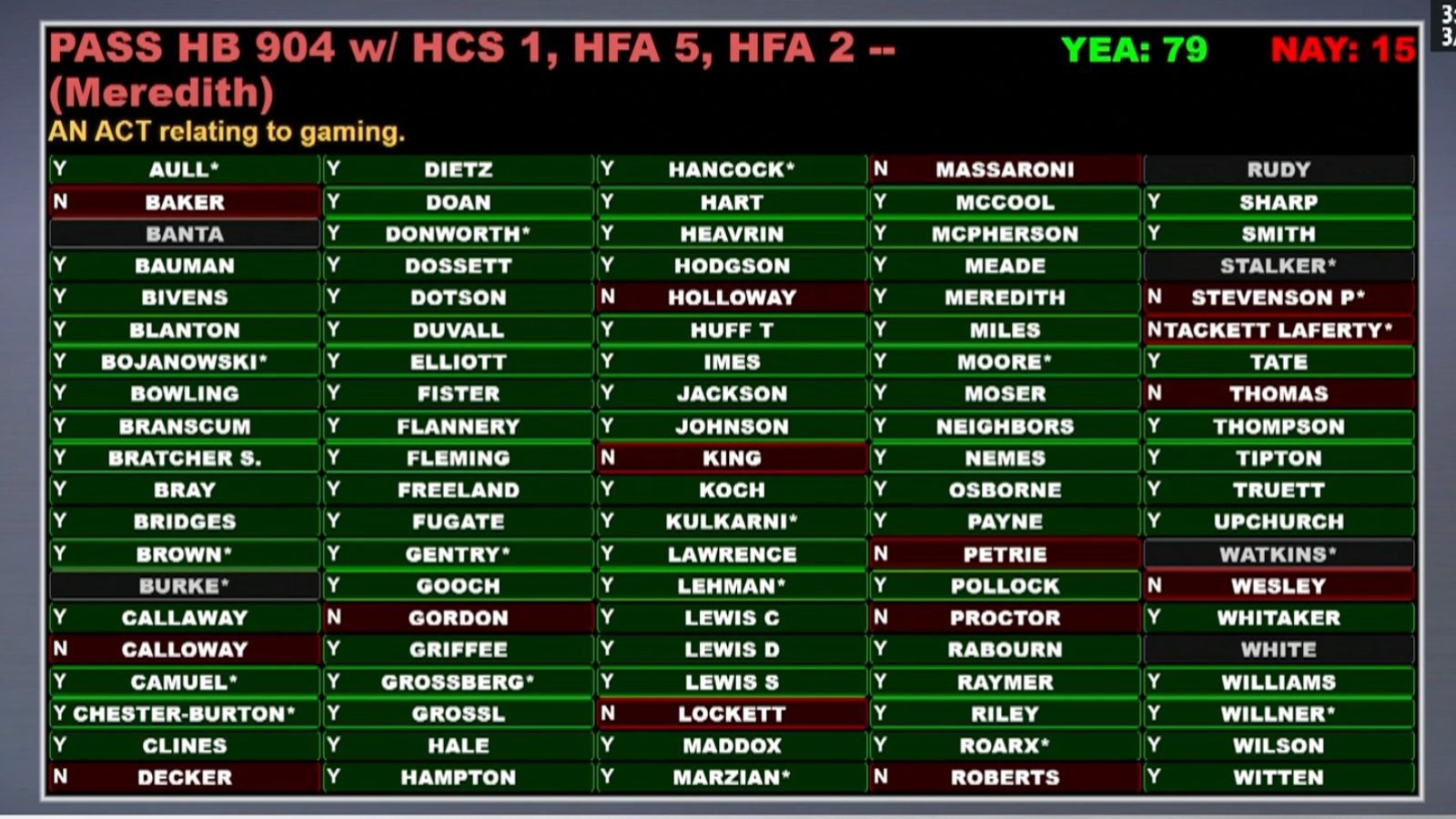
The Kentucky legislature is on its way to becoming the first to require online sports betting operators to accept wagers of up to $1,000 after the House passed HB 604, 79-15, Thursday afternoon. Should the bill get through the Senate, Kentucky would be the first state to pass a law mandating that operators take bets up to a certain amount. Legislation around the country on the issue of bet sizes has largely centered on bet minimums and operator-imposed limitations on bettors, usually more sophisticated “sharps.”
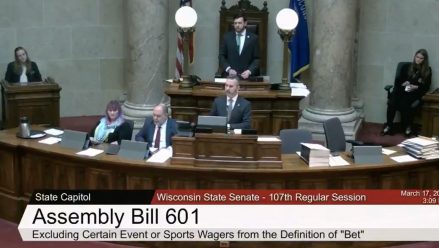
HB 604 now moves to the Senate, which will have about a month to consider the proposal before the legislature is set to adjourn April 15.
The Massachusetts Gaming Commission in December was the first regulator to take action around limiting bettors when it added a regulation to require that operators inform bettors if and why they are being limited, but did not set a floor or ceiling.
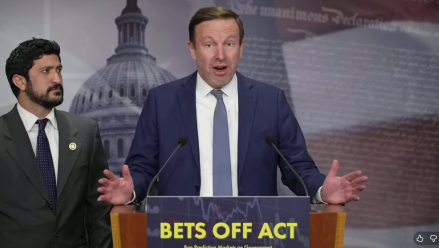
Kentucky’s bill would also seek to tax gross revenue generated by prediction markets at a 14.25% rate, the same as online sports betting platforms, and would ban horse tracks (through which wagering operators gain market access) and daily fantasy operators from operating a prediction market for one year, and after that, licensees would also be prohibited from “being involved with” or offering a prediction product anywhere else in the U.S.
Sponsor opposes $1,000 requirement
With regard to the requirement to take bets up to $1,000, Republican Rep. Nick Wilson brought House Floor Amendment 2 to his peers Thursday. He said the amendment would allow sportsbooks to decline to take such bets if “suspicious activity” is a concern, and would “suspend” the requirement should a bettor have already wagered $5,000 in a day, or if the bet in question could produce a payout of $1 million or more.
Bill sponsor Michael Meredith, the chair of the House Banking and Insurance Committee, opposed the amendment.
“I just have a lot of concerns with making a change like this in the business practices of the licensees, … in a time when we still don’t have a mature marketplace on this, in a time when we are doing major, major things to change this, and when the national market is doing major, major things to change our regulated industry,” he said.
Meredith also said that he does not believe that any other state has a similar “provision” and that a “$1,000 bet in some situations could result in a very large win for the customer and a very big loss for the book.”
Wilson argued that the amendment would stop sportsbooks from limiting bettors. Sportsbooks “actually stop it if somebody is winning. [The sportsbooks] want to stop that.”
The House ultimately voted in favor of the amendment, 54-13.
Pro bettors go offshore to avoid limiting
During a Citizens webinar Friday morning, two professional sports bettors said that bet limiting is pushing consumers to prediction markets, and more often, offshore, in search of better odds. While the $1,000 requirement might not entice a sharp to play in the legal market in Kentucky, it would likely make that market more enticing than others where sportsbooks do shut down winning bettors.
Former professional sports bettor and poker player Isaac Rose-Berman said it is “becoming harder and harder” for sharp bettors to wager on traditional sportsbooks, in part due to limiting.
Kanzi Yi, also a professional sports bettor and co-founder of PY Research, a fund that leverages machine learning and advanced statistical models to predict sporting events, said limiting and risk management practices fluctuate on different legal sportsbooks. In his quest for the best odds, he also bets offshore and sometimes on prediction markets, as neither limit him.
Other provisions in the bill
Kentucky’s bill would also raise the minimum age for betting from 18 to 21 and ban “negative” college-player prop bets on Kentucky athletes. The requirement to take wagers up to $1,000 was among two amendments added to the committee substitute. Amendment 5, which was also adopted, mainly includes technical and language changes.
HB 604 would also put regulations around daily fantasy sports, which currently operate unregulated in the state. Should the bill pass, DFS platforms would be required to be licensed and pay taxes to the state, allowing it capture a new revenue stream.