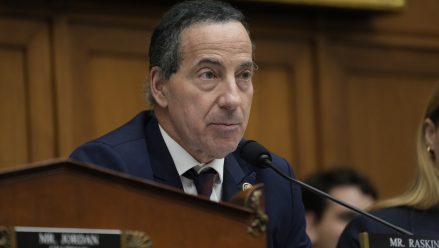

Michigan Gov. Gretchen Whitmer Wednesday proposed raising the top-tier tax for sports betting operators to 36% as well as adding a per-wager tax. In doing so, she drew the ire of the architect of Michigan’s online casino and online sports betting law.
“I am disappointed that the Governor didn’t call me first on this one, I could have helped with the math,” Brandt Iden, the former Michigan state representative who got two forms of online gambling legalized in December 2019, wrote to InGame via text.
“This isn’t rocket science, it’s simple math. Instituting these Whitmer tax hikes will plummet Michigan from one of the top gaming markets in the country to the bottom of Lake Michigan. I spent my legislative career on this issue, developing the optimal policy for the state and working with stakeholders to craft one of the most successful and most sustainable commercial and tribal gaming markets in the country. It’s a shame the Governor is seeking to destroy a market that we worked so hard together to create.”
Michigan operators currently pay an 8.4% tax on adjusted gross revenue.
Whitmer’s per-wager tax is modeled exactly after the one instituted in Illinois July 1, 2025. Operators would be charged 25 cents per bet for the first 20 million wagers placed, and 50 cents per bet above that. Stakeholders pushed back hard in Illinois, and now some operators pass the charge directly to consumers while others have instituted bet minimums. By December, Illinois sportsbooks reported a 25% year-over-year decline in betting volume.
“Her decision making paradigm is very perplexing. I don’t understand why a state would seek to replicate the failing gaming structure that is Illinois,” Iden, now head of government relations for Fanatics Sportsbook, wrote. “A simple Google search will uncover that since Illinois enacted the per-wager tax, gaming revenue [has] significantly declined month after month.”
In other news …
Here’s a look at the status of other active bills around the U.S.
Arizona: There doesn’t appear to be any legislative follow-up yet, but Gov. Katie Hobbs is calling for a more than four-fold increase on the tax rate for some sports betting operators:
Should a lawmaker pick up the proposal, it would, like other revenue bills, require a two-thirds majority to pass either chamber. Hobbs’ proposal calls for operators taking $75 million more in bets to pay a 45% tax rate vs. the existing 10% rate.
In Arizona, operators gain market access via partnerships with either tribal casinos or approved professional sports teams. Four of the biggest operators — BetMGM (Arizona Cardinals/State Farm Stadium), Caesars (Arizona Diamondbacks/Chase Field), DraftKings (PGA Tour/PGA Scottsdale), and FanDuel (Phoenix Suns/Mortgage Matchup Arena), are partnered with professional sports teams. Hobbs’ proposal could gain tribal backing due to the setup.
California: A bill was filed Wednesday that would ban “elected or appointed public officials” and state or local government employees from using insider information on prediction markets to buy contracts on administrative actions, elections, governmental actions, or legislative decisions about which they have “non-public” information. HB 1840 has not yet been assigned to committee. The bill is similar to one filed in New York and another in Congress. It has a tentative committee hearing date of March 14.
Illinois: HB 5142, which seeks to regulate prediction markets, was referred to the Rules Committee Monday, but no hearing date has been set. Filed by Daniel Didech, the bill would add sports event contracts on prediction markets to the definition of sports betting, and as such, the contracts would be subject to the state’s regulatory and tax structure. The detailed definition includes, “whether the contract, agreement, or transaction is entered into on a peer-to-peer basis, whether participants take positions against one another rather than against the operator, whether the operator is not a counterparty to the transaction, or whether the operator describes the activity as an investing opportunity, exchange, marketplace, or prediction market.”
If approved, prediction markets like Kalshi or Polymarket, or those offered by DraftKings, Fanatics, or FanDuel, would be subject to the same stringent consumer protections as state-regulated sportsbooks. The prediction markets would also have to pay taxes based on the state’s 20%-40% sliding tax scale and a per-wager tax.
Maine: The Joint Veterans and Legal Affairs Committee work session set for Wednesday on LD 2080, which would ban funding sports betting accounts from being funded by credit cards, was canceled. No new date has been set yet.
Mississippi: An amended version of the Mississippi bill that would expand sports betting to add online platforms passed out of the House Feb. 4, and was sent to the Senate last Friday. The bill, HB 1581, was amended and approved by the House, 85-31, Feb. 4, and sent to the Senate the next day. It doesn’t have a committee assignment yet. The bill would allow for statewide mobile sports betting with platforms tethered to existing casinos.
Sponsored by Rep. Casey Eure, the bill also calls for a sweepstakes platform ban. A similar bill, SB 2104, passed out of the Senate Feb. 4 and was referred to the House Gaming Committee last Friday. Historically, both Mississippi legislative chambers have supported a sports betting expansion, but don’t agree on what that should look like. Multiple bills have passed from one chamber to the next before dying in committee.
New York: S7908, which would require operators to create “age assurance” protocols to keep minors from creating wagering accounts, Monday advanced out of the Racing, Wagering, and Gaming Committee to the Finance Committee. The bill would further require the state regulator to promulgate additional rules, including creating “a means by which persons may register any of their identifying information on an exclusion list for the purposes of preventing themselves and any other person, including a minor, from using such information to create an account on a mobile sports wagering platform.”
Washington: The state Senate Wednesday approved a bill that would allow proposition bets on in-state colleges (but not in-state athletes), 41-8. HB 2205 , backed by the state’s Indian tribes, which have exclusivity for Class III gaming, will now be sent to the House. Washington law allows only in-person betting at tribal sportsbooks.