In an unusual moment Friday morning, a South Dakota senator who said she is the daughter of a gambling addict recommended passage of a proposed constitutional amendment that would allow for online sports betting in South Dakota.
The Senate Taxation Committee advanced SJR 504 to the floor for a vote. In-person sports betting in Deadwood and on tribal lands has been legal in the state since voters approved a constitutional amendment in November 2020.
Sen. Amber Hulme told the committee that she as the daughter of a gambling addict, she would rather her father had gambled in a regulated environment with responsible gaming tools and a safety net that may have flagged his addiction early on.
“I personally have felt the impacts of many of the statistics on the bottom of this page in my own life, but I would much rather see this, personally, be regulated so there are some limits and constraints,” Hulme said. “And quite frankly as someone from a district with huge property tax issues as well, anywhere where we can find revenue sources, to me like a sin tax, to put toward a growing problem in our state, I am personally in favor of.”
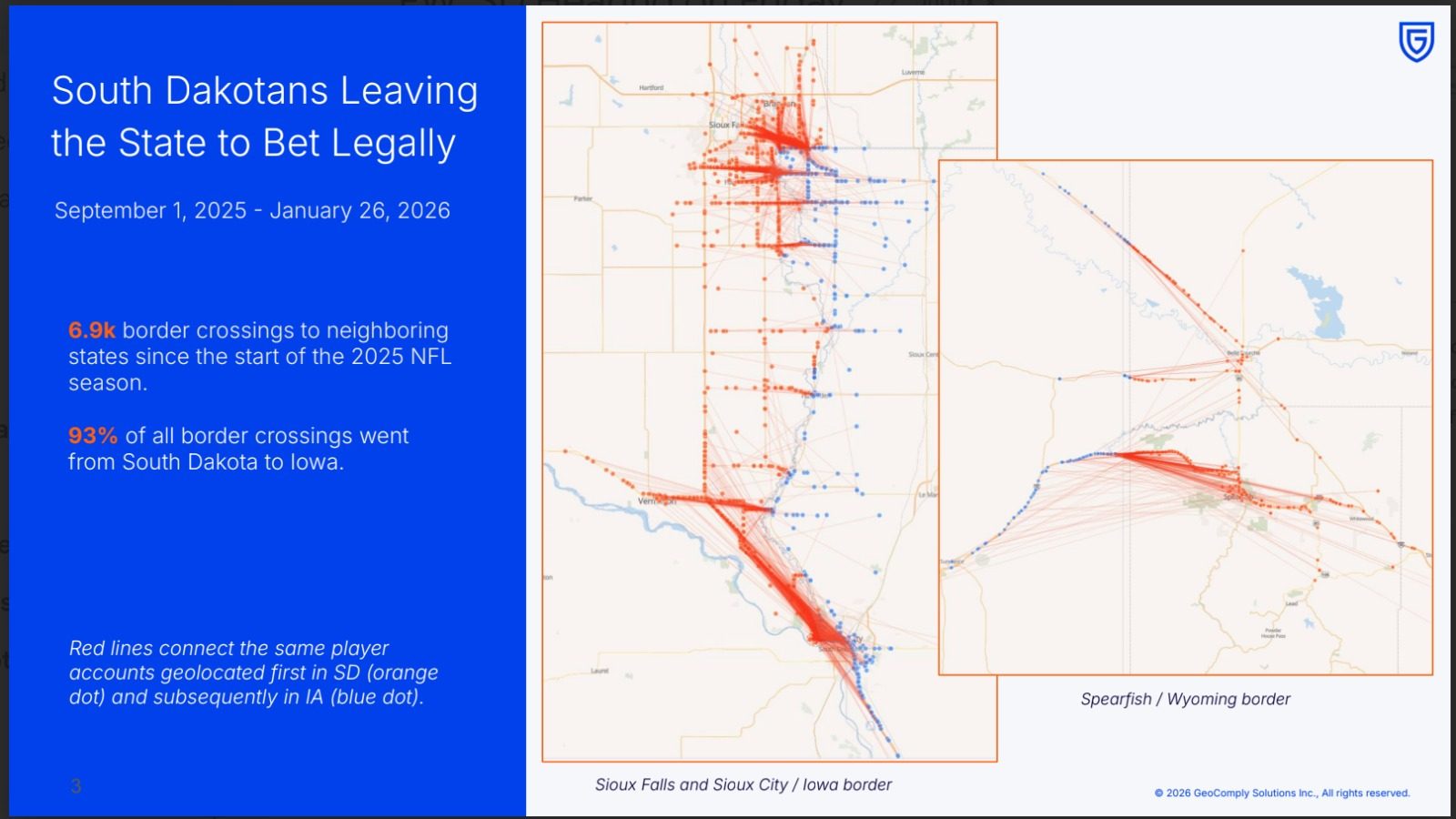
Hulme’s comments capped an hour-long hearing in which proponents argued that South Dakotans are already betting online illegally or crossing the border to place online bets in Iowa and Wyoming. The Iowa cornfield favored by Nebraskans to place mobile bets — online sports betting is illegal there, too, and state residents sit in a cornfield across the border to wager — was also mentioned.
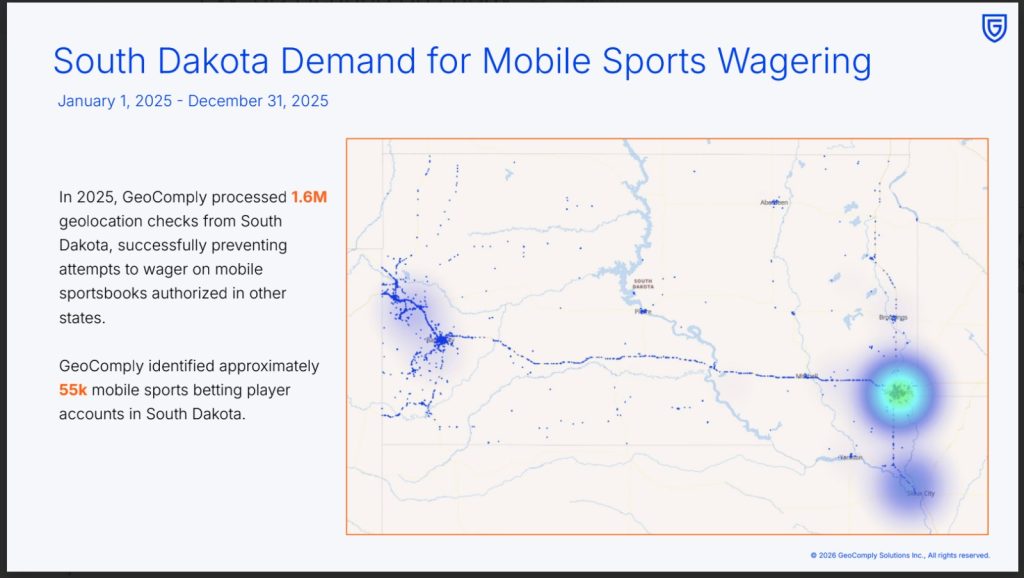
Consultant John Pappas on behalf of geolocation provider GeoComply logged 1.6 million geolocation checks from 55,000 people in South Dakota last year. And representatives from Deadwood’s gaming association spoke in favor.
The constitutional amendment would go on the November ballot, where it would require approval from a simple majority of voters, and calls for 90% of proceeds to be directed to property tax relief. Online platforms would have to be tethered to licensed casinos. Bill sponsor Casey Crabtree said that the constitutional amendment would allow the state legislature to craft a framework around online sports betting, rather than allowing other groups to draft an initiative that could include a framework that doesn’t work for the state.
There was opposition from the South Dakota Catholic Conference, and others. “Problem gambling is a form of enslavement,” a representative from the Catholic Conference told the committee. “This is why we believe that addictive kinds of gambling like the one proposed should not be enshrined in the South Dakota constitution.”
In other news …
Here’s a look at the status of other active bills around the U.S.
Alabama: Sen. Marika Coleman made good on her promise last week to file a wide-reaching but simple gambling expansion constitutional amendment. Tuesday, she dropped SB 257, which would send the decision to add sports betting, casino, and lottery in a state that currently only has in-person tribal casinos, to the voters. The proposal has no framework, and voters would just be deciding yes or no. Should it get approved, lawmakers would then be tasked with developing a framework. On the sports betting side, it’s not clear if a new law would include retail and online sports betting or just retail. A constitutional amendment requires a three-fifths majority in the senate and the house. If approved, it would on the November 2026 ballot.
Alaska: A legal sports betting bill carried over from the 2025 session got a new sponsor last Friday, which may indicate renewed interest. Rep. Mike Pax became the second champion of HB 145, which would legalize online sports betting at a 20% tax rate. The bill would allow for betting on college and professional sports, including proposition bets. The bill does not yet have a committee assignment.
Arizona: A bill that would eliminate the definition of “official league data” and change the requirements for where sportsbooks can get data was filed Thursday and assigned to the Senate Regulatory Affairs and Government Efficiency and Rules Committees. No hearing date has been set. SB 1801would remove the requirement to use “official league data” and would require data providers to offer data per sport or league rather than as a bundle.
Illinois: Carried over from 2025, SB 2667 would add “awards show” to the definition of legal sports betting, and was assigned to the Senate Gaming, Wagering, and Racing Committee Wednesday. In the proposal, awards shows are defined as the “Emmy Awards Show, the Grammy Awards Show, the Academy Awards Show, the Tony Awards Show, or any other live competition or talent contest.” Bill sponsor Sen. Sara Feigenholtz included emergency language in her proposal, meaning it could go into effect sooner than later if it passes.
Louisiana: Parishes that initially voted against legalizing sports betting could get another shot if HB 72 gets legs. Filed Tuesday, the three-page bill would allow “governing authorities” in the nine parishes that did not approve legal online sports betting in November 2020 to put the question to voters again. The bill was referred to the Committee on Administration of Criminal Justice, but does not have a hearing date.
Maine: A trio of gambling-related bills, including one that would ban credit-card funding for wagering accounts, were pulled Wednesday from the Joint Veterans and Legal Affairs Committee work session agenda in Maine. A bill that would ban sweepstakes, and one that would regulate daily fantasy sports were also stricken from the agenda.
Maryland: SB 639, which would expand the definition of sports betting to include historical horse racing machines, was filed Thursday in Maryland. The bill would allow some sports betting licensees to add the machines. The bill is the 2026 version of SB 982, which had several hearings in 2025, but the state’s biggest casino operators oppose the idea. The bill is set for a hearing the Senate Budget and Taxation Committee Feb. 25 at 1 p.m. local time. The machines would only be allowed at video lottery locations, horse race courses and OTBs, and at the Maryland State Fairgrounds at Timonium, but not Las Vegas-style casinos.
Missouri: With the Kansas City Chiefs set to leave the state in favor of Kansas, a constitutional amendment that would alter the definition of “professional sports team,” by removing the National Football League from the list was assigned to the Senate Appropriations Committee Thursday. Should SJR 109 get on the November ballot, it would require 57% of voters to approve it to become law.
The Kansas City Chiefs are the only NFL team in the state after the St. Louis Rams moved to Los Angeles in 2016, and the Chiefs are set to leave the state for a new stadium in Wyandotte County, Kansas in 2031.
Nebraska: A pair of initiative proposals filed by the sports betting industry last month are hung up, according to Nebraska Public Radio, which reported that the secretary of state has not yet approved the language. According to the report, one of the petitions includes language allowing for two digital skins, or platforms, for each licensed casino. The petitions were filed by the Sports Betting Alliance, which is comprised of bet365, BetMGM, DraftKings, Fanatics Sportsbook, and FanDuel.
InGame previously reported that the proposals include a 20% tax rate and that a portion of tax revenue will be directed to property tax relieft.