

The Massachusetts Gaming Commission (MGC) Thursday voted to require operators to inform bettors if they are being limited, and the operators will likely have to explain for what reason and in what markets.
The commission voted during its meeting to accept a proposed update that will go out for public comment before being promulgated. The proposed regulation does not address what those limits might be.
The MGC is the first regulator in the U.S. to consider requiring operators to inform bettors that they are being limited. Currently, in all jurisdictions, operators may limit bettors with no notice.
Commission staff suggested two updates to the Rule 235 CMR 238.30:
Option A: (11) Procedures to provide timely notice to a patron that their wagering activity has been limited.
Option B: (11) Procedures to provide timely notice to a patron that their wagering activity has been limited, including a specific explanation for the attachment of the limit(s), and identification as to which market(s) are so limited.
There was little discussion, and most commissioners are leaning toward adopting Option B. Whatever proposal the commission accepts will be added as a subsection to the current rule.
From here, the MGC will open a 21-day public comment period, as well as be required to file the proposed change with the secretary of state and file a public notice. The commission will also hold an in-person public comment hearing before its legal division proposes set language for a rule change. It seems likely the process could be completed in the first quarter of 2026.
Caesars set for adjudicatory hearing
Caesars Sportsbook self-reported that it allowed wagering in Massachusetts with credit card funds accepted in other U.S. jurisdictions. Between Oct. 15-28, Caesars allowed 88 wagers by 35 patrons for a total of $1,256.07. Funding accounts by credit cards is banned in Massachusetts.
Though this is the first such violation for Caesars, the MGC has previously come down hard on other operators for allowing credit card funds to be used in the state, having fined DraftKings $450,000 in July after repeated violations. DraftKings went on to ban credit card deposits across its U.S. platforms.
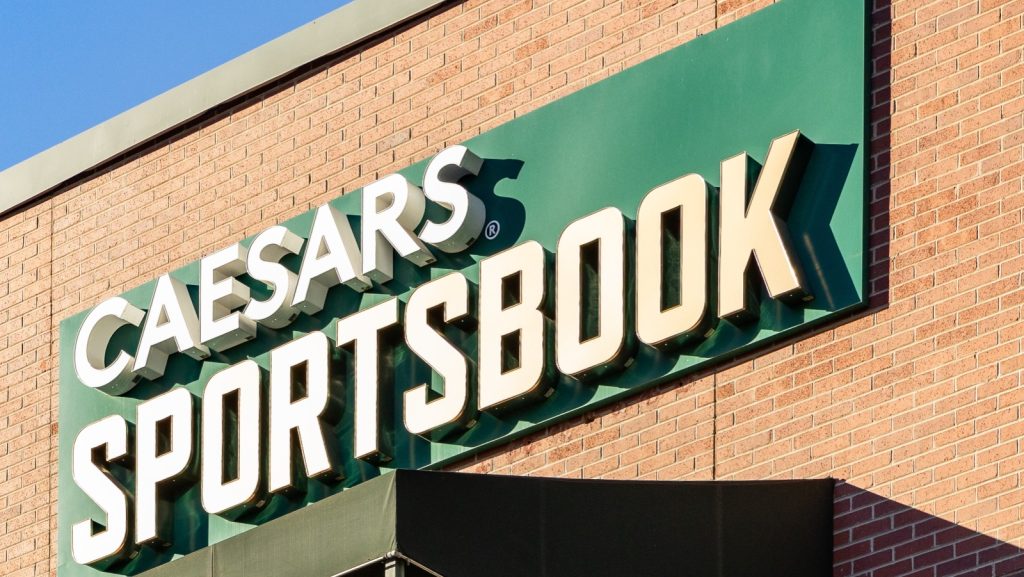
With the DraftKings issue clearly still top of mind, the commission opted to set an adjudicatory hearing for Caesars rather than instruct the state’s Investigations Enforcement Bureau (IEB) to recommend a fine without a hearing.
“We levied the harshest penalty in the United States on this issue,” commission chair Jordan Maynard said. “I am not going to connect the two issues, but that operator went on to nationally get rid of credit cards off their platform. If that doesn’t show you how impactful the commission can be when it needs to be …”
The IEB told the commission that it appears the error occurred due to a software update at Caesars and that it was a one-off issue that has been corrected.
DraftKings must pay out on $934,000 win
Also at the meeting, the commission declined to allow DraftKings to void a series of wagers made during baseball’s American League Championship Series.
DraftKings asked for the right to void due to a technical error that allowed a patron to make 27 parlay wagers (24 winners) that included combining correlated markets on MLB player Nathan Lukes’ hits during the series at mistakenly inflated odds. DraftKings self-reported, took down the markets, and requested a void of the correlated lesser markets. The bettor wagered $12,950 for a payout of $934,147.83. DraftKings’ proposal to remove the markets would have resulted in a payout of $84,242.53, as well as $11,500.00 returned in voided bets.
The issue also came up before regulators in Pennsylvania, which approved the void, and New Jersey, which did not.
The issue was caused when Lukes was “incorrectly designated as a non-participant” by a DraftKings employee. In presenting the matter to the commission, MGC sports betting compliance operations manager Andrew Steffen said, “While there is no direct evidence that the patron knowingly exploited the error, the repeated placement of similar wagers may suggest awareness of unusually favorable opportunity.”

DraftKings’ Pete Harrington argued that the patron did exploit the error and that it was “fundamentally unfair” to other patrons. Harrington said that the patron got higher odds while not accepting any additional risk, and that with this patron it “was fairly clear they knew what they were doing, and the actions were an extreme deviation from standard behavior.” The deposits, Harrington said, exceeded the customer’s lifetime deposits, doubled the handle, and shared this information with a relative in New Jersey, who also wagered.
“They took purposeful efforts to evade our controls, they engaged in repeat betting, they placed 27 wagers with the correlating markets,” Harrington said. “The system is set up to prevent repeat wagering, and the way they evaded it was placing high probability selections along with the error.”
DraftKings argued that its house rules clearly address this type of issue and suggested the company would pay out the wagers in a way that reflects a more “honest” bet.
Commissioners voted to decline the void for varying reasons, including the belief that DraftKings should have caught the error before it went live and that the company did not provide enough information to the MGC.