Ohio lawmakers continue to push back against the state’s sports betting laws, and the latest attempt came Wednesday morning when House Republicans announced the “Save Ohio Sports Act.” The promised package of proposals would eliminate online sports betting, which was legalized in December 2021 and launched on New Year’s Day 2023.
Reps. Gary Click, Johnathan Newman, and Riordan McClain held a press conference and outlined a bill that would ban sports betting online but continue to allow it in person. The package would also make prop bets, parlays, and in-game betting illegal and prohibit any betting on college sports. In addition, the proposal would limit how much and how often those in the state can wager, ban credit card funding of accounts and promotions, and tighten up advertising rules.
The sports betting industry will surely oppose the proposal and argue that such limitations will only push bettors back offshore, where there are no consumer protections, responsible and problem gambling programs, or limits of any kind. In addition, the state stands to lose tens of millions of dollars per month in tax revenue.
The Ohio Casino Control Commission (OCCC) last week released its February revenue report, which showed that of the $69.8 million in revenue for sportsbooks, just $372,550 came from retail sportsbooks. In terms of tax revenue, the state collected about $14 million. Without online wagering, that number would have been about $75,000.
In January, operators reported nearly $100 million in revenue, and $43,800 came from physical sportsbooks. Ohio sportsbooks are taxed at 20% of adjusted gross revenue.
Wagering is a political football
Social media response to the proposal was swift — and many responses had little to do with sports betting and lots to do with politics:
On the flip side, the Center for Christian Virtue stood with the lawmakers at the press conference and then offered a press release that reads, in part:
This predatory business model is designed to weaponize data and create lifelong addiction. While Americans are on track to lose $1 trillion in wealth to gambling interests by 2030 — a staggering $300,000 every minute — the human cost of this shakedown is priceless.
Responsible gambling advocate the Campaign for Fairer Gambling (CFG) told InGame that studies in Ohio show that “more than 1.5 million individuals are impacted by gambling addiction. The state experienced a 55 percent spike in helpline calls after the first year of legalized sports betting.”
But the organization — and likely others in the advocacy space — will likely remain somewhat neutral on the proposal. The CFG and the National Council for Problem Gambling have previously lobbied for stiffer regulation and more problem and responsible gambling funding and programs rather than a ban on betting.
“We applaud the legislature for taking these growing concerns seriously, prioritizing consumer welfare above all else,” Brianne Doura-Schawohl, director for the CFG, said. “We at the Campaign for Fairer Gambling look forward to engaging in a meaningful dialogue to find a pathway forward where sports betting can be an enjoyable recreational activity with minimal social harms.”
Ohio has been a betting battleground
Since sports betting went live just over three years ago, legal betting in Ohio remained a key topic in Columbus. Within six months, Gov. Mike DeWine pushed through a doubling of the betting tax from 10% to 20%. He tried for a second increase in 2025, but lawmakers did not follow through. Also in 2025, Sen. Louis Blessing introduced a bill that would add an additional 2% tax on handle, but it did not move.
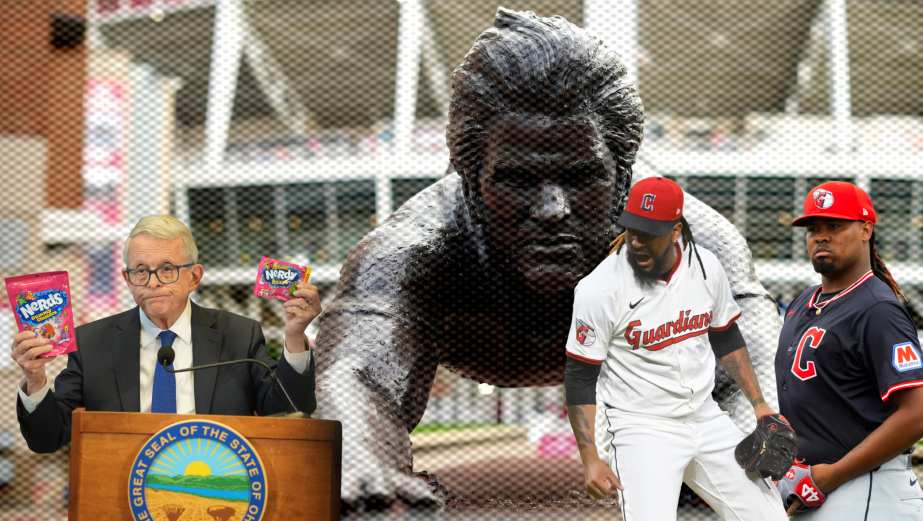
Since two Cleveland Guardians players were indicted for fixing pitches, DeWine has been lobbying for changes to Ohio’s sports betting law and regulations. Pitchers Emmanuel Clase and Luis Ortiz were charged in November with wire fraud conspiracy, honest services wire fraud conspiracy, conspiracy to influence sporting contests by bribery, and money laundering conspiracy. Court documents detail relationships with bettors in which Clase, in particular, alerted bettors to what pitch he would throw at a certain time, allowing them to microbet on legal platforms, which in turn flagged the suspicious activity.
DeWine last summer called for a ban on pro prop bets. He has also been vocal supporting the NCAA’s national push to eliminate betting on college players and was a key player in Major League Baseball’s decision to put limits on the amount bettors can wager for microbets.
According to the Dayton Daily News, language for the new proposal is being massaged. It’s not clear when the package of bills will be filed. There is no crossover deadline in the Ohio Legislature, which is in session year-round.