Five years after Georgia House Democrats pulled their votes from an online sports betting bill over redistricting, the issue remains a political football in the biggest non-legal wagering state not named California or Texas.
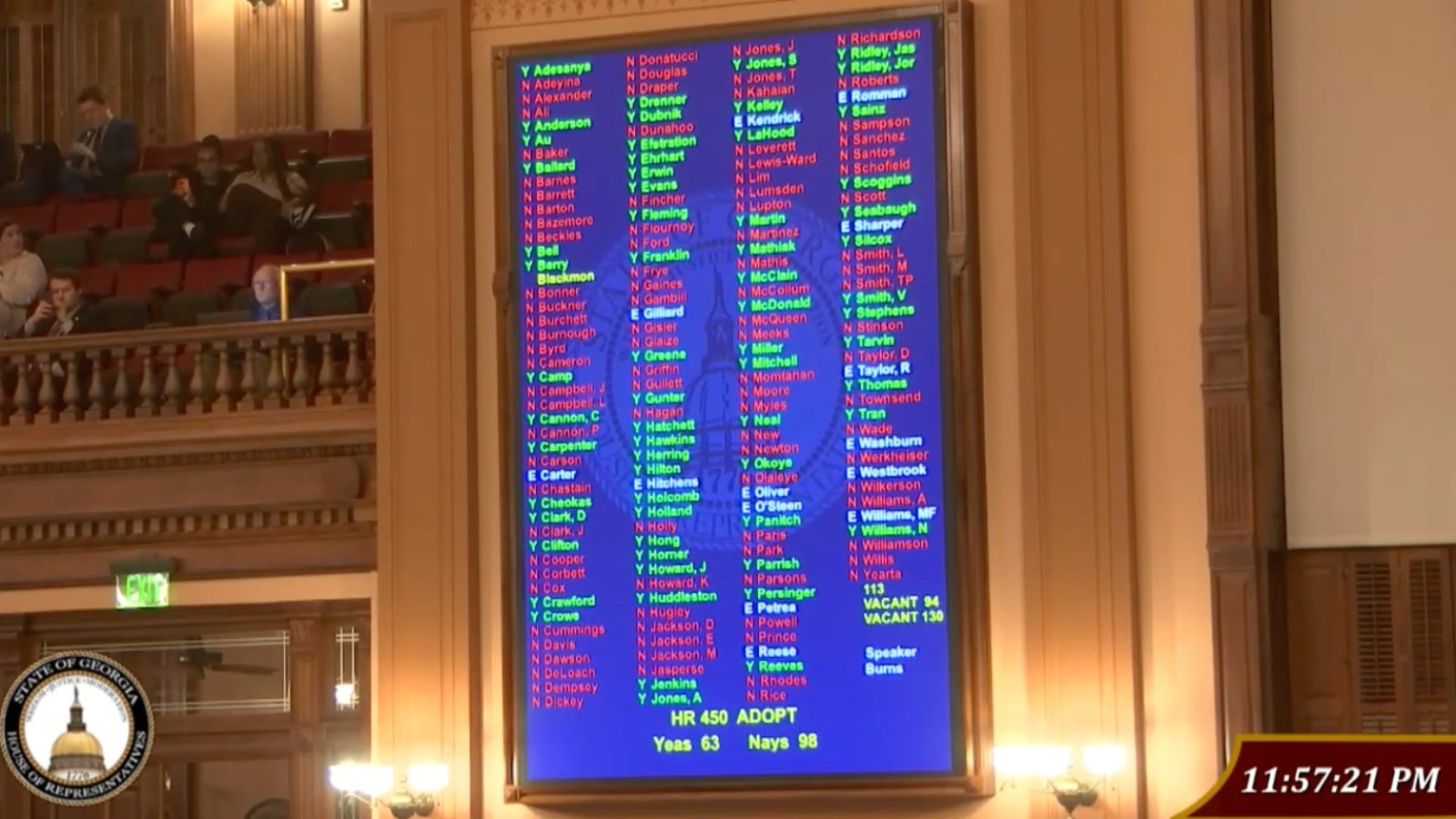
Late Friday night, lawmakers again killed the issue, this time because how proceeds from legal betting should be spent became a partisan issue. After a passionate 30-minute debate on the House floor on the final day that bills could be sent from one chamber to another, HR 450, failed, 98-63.
Georgia lawmakers argued that citizens want legal sports betting — a December 2024 University of Georgia poll showed that 63% of those surveyed support legal sports betting, and the number rose to nearly 80% if tax dollars would be used to fund the state’s HOPE scholarship program. In addition, they said, three of Georgia’s five border states already allow it, the illegal market is active, and a legal market could bring in $200 million in annual tax revenue.
The HOPE Scholarship program — Helping Outstanding Students Educationally — was founded in 1983, and offers merit-based tuition assistance to high-achieving Georgia residents who attend eligible public or private colleges or universities.
Given the interest in debate, House Speaker David Ralston gave opponents and proponents each 15 minutes for debate.
No collaboration a big issue
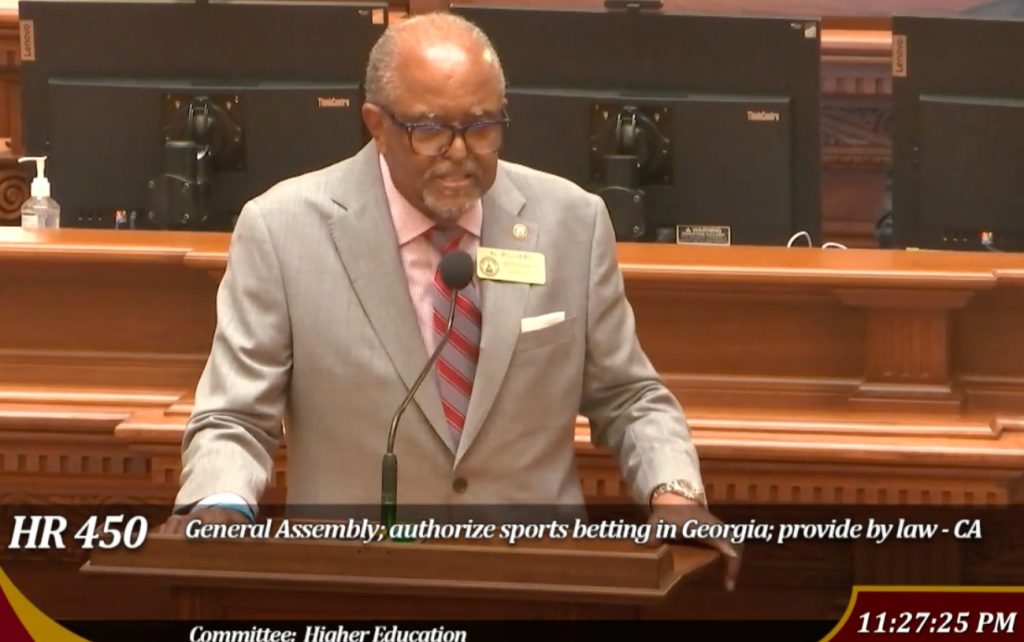
Democrat Rep. Al Williams was one of those who made a spirited argument against — his was centered around the idea that Republicans were pushing the issue and the minority was not consulted. He gave a colorful monologue that included references to being forced to eat certain foods when he was young, but as an adult, he has the right to choose.
Williams, a sponsor of the bill, believes the state should legalize, but he said he was “against the way this was handled” after chiding the Republicans for not seeking Democratic input. Among his more choice words:
“This issue really came up Monday, heated up by Wednesday, and got red-hot tonight. It went from 0 to 100 degrees and I didn’t have a chance to take my winter clothes off.”
“I don’t like to be told the night of, here is your meal. You either eat it or go hungry. But I’ve been hungry before. And I’ve had some good peach ice cream and that will take me through the night.”
“I refuse to be given something that I have had no say in.”
“We can clean this up and make it happen. Won’t happen this year, I don’t believe. And the world is not going to end. The sun’s gonna come up in the morning or the day after when we get home. But it’s coming up.”
Williams said that while there would not be a win for legal sports betting in Georgia this year, there would be a “win for dignity and standing up in spite of pressure.”
The Democrats were seeking to have some of the tax dollars directed to infant mortality issues and to “backfill” losses for emergency rooms.
Questions about tax dollars, addiction
Other opponents cited concerns about addiction, social issues, and whether or not the projected $200 million in annual tax revenue was a valid number. For comparison, the state of Ohio, which taxes gross revenue at 20%, brought in $209 million in 2025.
Among the other arguments against are risk of addiction, social issues, and changing the quality of life in the state.
Republican Rep. Alan Powell — who said he found himself in an “unholy partnership” working with Democrats to oppose the bill — also pointed to the idea that legal sports betting is often considered the foundation for more kinds of gambling, and that offshore operators continue to exist.
“Most of these companies are offshore, out of the state, and you can’t audit them, and that’s the way it is,” he said.
“Putting sports betting on this ballot … it’s a sin not to put the whole [gambling] question on.”
What proponents said
Those in favor of legalizing leaned into arguments around protecting consumers with problem and responsible gaming guardrails, bringing a new revenue stream into the state, and allowing Georgians the opportunity to make the decision for themselves.
“I got curious and began looking online and what I found … is [sports betting is] indeed illegal in Georgia, and online sports betting is happening in Georgia,” Rep. Bethany Ballard said. “In fact, when were discussing it at the dinner table one night, my children were surprised to find out it was illegal in Georgia.”
Ballard went on share how she tried to set up accounts on legal sites, but was immediately locked out. On black-market sites she was able to create an account — even using a fake birthdate that would have made her 15 or 16 years old. “Let’s lock down these bad actors” by legalizing, she said.
Rep. Beth Camp argued that Georgia voters should be allowed to have the chance to make the decision.
“This bill does not legalize sports betting,” Camp said. “It simply allows the people of Georgia to determine if they want it, and how they want it regulated. Let’s ask the voters what they think. That’s my perspective.”
Said Rep. Anissa Jones: “HR 450 simply places the question in front of voters and allows them to decide whether or not sports betting should be legalized in our state through a constitutional amendment. Colleagues, I believe that is the most important part of this conversation … we should not be afraid to trust the people we represent.”
Camp also said she has concerns about who owns offshore platforms, suggesting that it would be “adversaries or violent criminal organizations. There’s just simply no accountability right now.”