Women’s sports in the United States are entering a record-breaking era. From soaring WNBA attendance and rapid NWSL expansion to college programs producing elite-level talent, the momentum has never been stronger. What was once considered niche is now firmly in the mainstream, drawing packed crowds, national media coverage and growing global interest.
This surge reflects a broader shift in how women in sport are valued. Sponsorship deals are reaching unprecedented levels, with major brands investing heavily in athletes, teams and leagues. Media rights agreements are expanding, investors are recognising long-term growth potential, and fans are responding with enthusiasm that continues to break records season after season.
Yet while the national picture is overwhelmingly positive, opportunities are not evenly distributed. The strength of women’s sports still depends heavily on geography. Some states have built powerful ecosystems that nurture talent from grassroots participation through to college scholarships and professional careers, while others lag behind in funding, infrastructure and visibility.
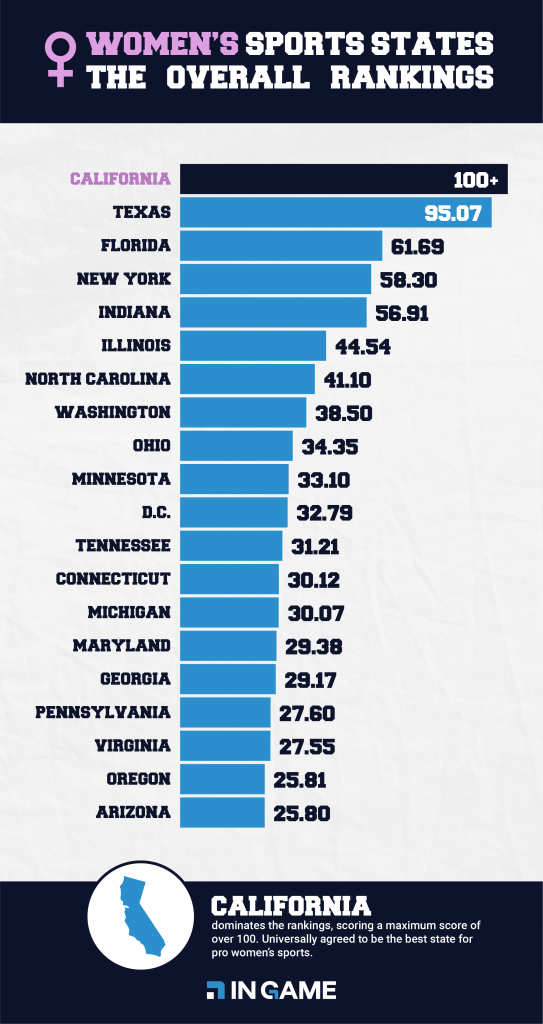
This raises an important question: which parts of the U.S. are truly powering the rise of women in sport? InGame carried out research that reveals which states are most effective at turning infrastructure, investment and participation into elite-level outcomes for women in sport. By measuring professional team presence, college excellence, athlete development and fan engagement, the rankings highlight where support systems are translating into real-world success. While several states perform strongly, the data shows a clear hierarchy, with five states achieving very high scores out of 100.
The states converting opportunity into elite success
1. California: 100+
California stands alone as the undisputed leader in women’s sports, achieving a perfect score and establishing itself as the national benchmark. Its dominance is driven by a powerful combination of professional teams, elite college programs and exceptional athlete development pathways. The state consistently produces Olympic-level competitors while maintaining some of the highest attendance figures in the country.
Widely recognized by major publications and governing bodies as the leading state for women in sport, California’s success reflects decades of sustained investment. From grassroots participation to professional franchises, it has created a complete framework that continues to fuel both national teams and global success.
2. Texas: 95.07
Texas ranks second overall, emerging as one of the fastest-growing powerhouses for women in sport. While it may not always be the first state associated with women’s sport success culturally, the data tells a compelling story. Rapid professional expansion, growing fan attendance, and highly competitive college programs have positioned Texas as a major force.
The state’s population growth and increasing investment are boosting opportunities for women in sport, creating stronger pathways from youth participation through to professional careers. Texas is now firmly established as one of the key engines driving national growth.
3. Florida: 61.69
Florida completes the high-growth tier, offering expanding professional representation and strong collegiate foundations. The state has benefited from increasing investment in facilities, athlete development and league expansion, which has translated into measurable success across multiple performance indicators.
As attendance rises and college-to-professional pathways strengthen, Florida is helping to redefine regional leadership in women’s sports, proving that sustained investment can rapidly improve a state’s national standing.
4. New York: 58.30
New York remains one of the most established and respected states for women in sport, consistently recognized among the nation’s elite. Its strength lies in a balance that includes major professional franchises, prestigious college programs, and one of the largest sports media markets in the world.
The state’s visibility, infrastructure and cultural influence continue to support athlete development and fan engagement, ensuring New York remains a cornerstone of the national women’s sports landscape.
5. Indiana: 56.90
Indiana rounds out the top five, reinforcing its long-standing reputation as a major hub for women’s sports excellence. Widely acknowledged as a top-tier women’s sport state, Indiana benefits from deeply embedded basketball culture, elite college programs, and strong fan support.
Its consistent production of elite athletes and sustained attendance figures demonstrate how focused investment and strong sporting traditions can create lasting success for women in sport.
A clear hierarchy, but nationwide momentum
Beyond the top five, states such as Illinois, North Carolina, Washington, Ohio and Minnesota continue to deliver strong outcomes, reflecting the growing national depth of women’s sports. However, the gap between the very top and the rest highlights how critical sustained investment, infrastructure and cultural support are in shaping long-term success.
The index ultimately shows that while women in sport are thriving nationwide, certain states have a particular interest in women’s sports. These leaders are not just benefiting from growth, as they’re also actively influencing the future of women’s sports in America.
Professional presence is the foundation of elite success in women’s sports
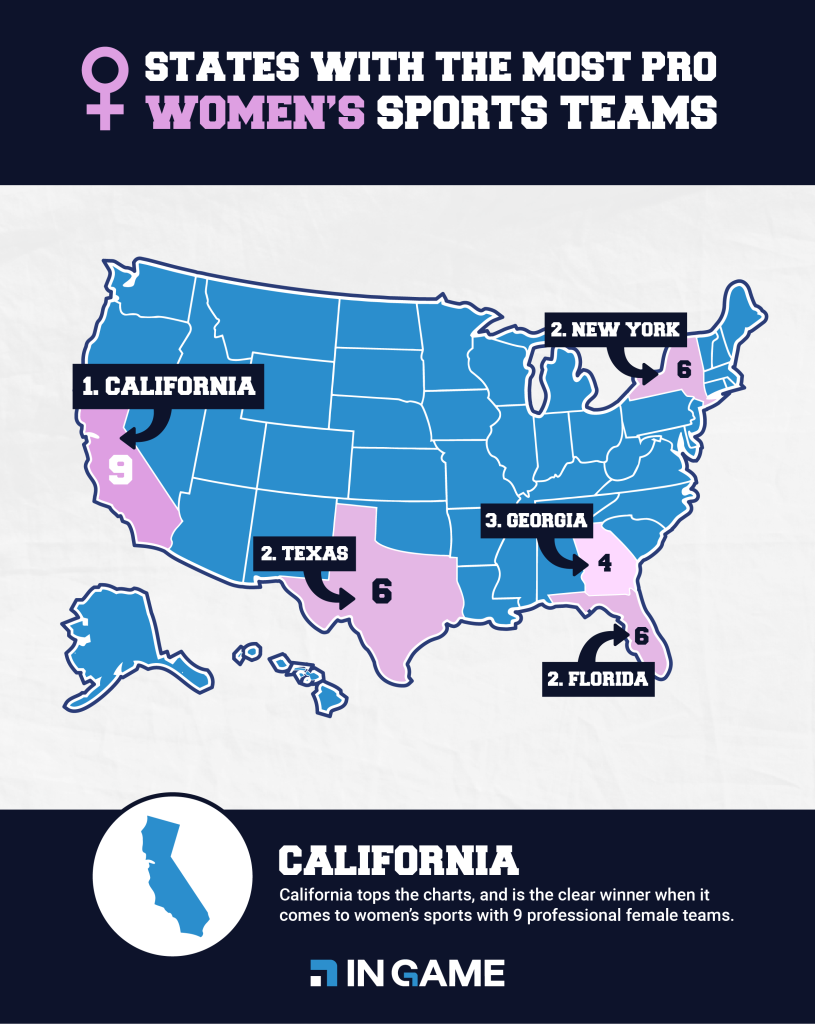
One of the clearest factors separating the top-performing states is the strength of their professional presence. States that rank highest in the index consistently benefit from a greater number of women’s professional teams, particularly across major leagues such as the WNBA and NWSL. These teams create visible career pathways, inspire the next generation and improve the overall profile of women in sport.
California’s leadership is strongly supported by its unmatched professional footprint, with nine women’s professional teams across major leagues. This concentration provides athletes with more opportunities to compete at the highest level while also strengthening fan engagement, media coverage and commercial investment. The presence of multiple teams across major cities helps to reinforce California’s position as the national epicentre of women’s sports.
Meanwhile, Texas and Florida are rapidly closing the gap. Continued league expansion and growing investor confidence have brought new professional teams to both states, increasing opportunities for athletes and boosting regional visibility. As professional franchises expand into new markets, these states are building stronger foundations that support sustained growth and long-term success for women in sport.
Fan momentum and cultural visibility in women’s sports
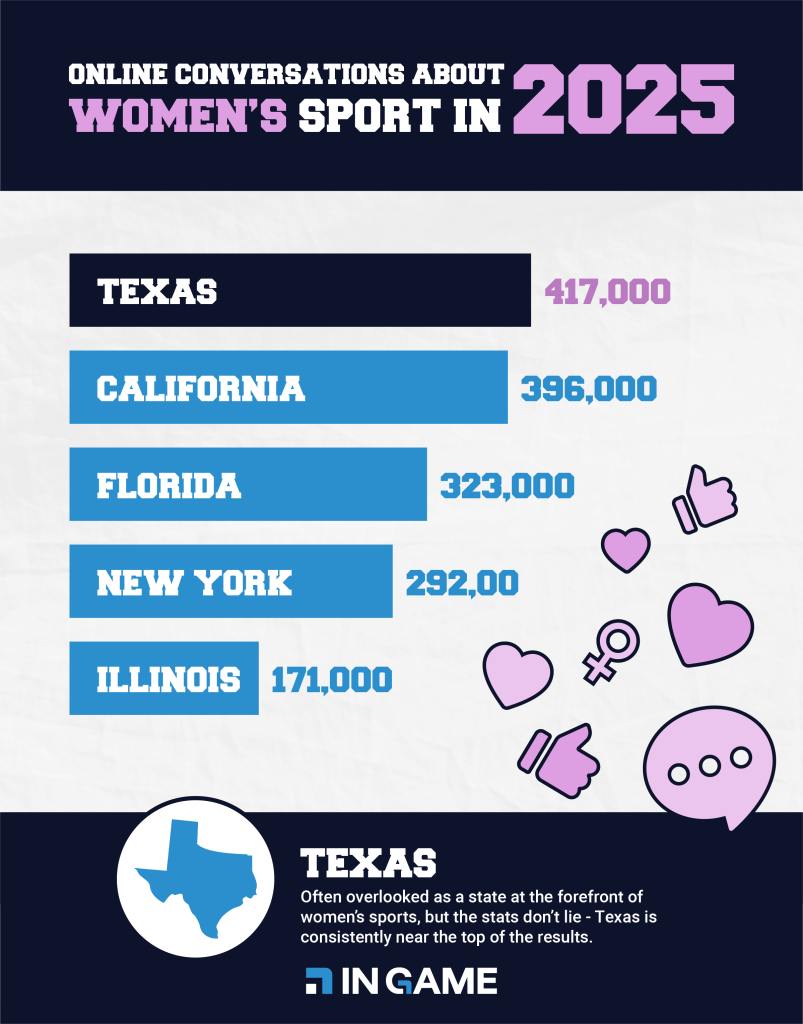
Fan support is one of the most powerful forces driving the continued rise of women’s sports, and the index shows a clear link between engagement levels and overall performance. States ranking highly consistently demonstrate strong fan interest, measured through online conversations, media attention and broader cultural relevance. This visibility not only reflects current success but also helps fuel future investment, sponsorship and expansion opportunities for women in sport.
High-performing states generate significantly greater volumes of online discussion around professional leagues, players and major events. This sustained conversation keeps women’s sports in the public eye, helping to attract new audiences while reinforcing loyalty among existing fans. Crucially, this engagement often extends beyond traditional sports communities, becoming part of wider cultural and social conversations.
Texas leads the nation in this category, recording an impressive 417,000 online conversations about women’s professional sport in the past year alone. This level of engagement highlights the state’s rapidly growing influence and demonstrates how strong fan interest can accelerate the visibility and commercial strength of women in sport, supporting both current athletes and the next generation.
Where fans show up the most for women’s sports
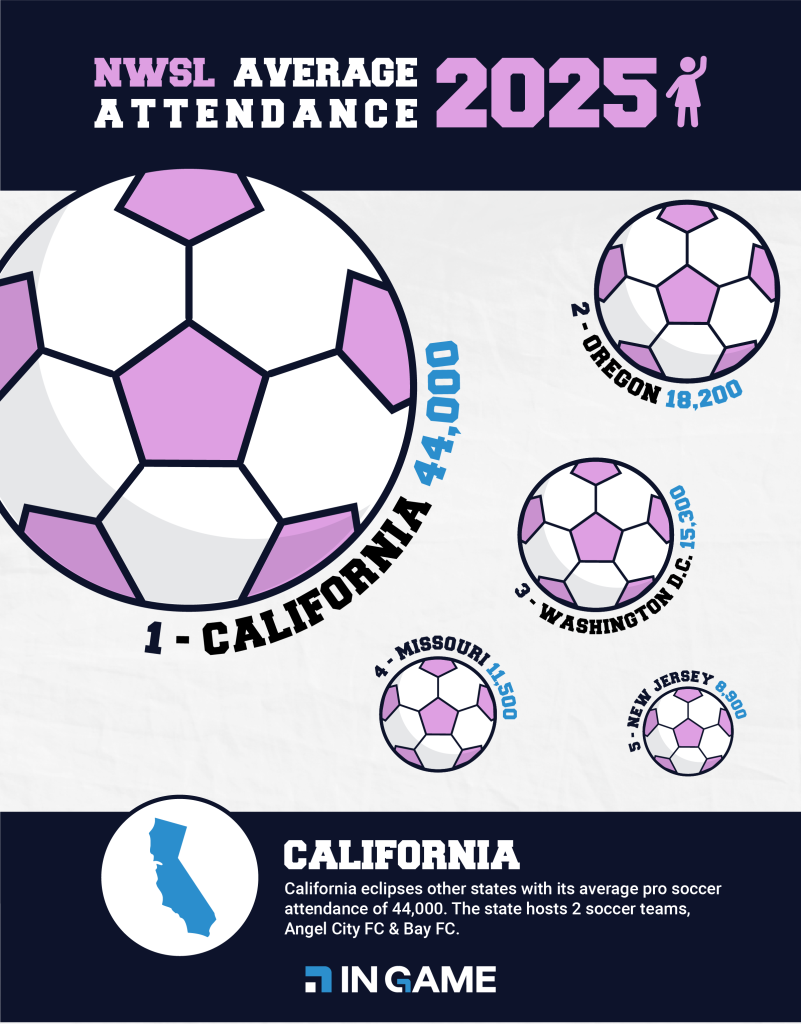
Attendance is one of the clearest indicators of genuine support for women’s sports, reflecting not just passive interest but active fan commitment. To fairly measure market strength, average attendance figures for both the WNBA and NWSL were doubled within the index, emphasising the importance of live crowds, venue demand, and the commercial viability of professional teams.
States that rank highly consistently demonstrate the ability to attract large, often sell-out crowds. These strong attendances create electric matchday atmospheres, increase revenue potential, and signal to leagues and investors that these markets can sustain long-term professional growth.
California once again leads the way, recording the highest average attendance in women’s soccer, with a remarkable combined average of 44,000 fans per game week across Angel City FC and San Diego Wave fixtures. Oregon follows as the second-strongest soccer market, with an impressive 18,200 fans attending matches on average, underlining the state’s deep-rooted support.
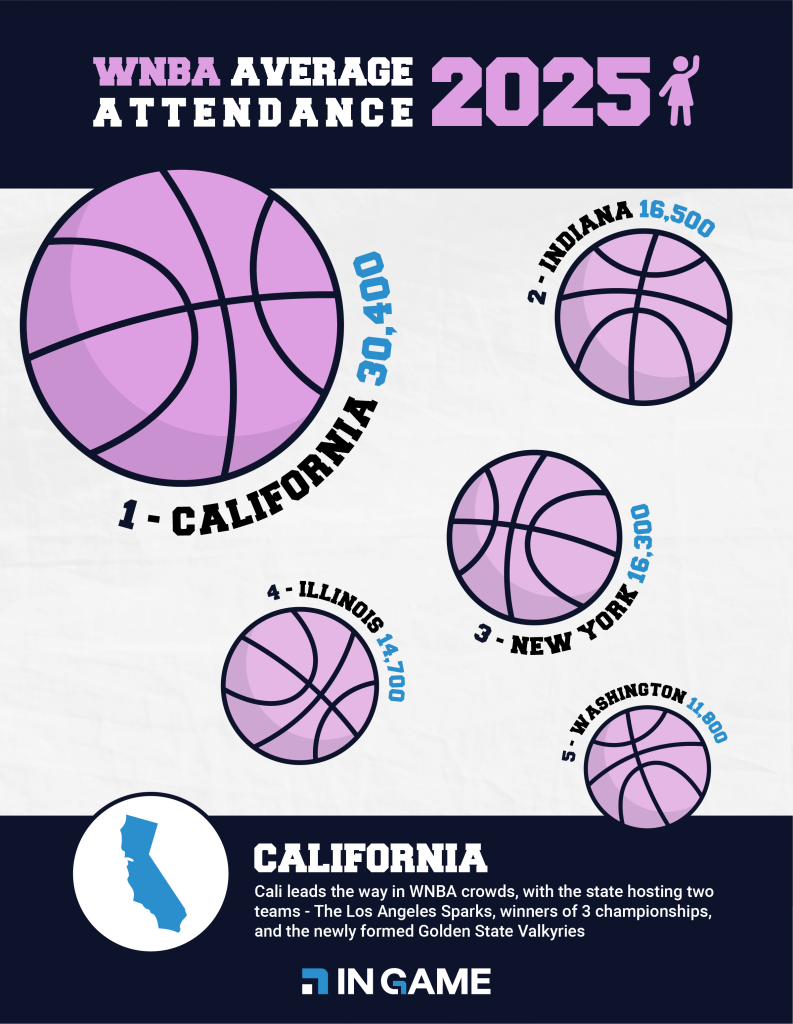
California’s dominance extends to basketball as well. California tops the WNBA attendance rankings, with an average of 30,400 fans attending game weeks across the Golden State Valkyries and Los Angeles Sparks. Indiana ranks second in WNBA attendance, drawing an outstanding average of 16,500 spectators to Indiana Fever games, reinforcing the state’s long-standing reputation as one of the country’s most passionate basketball markets.
Beyond professional attendance, the index also incorporated Olympic gold medal production, the number of elite women’s college programs, and overall state-by-state athletics performance rankings. These factors ensure the final standings reflect not just fan enthusiasm, but the complete network supporting long-term excellence in women’s sports.
The rise of women’s sports is a national success story
Increased investment, stronger college programs, and growing fan engagement mean opportunities for women in sport are expanding rapidly. However, the final rankings show that while progress is widespread, a handful of established and emerging heavyweights continue to lead the charge.
California’s position at number one will come as no surprise. Long recognized as the country’s premier destination for women’s sports, its combination of professional teams, elite college programs, and Olympic athlete production firmly cements its leadership. Texas, meanwhile, ranks second overall, which you may not have expected. Yet with an extraordinary volume of online conversations in the past year alone, the data highlights just how quickly Texas is becoming one of the most influential states for women’s sports.
Further down the rankings, Oregon currently sits in 19th place. However, this position may not reflect its future trajectory. With the addition of the Portland Fire to the WNBA, you can expect Oregon to finish much higher in next year’s rankings, as expanded professional opportunities and fan engagement strengthen its overall women’s sports ecosystem.
Together, InGame’s recent findings reinforce a clear message: while women in sport are thriving nationwide, the states investing most effectively in infrastructure, visibility, and athlete development are influencing the future of the game.
Looking for more coverage and reports on your favorite sports? Head to our news page for all the latest features and blogs.
Methodology
InGame collected various data sources which point towards success/support for Women’s Sports across each state in the U.S.A. Factors such as average WNBA attendance, online conversations about women’s sports and number of elite women’s sport colleges per state were counted and added together.
Each factor was indexed between 1 and 100 during the calculation. Note, however, that WNBA and NWSL attendance were given double weight in the final index to reflect the importance of community support for the two biggest women’s pro sports leagues.