Two senators from across the aisle will introduce a federal bill that would ban prediction markets from offering sports contracts, according to a report.
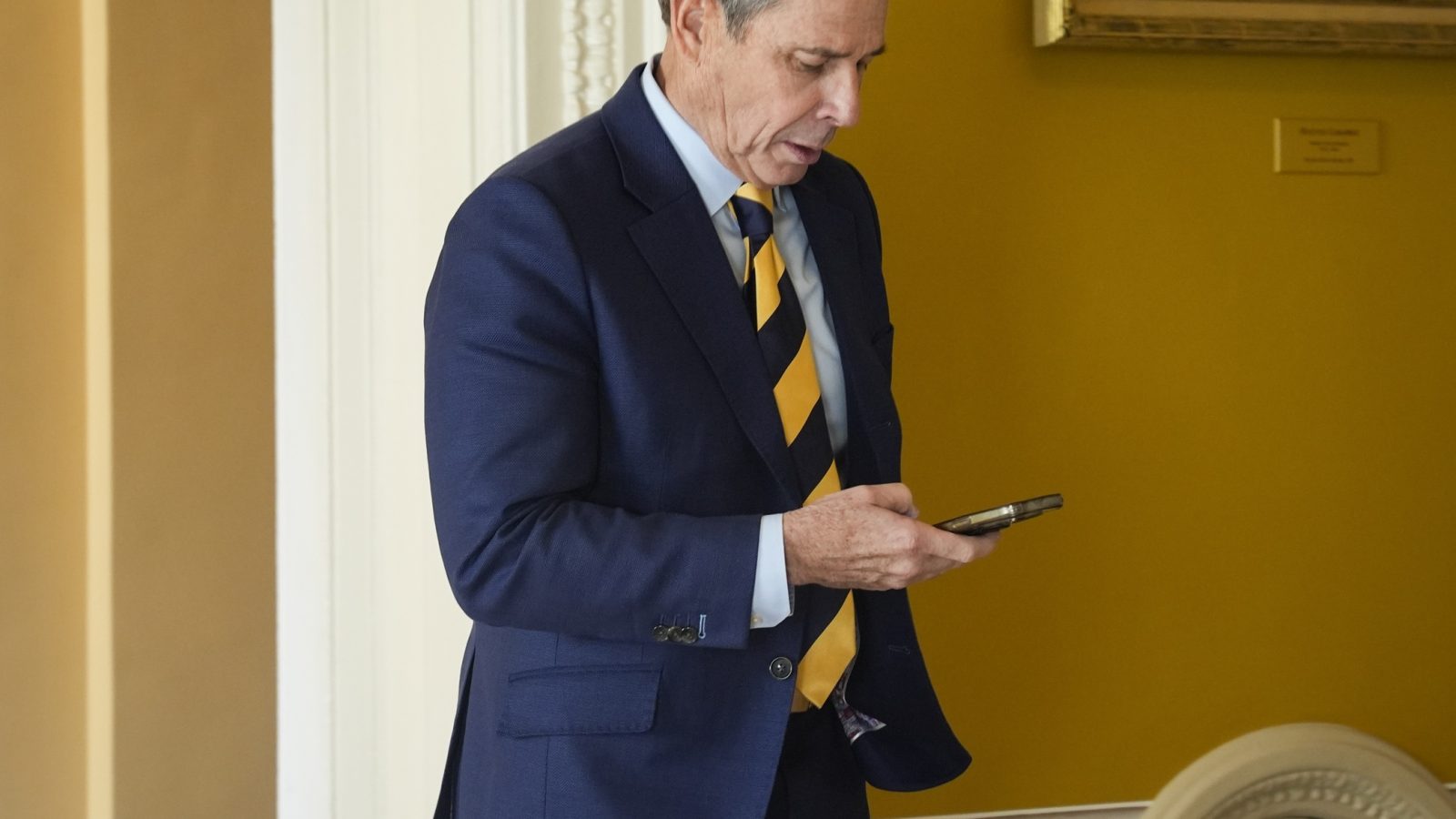
The Wall Street Journal reports that Sen. Adam Schiff and Sen. John Curtis’ bill will be introduced Monday.
“Too many young people in Utah are getting exposed to addictive sports betting and casino-style gaming contracts that belong under state control, not under federal regulators,” Curtis said in the Journal report.
Sports continue to make up the majority of trades at prediction markets like Kalshi, with around 90% of volume during the first two rounds of the NCAA men’s basketball tournament.
The bill text has not been published yet and the report did not detail exactly how it would ban sports contracts, but an amendment to the Commodity Exchange Act (CEA), the existing federal law governing prediction markets, could do the job.
The CEA is somewhat ambiguous on the status of sports event contracts. A “special rule” within the Act says that the CFTC “may” ban contracts involving gaming, but prediction markets like Kalshi argue that it doesn’t have to. Proponents of sports event contracts have also argued that they don’t truly “involve” gaming.
“The CFTC is greenlighting these markets and even promoting their growth,” Schiff said in the report. “It’s time for Congress to step in and eliminate this backdoor, which violates state consumer protections, intrudes upon tribal sovereignty, and offers no public revenue.”
Mick Mulvaney, executive director of anti-prediction market advocacy group Gambling is Not Investing, welcomed the bill.
“Clearly something needs to be done,” he said via a press release. “Prediction market platforms have unilaterally made sports gambling available on every phone in the country, regardless of local laws and in disregard for consumer protections and safeguards that legal sportsbooks implement. The CFTC is attempting to sow confusion about who regulates sports gambling in this country, but the law is clear: sports betting is a state issue.
“I’m glad to see Members of Congress stepping up to ensure that all forms of sports betting are governed by the same state-set regulatory framework. If it quacks like a duck, it’s probably sports betting and it ought to be regulated as such.”
Seventh federal bill
The latest bill is the seventh attempt at federal legislation covering prediction markets this year. Some of them concern the rise of sports contracts and the possibility of casino-like contracts on prediction markets, while others deal with insider trading.
In January, Rep. Ritchie Torres introduced a bill that would limit federal government officials’ ability to trade on prediction markets.
In February, Rep. Dina Titus introduced the Fair Markets and Sports Integrity Act, which would ban prediction markets from offering sports or casino-style contracts.
On March 5, Sens. Jeff Merkley and Amy Klobuchar introduced a bill that would ban federal elected officials from trading on prediction markets.
That same day, Rep. Blake Moore of Utah and Rep. Salud Carbajal of California filed a bill that would make event contracts on assassination, war, terrorism, gambling, and politics illegal.
On March 11, Sen. Richard Blumenthal introduced the Prediction Markets Security and Integrity Act, which would prevent online prediction markets from operating in states unless they are subject to a state wagering program approved by the attorney general. It would also set a minimum age of 21, among other provisions.
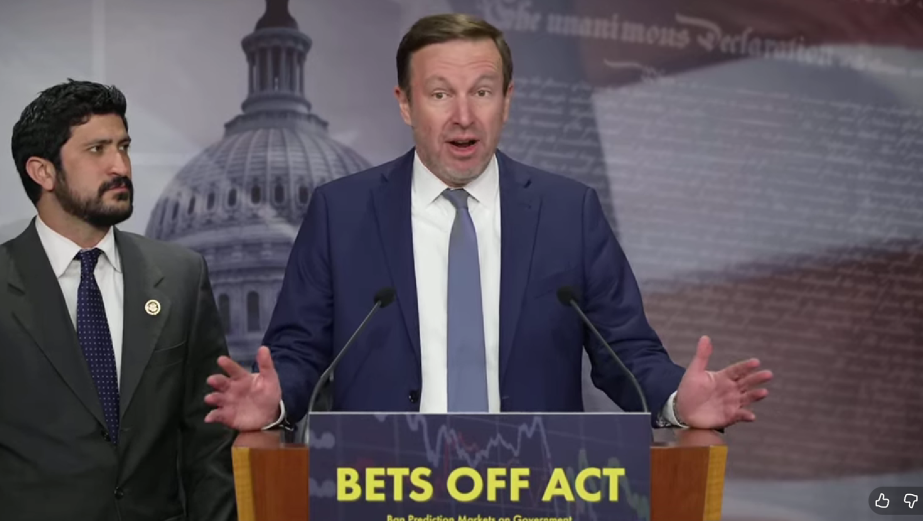
Last week, Rep. Greg Casar and Sen. Chris Murphy introduced the Banning Event Trading on Sensitive Operations and Federal Functions (BETS OFF) Act, which would ban all trades on government action and events where the outcome is already known. Murphy said that these contracts were likely to be “rigged.”
None of these bills have progressed beyond a committee assignment at this point. Their path to the floor remains unclear.