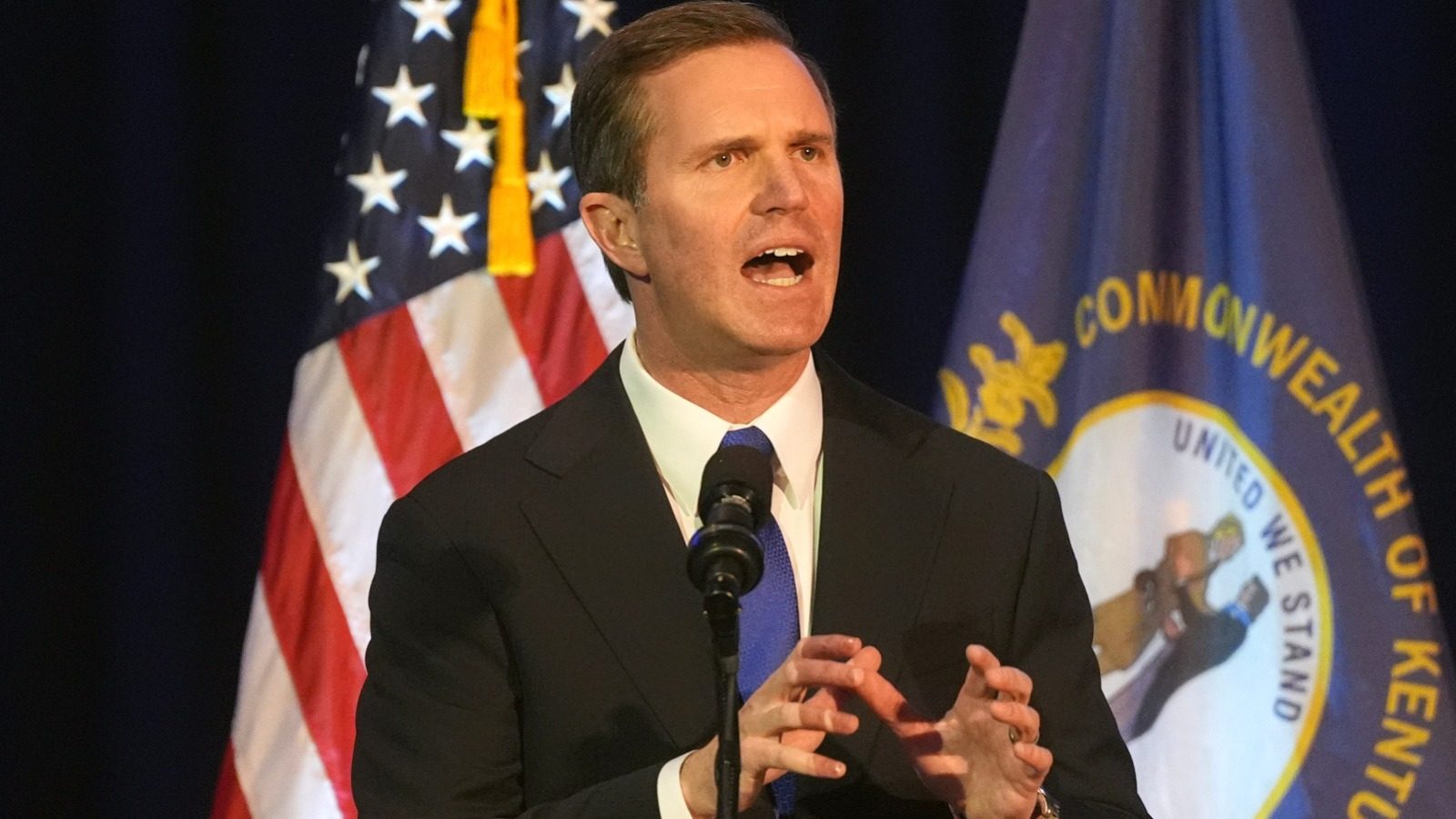
Kentucky Gov. Andy Beshear vetoed on Monday HB 904, the bill that would have made sweeping changes to the state’s sports betting landscape, including increasing the legal betting age from 18 to 21, banning some college player proposition bets, and requiring operators to set a “minimum bet limit” of at least $1,000.
Kentucky, Montana, New Hampshire, Rhode Island, Washington, D.C., and Wyoming allow legal sports betting and gambling at age 18, while all other legal sports betting states set the age at 21. Despite the 18-year-old minimum, many legal betting platforms in Kentucky require customers be 21 or over.
The bill would also have put a regulatory and licensing framework around daily fantasy contests.
The change to prop betting would have been limited — language in the bill called for a ban on prop bets placed on college athletes who play for Kentucky teams “if the successful outcome of the wager is contingent upon the athlete failing to meet a specified statistical threshold or experiencing a negative performance outcome.”
What is a ‘minimum bet limit’?
The bill defines a minimum bet limit as “the amount a bettor can win, not how much can be staked or
collected.”
Had the bill passed, Kentucky would have been the first state to require wagering operators to set such limits. Bet limits have been discussed this year in statehouses and at regulatory meetings around the country, but those discussions have mostly centered around amounts wagered and operator-imposed limitations on bettors.
The proposal would also have taxed gross revenue generated by prediction markets at a 14.25% rate, the same as online sports betting platforms. It would have banned election betting. It would have banned horse tracks (through which wagering operators gain market access) and daily fantasy operators from operating prediction markets for one year, and after that, licensees would also have been prohibited from “being involved with” or offering a prediction product anywhere else in the U.S.
In addition, the bill would have allowed for fixed-odds betting on horse races and made changes to charitable gaming.