
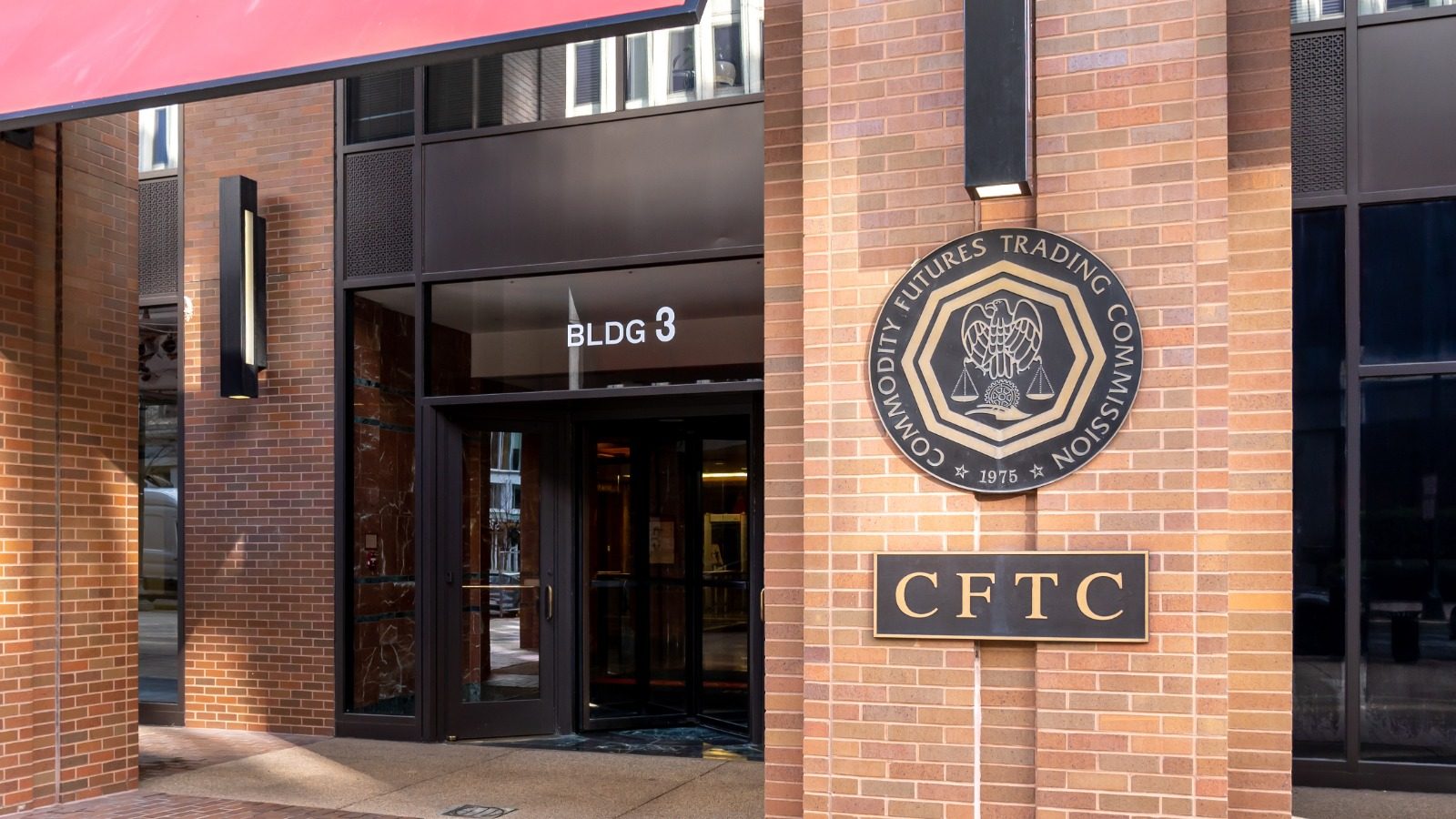
Better Markets Policy Director and Chief Operating Officer Amanda Fischer said Wednesday that opponents of sports event contracts “have the wind at their backs because the law is so clear” and that she sees a lot of “legal deformities” with the current posture of the Commodity Futures Trading Commission (CFTC).
Fischer made the comments during a New Normal webinar titled “The Selig Doctrine — Inside the CFTC’s Handling of Prediction Markets.” Her company monitors government agencies, including the CFTC, in an effort to “de-rig the economy,” according to its mission statement.
Six days after the close of a CFTC public comment period on the application of existing rules and potential future rules or amendments for prediction markets in the U.S., Fischer said the agency received about 1,500 comments. That number, she said, is stunning, because in the six months prior, no other proposed rule change netted more than nine responses.
She found it troubling, though, that it appears the CFTC and Chairman Michael Selig have already determined how to move forward with sports event contracts, which mimic traditional sports betting. And that pathway contradicts how Selig said he would approach the issue during his confirmation hearing.
Fischer: It’s clear CFTC is breaking rules
Fischer said that per the Administrative Procedure Act, government agencies are “supposed to earnestly listen to comments” before revealing or considering further action. Instead, she said, despite clear opposition to the CFTC moving to definitively allow sports event contracts, the agency is “not following that whole process” and Selig is already peddling the agency position that it favors allowing sports event contracts.
“It’s really clear that the CFTC has already arrived at their answer, and is retrofitting the answer to what they have already decided. They are doing this backwards.”
Fischer also stated that by allowing event contracts on sports, assassination, terrorism, and war, the CFTC is clearly breaking its rule 40.11, which bans such contracts.
During his Senate confirmation hearing last fall, Selig did not take a conclusive position on sports event contracts, saying that the issue would play out in the courts. There are now at least a dozen states battling Kalshi and other prediction markets in federal and state courts, and after Selig said in January that the agency would join the fray, it first did so in early April when it filed for an injunction in Arizona.
Can CFTC in current form do its job?
Fischer was the guest of co-hosts Indian Gaming Association Conference Chair Victor Rocha and IGA Executive Director Jason Giles, who have generally voiced on their webinars opposition to the spread of prediction markets. Fischer said the CFTC is tasked with overseeing $500 million in derivatives trading. The agency, which is supposed to have a five-person commission, currently has a single commissioner — Selig — and its staff has been cut by about 25% under the Trump administration.
Fischer wondered how the agency is doing its job in its current state and called for it to halt decision making until the commission at least gets beefed up.
“Better Markets’ concern is that … this is taking away from the CFTC’s core mission, and when they take their eye off the ball, bad things happen,” she said, referring to the 2008 collapse of Bear Stearns and the ensuing financial crisis. Shortly after that, Congress passed the Dodd-Frank Act, which some say is now being massaged by the CFTC and prediction markets as they offer event contracts.
The contracts, which prediction markets say are peer-to-peer as opposed to pitting bettors against the house, currently account for up to 90% of Kalshi’s volume. Fischer said the company and others are papering Washington, D.C. with money as they try to become “too big to fail.”
“They are blocking out the sun with all of the money,” Rocha said.
That tactic, Fischer said, it similar to one used by cryptocurrency companies as they fought for acceptance two decades ago.
“The deluge of money, hiring people close to the White House to work on policy, breaking the law and hoping it won’t catch up with them,” Fischer said, are strategies right out of the crypto playbook. The companies are attempting to “establish enough incumbency that you can’t put the toothpaste back in the tube.
“But the prediction markets are in a precarious position … and they are being greedy in a way that will be unsustainable.”
Prediction markets bad for credit?
In recent months, some prediction companies and the CFTC have been considering 24/7 trading and allowing consumers to trade on credit. There has been pushback from the agricultural community to 24-hour trading, and from many groups on the idea of allowing event contracts to be purchased with credit. Farmers, who have long used futures contracts to hedge against bad harvests, say they do not want to have to monitor those markets around the clock. Prediction markets and the CFTC have responded by suggesting a carve-out for agricultural contracts.
With regard to trading on credit, the gambling industry is moving in the opposite direction with more and more states and operators banning credit card funding.
“[Bank of America] came out with a report flagging the credit worthiness of young people using prediction markets,” Fischer said. She explained that allowing such platforms alongside more traditional wealth building opportunities make the prediction markets look like investments rather than bets. She went on to say that the prediction companies use algorithms to try to push people to trade and they “hide the small print of how the bets are resolved.”
Congressional ignorance, CFTC failure
For Giles, Rocha, and Indian Country, Fischer is a key source who can help navigate what comes next as tribes across the U.S. push back against prediction markets. Giles, who lobbies on Capitol Hill, said he has been frustrated by the ignorance of Congress and how it is getting information about prediction markets.
He said that during a recent closed hearing for which each invitee was allowed one guest, the information sheet provided to committee members “looked like it was written by the prediction markets, and if this is where they are getting their information, that’s a problem. The congressional people have no idea what sports betting is or what that is on a prediction market. It makes the learning hurdle high.”
There are currently 14 prediction market-related bills in D.C., but Giles said all but two are “noise” that shift the focus from insider trading (see the Nicolas Maduro ouster and the Ali Khamenei assassination markets, among others). Fischer said the case in which a U.S. soldier is accused of using insider information raises concerns about why and how an American citizen was able to get onto Polymarket’s global site — and if the CFTC is really able to effectively monitor platforms. Polymarket is in the process of relaunching its U.S. site.
“Rather than proof of concept” for the CFTC, she said, “it shows they aren’t doing their job. When U.S. people are able to access the platform so easily, what is really going on here?”