
Wednesday’s highly anticipated congressional hearing on sports betting integrity netted little new for the gambling industry and was more of an educational moment for the Senate Committee on Commerce, Science, and Transportation’s Subcommittee on Consumer Protection, Technology, and Data Privacy.
Five witnesses testified and fielded questions from the committee, which for the most part was transparent about where it stood on prediction markets and federal oversight of sports betting.
The lead-up to the hearing was more intense than the hearing itself. In the last week, FairPredicts, a “nonpartisan market integrity watchdog” that says its mission is “holding the prediction market industry accountable,” launched, and the Blue Ridge Times resurfaced reporting that Harry Levant, a responsible gaming advocate, pled guilty to 13 felonies and stole $2 million from clients at the height of his addiction.
It’s unclear who is behind FairPredicts, which, per a social media post by Mick Bransfield, would not reveal where its funding comes from. Per NBC News, the group “launch[ed] a six-figure ad buy focused on digital and billboards this week in the Washington, D.C., media market.”
Levant, a disbarred lawyer, avoided jail time in 2015 and was required to pay restitution, though per the story, he still owes former clients $1.7 million. Levant has been Congress’ face of problem gambling for several years, standing up with Connecticut Sen. Richard Blumenthal and others as they push for federal regulation and problem gambling standards for state-regulated legal sports betting. His history was not questioned during the hearing.
The hearing was part of an ongoing effort by Congress to explore how and if it will try to clamp down on prediction markets or put a federal problem and responsible gambling framework in place. There are more than a dozen bills addressing prediction markets and problem and responsible gambling on Capitol Hill, but none have gained traction.
Panelists true to their constituencies
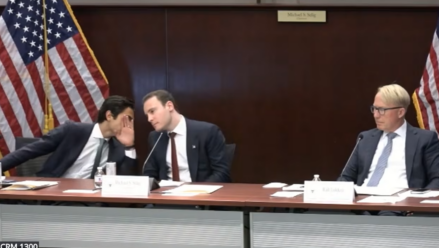
Levant was a last-minute addition to the witness panel by subcommittee Chair Marsha Blackburn, a Tennessee Republican. He was joined by Patrick McHenry, former chairman of House Financial Services Committee, who is now with the Coalition for Prediction Markets; Bill Miller, president & CEO of the American Gaming Association (AGA); Scott Sadin, co-founder and co-CEO of Integrity Compliance 360 Inc.; and Mary Beth Thomas, executive director of the Tennessee Sports Wagering Council.
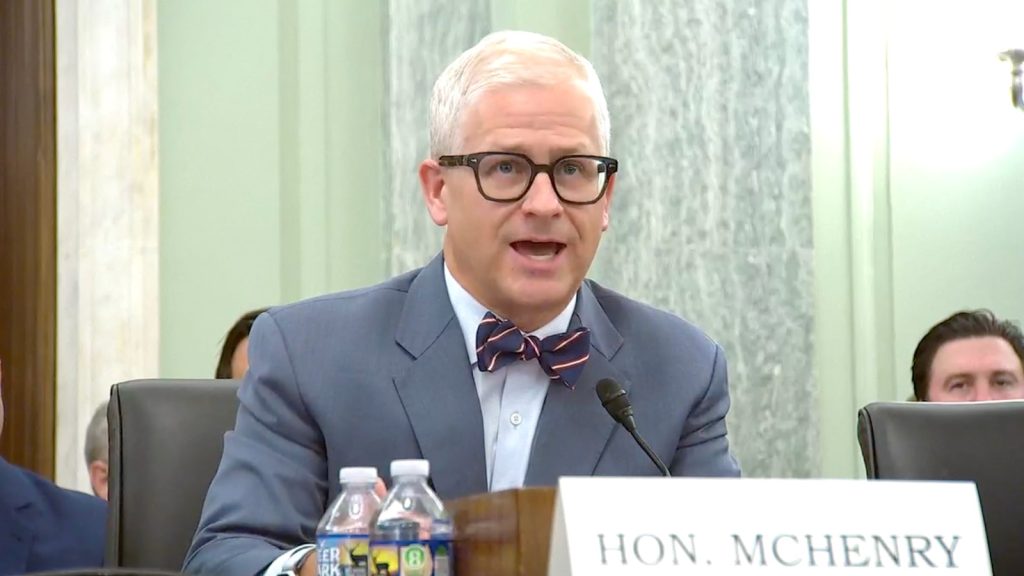
The five witnesses were allowed five minutes each to share their take on integrity in sports betting, and each stated what would be expected given their positions. McHenry said that prediction markets — overseen by the Commodity Futures Trading Commission (CFTC) rather than state or tribal gambling regulators — are different than traditional sportsbooks or casinos and highlighted that the platforms earn their money from fees rather than “consumers losing money.” He also talked about how prediction platforms do not accept microbets, which have been at the center of recent NBA and MLB scandals, and are implementing problem and responsible gambling programs.
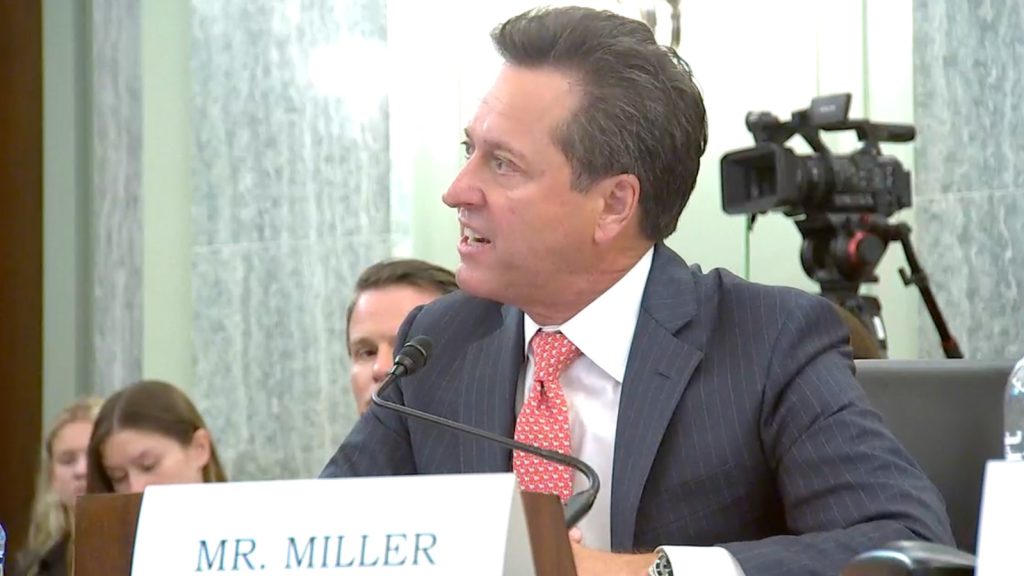
Miller lobbied for state and tribal rights, the 1.8 million jobs created around state-regulated gambling, the comprehensive state frameworks that include everything from know-your-customer to integrity monitoring to tax collection, and how prediction markets are encroaching on state and tribal sovereignty. Of note is how the AGA and the Indian Gaming Association have solidified a partnership to fight against prediction markets. Indian Country was not invited to the hearing, and Miller adeptly fielded questions about and defended tribal gaming.
Sadin educated lawmakers on how integrity monitoring works, and focused on how effective integrity monitoring requires open, trusting relationships between between regulators, sports leagues, sportsbooks, and integrity monitors. He said the “connective tissue” between all groups is imperative for successfully uncovering scandals.
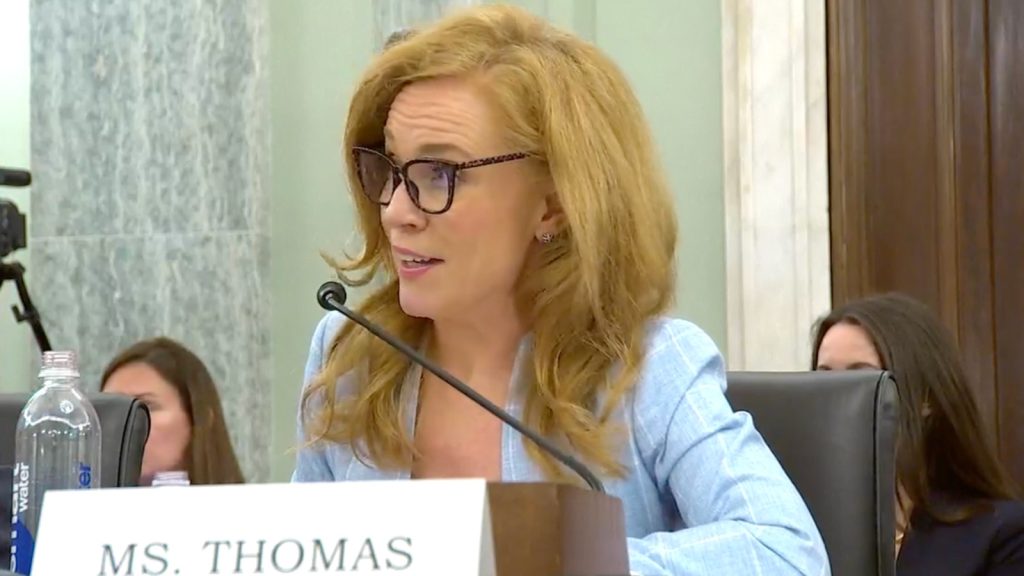
Thomas, whose state offers only online sports betting, gave an overview of how regulation works. Blackburn introduced Thomas as a friend, and her role was clearly to offer the regulator perspective. Thomas reviewed programs in place for integrity monitoring, problem and responsible gaming initiatives, and more.
Miller and Thomas stressed how states and tribes benefit from gambling tax income, which Miller said has been “transformative” for tribes. Thomas pointed to educational programs supported by the tax income and highlighted the state’s commitment to problem gambling. Every state uses its gambling tax revenue for different programs, and Tennessee’s educational programs are just one example.
McHenry on the hot seat
Some of the more pointed questions to the panelists were about advertising and economics.
Blackburn and Colorado Democrat John Hickenlooper pressed McHenry and Miller on the point. Blackburn asked both if their members advertise to minors, and while both said no, Blackburn called them out, saying that social media advertising is how gambling companies and prediction markets get to those under the legal gambling age. Most states have set 21 as the minimum age to gamble, while the CFTC has set 18 as the legal age for trading. Levant said the idea that gambling is disguised as investing is a key issue.
Hickenlooper — who didn’t hide his disdain for the prediction markets or the CFTC’s ability to oversee them — went further with McHenry.
Hinckenlooper: There have been reports that Kalshi is using young social media influencers, as young as 15 years old, to promote its platform to young consumers. Is that true?
McHenry: Not to my awareness.
Hickenlooper: And you wouldn’t sanction that?
McHenry: [No reply]
Hickenlooper: Young, 15-year-old influencers saying why these prediction markets are a useful and valuable investment of the risk of their money.
McHenry: I wouldn’t condone anyone using TikTok, but that’s a separate matter.
Hickenlooper: Let’s put it this way. Does Kalshi have any age restrictions at all on the influencers it works with … in order to influence the audience it markets to?
McHenry: They are one of the member companies for the [Coalition] for Prediction Markets, I can try to direct you to them to answer that question directly.
Hickenlooper: No, I am talking about Kalshi. I don’t want to go through the rigamarole, I mean you’re saying you’re open to conversation, but why is it that these prediction markets, why isn’t Kalshi out in front picking out these issues and saying this is how we’re going to deal with this. … We shouldn’t have to go through hearings and slow it down. Every day that they can stall, they’re going to make more money. I get that. … But if you want to be the responsible supporter, then you need to help them get out in front of this.
McHenry: Well, they are. Our members are onshore, regulated by the CFTC, and they comply with federal law and the regulations, and they have complied with all of the court cases.
Hickenlooper: But the CFTC we know is inexperienced about having any real regulations about sports betting.
No action, but plans to explore more
The two went on to parry about the self-certification process, with McHenry defending the agency and pointing to its power to pull down markets it deems troublesome. To date, that has only happened following public outcry around a “death market.” McHenry also parroted CFTC Chair Michael Selig’s mantra that the CFTC is the “cop on the beat” for prediction markets.
Hickenlooper also asked McHenry about the economic benefit of sports event contracts in particular, but McHenry didn’t directly address that, instead pointing not to the benefit of the contract but rather the economics around a game, including the sale of T-shirts. That issue is a key piece of several of the lawsuits between Kalshi and the CFTC and states.
The two-hour hearing concluded without any clear resolution other than a commitment to continue to explore and potentially address the issue in more concrete terms.
Said Hickenlooper: “I feel like all of the panelists are willing and engaged to fix some of these serious problems.”