LAS VEGAS — A study of 482 college students who are online sports bettors across the U.S. reports that many among the most engaged of them started wagering before their freshman year, with nearly 50% now betting at least two days per week.
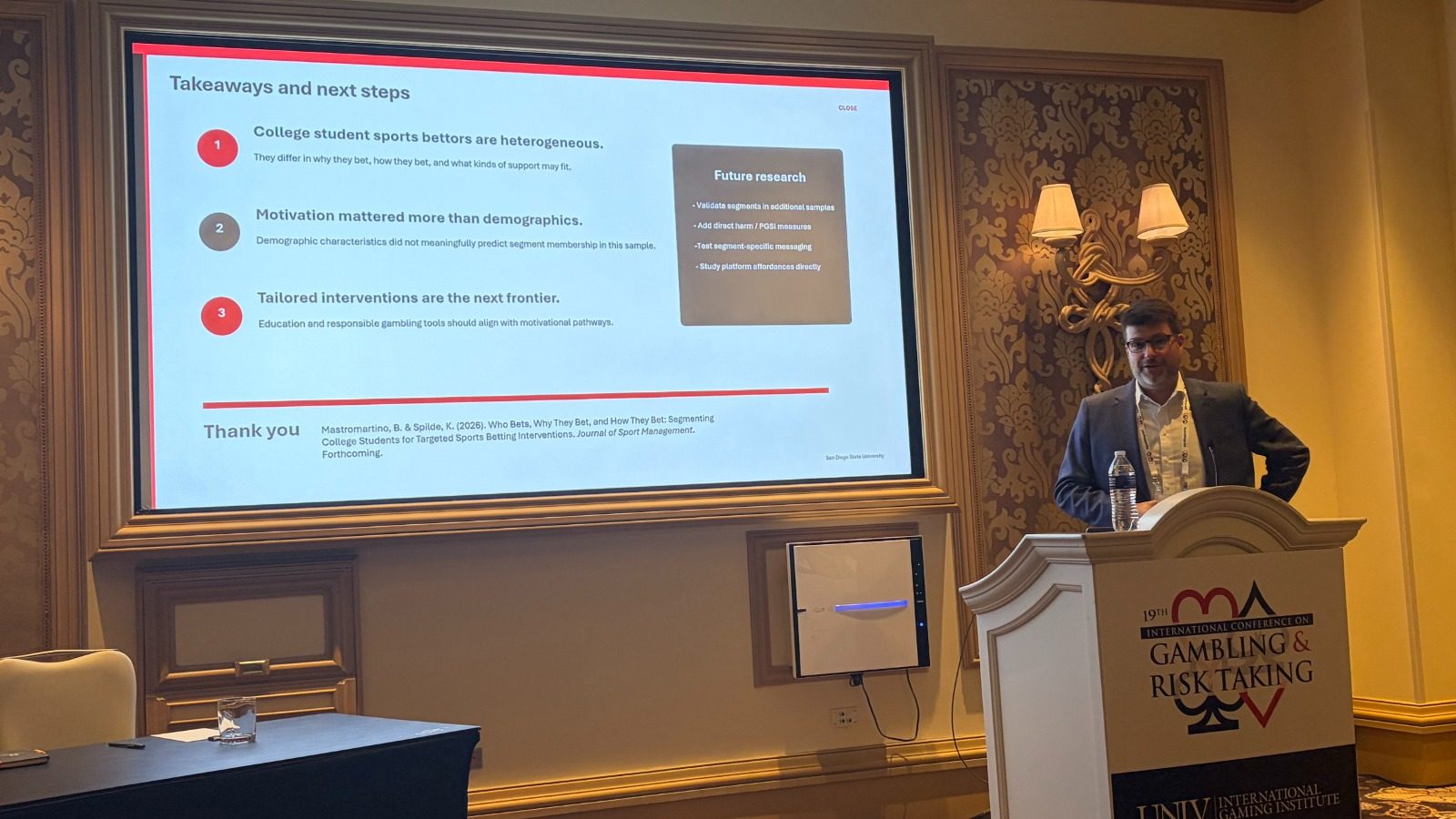
The findings were presented Wednesday afternoon by Brandon Mastromartino, the director of the
Institute on Sports Wagering and Gaming at San Diego State University, with a takeaway that operators and regulators must be more proactive in meeting young bettors where they are in order to effectively address problem and responsible gambling issues. Mastromartino shared the results at the International Gambling and RiskTaking Conference hosted by UNLV’s International Gaming Institute.
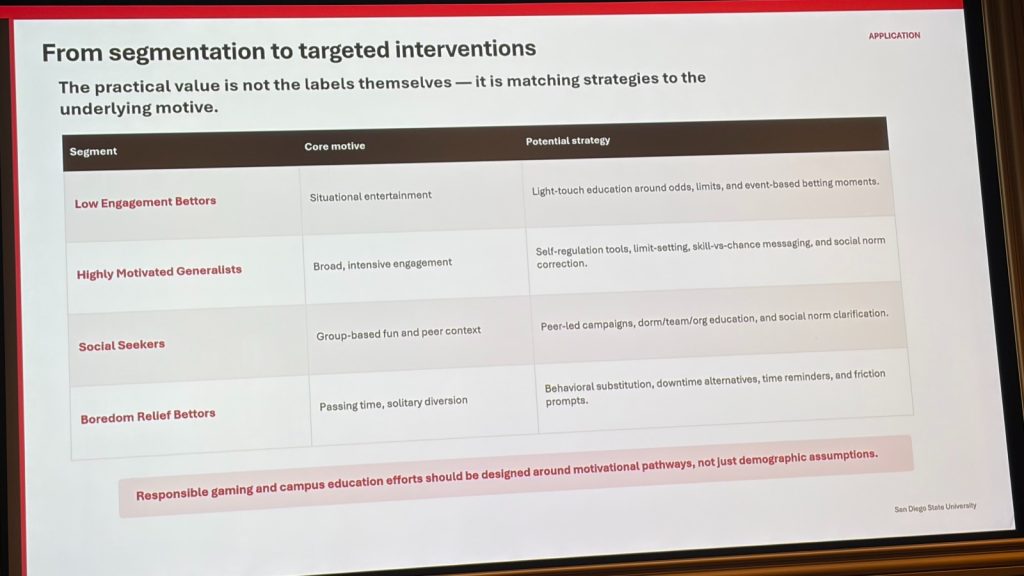
“Higher education should move beyond generic awareness campaigns, use peer networks, and identify boredom-based bettors or event-based risk,” Mastromartino said. He said that “tailored” or individualized interventions are the “next frontier,” and they should address what motivates a bettor to wager.
Mastromartino has submitted the study, titled “Who Bets, Why They Bet, and How They Bet: Segmenting College Students for Targeted Sports Betting Interventions” for publication this year in the Journal of Sports Management.
Young bettors not ‘a single entity’
Mastromartino acknowledged that previous research makes it clear that young men are the most likely demographic to make online sports bets. His study found that within that age group, why and how they bet often differs, and that “motivation” rather than demographics is a key indicator of behavior. Mastromartino and his co-author, Katherine Spilde, a professor and endowed chair of the Sycuan Institute on Tribal Gaming at SDSU, broke respondents into four categories: Low Engagement (65 respondents); Highly Motivated Generalists (166 respondents), Social Seekers (175 respondents), and Boredom Relief (76 respondents).
The Highly Motivated Generalists were the most frequent bettors, with 29.5% saying they bet 2-3 times a week and 15.1% saying they bet daily. The group — 42.2% of whom said they started betting before going to college — is also the most likely to continue to bet. The group, along with Social Seekers, wagers in part for social approval. Of note is that the Highly Motivated Generalists have a wide range of sports betting interests, including international sports leagues and niche sports, while Boredom Bettors tend to bet what they are watching.
Addressing regulators and operators, Mastromartino said that from a regulatory standpoint, identifying a bettor’s motivation can better “inform consumer protections,” and that “young bettors should not be treated as a single entity.” He said because the research shows that there are different motivations, different kinds of support may work.
Parlays the favorite bet type
Here are some additional highlights from the study:
- For all bettor categories but one, the age at which betting peaked was either before the start of college or during freshman year, and it was at its lowest point during senior year. The only exception was the Boredom Relief Bettors, for whom the highest levels of initial engagement were before freshman year or during junior year.
- For Low Engagement Bettors, the bets most often made were parlays (40% of bets) and moneyline (38.5%); for Boredom Relief Bettors, the bets most often made were parlays (59.2%) and moneyline (53.9%); for Social Seekers, the bets most often made were parlays (53.1%) and moneyline (53.1%); and for High Engagement Generalists, the bets most often made were parlays (40.4%) and in-game bets (33.1%).
- All groups bet most often on North American professional sports, while the next most popular sports to bet on were college sports for Low Engagement and Boredom Relief Bettors and “niche” sports for Social Seekers and High Engagement Generalists.
- The average spent betting every month ranged from $26.48 by Boredom Relief Bettors to $70.16 for High Engagement Generalists.
- All groups said they regularly used two to three wagering platforms.