Utah last week joined seven other states that have had at least some success in keeping Kalshi from operating within their borders. Last Tuesday, a U.S. district court judge ruled that the state could enforce its gambling laws to prohibit the platform, though for now it is still available in the state. According to the Associated Press, Attorney General Derek Brown does plan to enforce the laws but has not yet determined the pathway to do so.
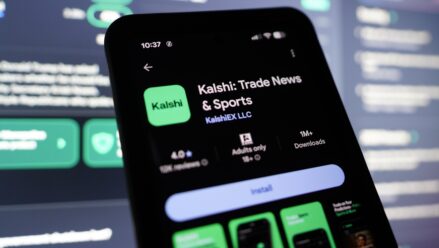
Kalshi, the prediction market that first offered the sports event contracts that mimic state-regulated sports betting, is in federal or state court with at least 15 states and three tribal groups across the U.S. There have been rulings both for and against allowing the prediction market to continue to operate, though the number of decisions against Kalshi has been growing.
U.S. District Judge Robert Shelby’s decision in Utah doesn’t outright ban the platforms, but it does allow the state to impose its strict gambling prohibition if it chooses to prohibit them.
So far, judges in Michigan and Nevada have outright banned the platform and set guidelines for how and when Kalshi must geofence in those states. In several other states, including Maryland, federal courts have allowed states to enforce their laws, but states have agreed not to do so until cases are resolved.
In addition to the Kalshi cases, its federal regulator, the Commodity Futures Trading Commission (CFTC), has sued at least 10 states. In Indian Country, no judge so far has agreed to prohibit Kalshi from operating, but those cases are on a different plane, pitting federal laws against one another.
Below is a look at the status of cases in which Kalshi has sued or been sued.
Rulings that favor states or tribes
Maryland: Last August, a federal judge denied Kalshi’s request for an injunction blocking a cease-and-desist order issued by the state. That meant that the state could have demanded that Kalshi take down its platform, but Kalshi ultimately appealed and the state agreed not to enforce the order until a decision on the injunction is handed down by the Fourth Circuit. Following oral arguments in May, no decision has been issued yet.
Massachusetts: State courts have had differing views on whether Kalshi should be allowed to operate. Though the latest decision seems to favor Kalshi, a previous ruling — which hasn’t been overruled — would prevent Kalshi from operating. But in February, a state court of appeals paused enforcement of the initial injunction as the case moves forward, while cautioning that the decision does not imply “any view on the merits or the disposition of this litigation.” The case remains in process with the state’s supreme judicial court.
Michigan: A state court judge in mid-July extended a a 14-day prohibition on Kalshi offering its products in the state, and Kalshi must now geofence the state out by Aug. 12 or is subject to a $500,000 daily fine.
New York: Last month, the U.S. District Court for the Southern District of New York rejected an emergency bid by Kalshi for an injunction pending appeal. Judge Analisa Torres ruled that the Commodities Exchange Act does preempt some state laws around commodities regulation, but not gambling laws, which opened the door for the state to sue Kalshi in state court. The state did so at the first opportunity, July 31. Depending on how the state court rules, Kalshi could be forced to geofence out the nation’s fourth-biggest state.
Nevada: The gambling capital of the U.S. was the first state to win its case to force Kalshi to cease offering sports contracts in the state. The most recent development is that Kalshi has agreed to use a third-party geolocation service after the state objected that Kalshi’s in-house geolocation service continued to allow bets to be placed from within Nevada. Kalshi is required to have the new geolocation service in place by Aug. 12.
Ohio: A U.S. district court judge in March denied Kalshi’s request for a preliminary injunction after the state sent the company a cease-and-desist letter. Kalshi appealed, and it is still live in the state. Oral arguments were heard in the Sixth Circuit July 30.
Washington: A state judge in late July issued a preliminary injunction against Kalshi, saying that he believes it’s likely that the state will be able to prove that the company is offering illegal online gambling. And last week, per the King County Superior Court docket: “By no later than August 10, Kalshi will implement IP address and residency based geofencing, and by no later than August 26, 2026, Kalshi will implement a multi-source geofencing solution provided through GeoComply, designed to prevent anyone located within the geographic boundaries of the State of Washington from purchasing any event contract, or other contract, instrument or product in violation of the preliminary injunction.”
Rulings that favor Kalshi
Blue Lake Rancheria et al (California): Oral arguments were heard in the Ninth Circuit July 10, and to date the court has not ruled on the case or on Kalshi’s status on the reservations. A U.S. district court judge previously declined to ban the platforms in Indian Country.
Minnesota: After the state became the first in the nation to pass a law banning prediction markets from offering sports event contracts and some other markets within its borders, Kalshi sued. A federal judge in late July issued an injunction to keep the law from going into effect as the case moves forward.
New Jersey: In April, the Third Circuit granted Kalshi an injunction that allows it to continue to offer its platform. The ruling was the first on such an issue by a circuit court, preventing the state from enforcing its gambling laws. The state has indicated that it will appeal this decision to the U.S. Supreme Court, but it has not done so yet.
Tennessee: A federal judge in February ruled in Kalshi’s favor, granting it an injunction that prevented the state gambling regulator from enforcing its rules. Kalshi continues to operate, though the state appealed to the Sixth Circuit. That court on July 30 heard oral arguments in a case combined with one from Ohio.
No ruling on Kalshi’s status
Arizona: The courts have not yet made a decision on Kalshi’s status in the state. Kalshi and the state are arguing in both state and federal court.
Connecticut: The courts also have yet to rule on Kalshi’s status. Last December, a federal court did order the state not to enforce its cease-and-desist letter until a decision was made. Oral arguments were heard in February, but no ruling has been handed down.
Ho-Chunk Nation (Wisconsin): In a case set for trial April 24, 2027, the courts have not made a decision on Kalshi’s status on the reservation.
Illinois: Kalshi in June withdrew a motion for a preliminary injunction at the same time the state agreed not to enforce its gambling laws. Per court documents, because the case is related to a CFTC action and a Coinbase lawsuit, it was reassigned.
Iowa: The courts have not yet made a decision on Kalshi’s status in the state, but on Friday, Kalshi argued before a federal judge that the CFTC and CEA preempt state law. During the hearing, the state assistant solicitor general said the attorney general’s office has yet to take a firm position on whether it sees Kalshi as offering illegal gambling that should be stopped.
Mescalero Apache Nation et al (New Mexico): The courts have not yet made a decision on Kalshi’s status on the reservations. The case was filed in May, and the court is still collecting briefs. The tribe is arguing that Congress never intended for sports event contracts to be offered.
Montana: The court has not yet made a decision on Kalshi’s status in the state, and in June, a new judge was assigned. That judge approved a 60-day stay on all deadlines, and both Kalshi and the state are now required to provide status updates by Aug. 21.
Rhode Island: The courts have not yet made a decision on Kalshi’s status. U.S. District Court Judge Mary S. McElroy heard arguments for and against a temporary restraining order and preliminary injunction Aug. 3, but she has not issued a ruling.