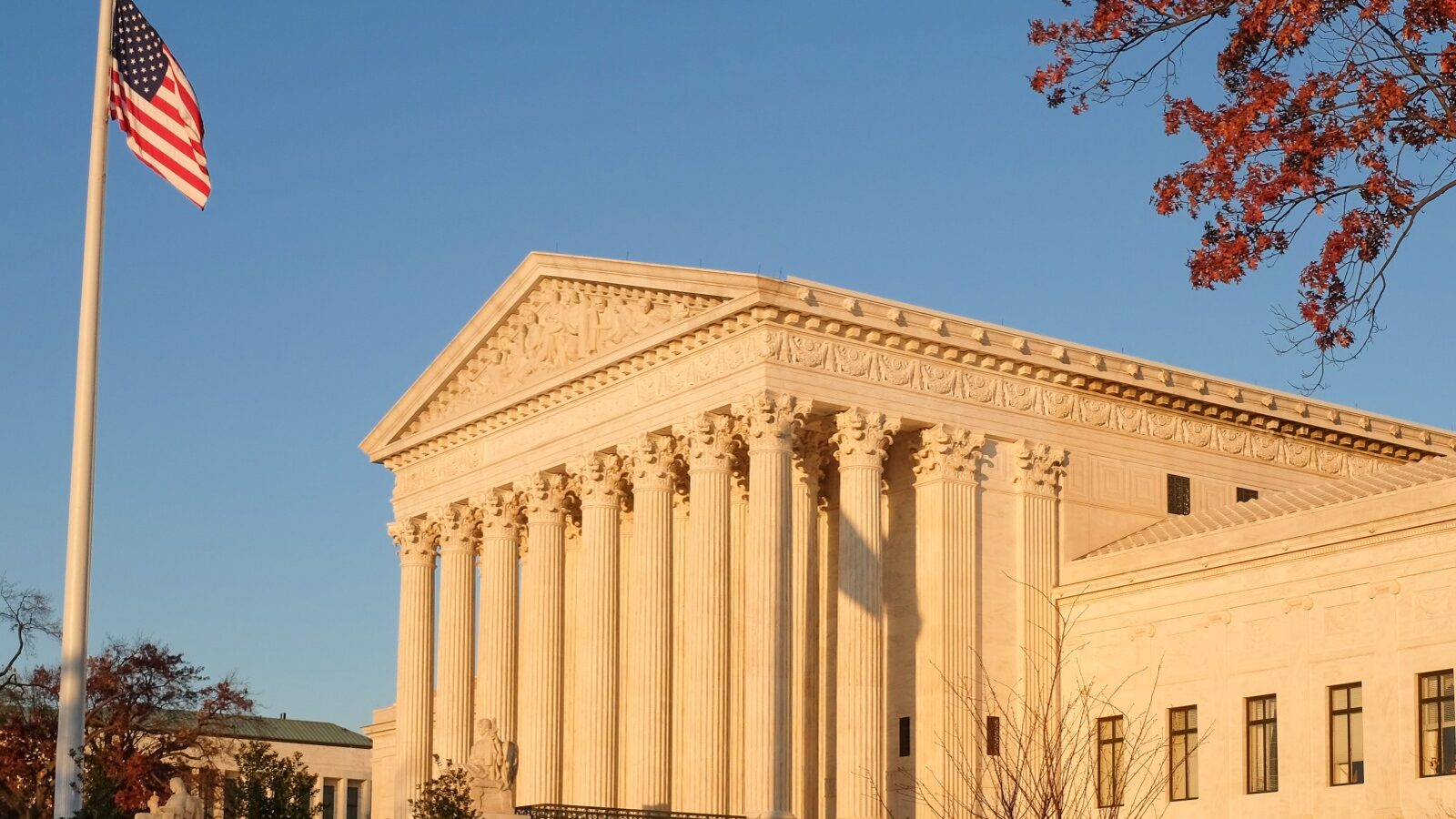
New Jersey’s attorney general took the state’s case against prediction markets to the U.S. Supreme Court Wednesday morning, seeking an answer to a single question: Whether the 2010 Dodd-Frank Wall Street Reform and Consumer Protection Act preempted States from regulating sports bets that occur within their jurisdictions if those bets are offered on markets registered with the Commodity Futures Trading Commission.
The question in the writ of certiorari is concise and direct, but the answer is not so simple, as lower courts across the country have offered differing opinions in cases involving prediction market Kalshi, states, and Indian tribes. States and tribes believe prediction market sports event contracts should be regulated like gambling, while Kalshi has argued they are financial tools. The power to regulate sports betting has been with states since May 14, 2018 — the last time the U.S. Supreme Court acted on a gambling issue in overturning the Professional and Amateur Sports Protection Act (PASPA).
At that time, it was also the state of New Jersey that took the lead. This time, the Third Circuit Court of Appealsruled in April that Kalshi could operate and the state could not enforce its gambling rules on the platform. Attorney General Jennifer Davenport has been waiting ever since to petition the Supreme Court, and last Friday the Ninth Circuit issued an opposing opinion, creating a circuit court split. Such splits, while not quite a prerequisite for Supreme Court consideration, make it more likely.
In the state of Nevada, gambling regulators have already been enforcing a ban on the Kalshi platform and other prediction markets offering sports event contracts.
New Jersey filed the writ a day ahead of the deadline the court granted after the state requested an extension in July.
It could still be a while …
Supreme Court justices hear cases from the first Monday in October through the end of April every year in two-week sessions with breaks between. There are usually two cases per day Monday-Wednesday when the court is in session.
How long it will take before the court announces whether it will consider New Jersey’s petition is open ended. When the state sued the NCAA over the legality of PASPA, the process of petitioning the court for a writ of certiorari to the opinion was 19 months.
In that case, New Jersey filed the petition to the Third Circuit on Oct. 7, 2016, and the Supreme Court granted the petition more than eight months later on June 27, 2017. The case was consolidated with the New Jersey Thoroughbred Horsemen’s Association v. NCAA suit. From there, oral arguments were heard Dec. 4, 2017, and the court released its opinion May 14, 2018.
While the writ of certiorari is under consideration, other prediction market cases will likely move forward, including three cases pitting Indian Country against Kalshi. Those add an extra wrinkle to the preemption question because tribal gaming is covered by another federal law — the Indian Gaming Regulatory Act.
In addition, Kalshi has 14 days from the date of the Ninth Circuit judgment on Aug. 28 to request an en banc rehearing. If a request is granted, the case would go before the full panel of Ninth Circuit judges.