The first full Saturday for college football was a record day for Kalshi in terms of overall volume — but not for fees — as the platform recorded $2.293 billion in trades, breaking its previous record of $2.11 billion set on July 11.
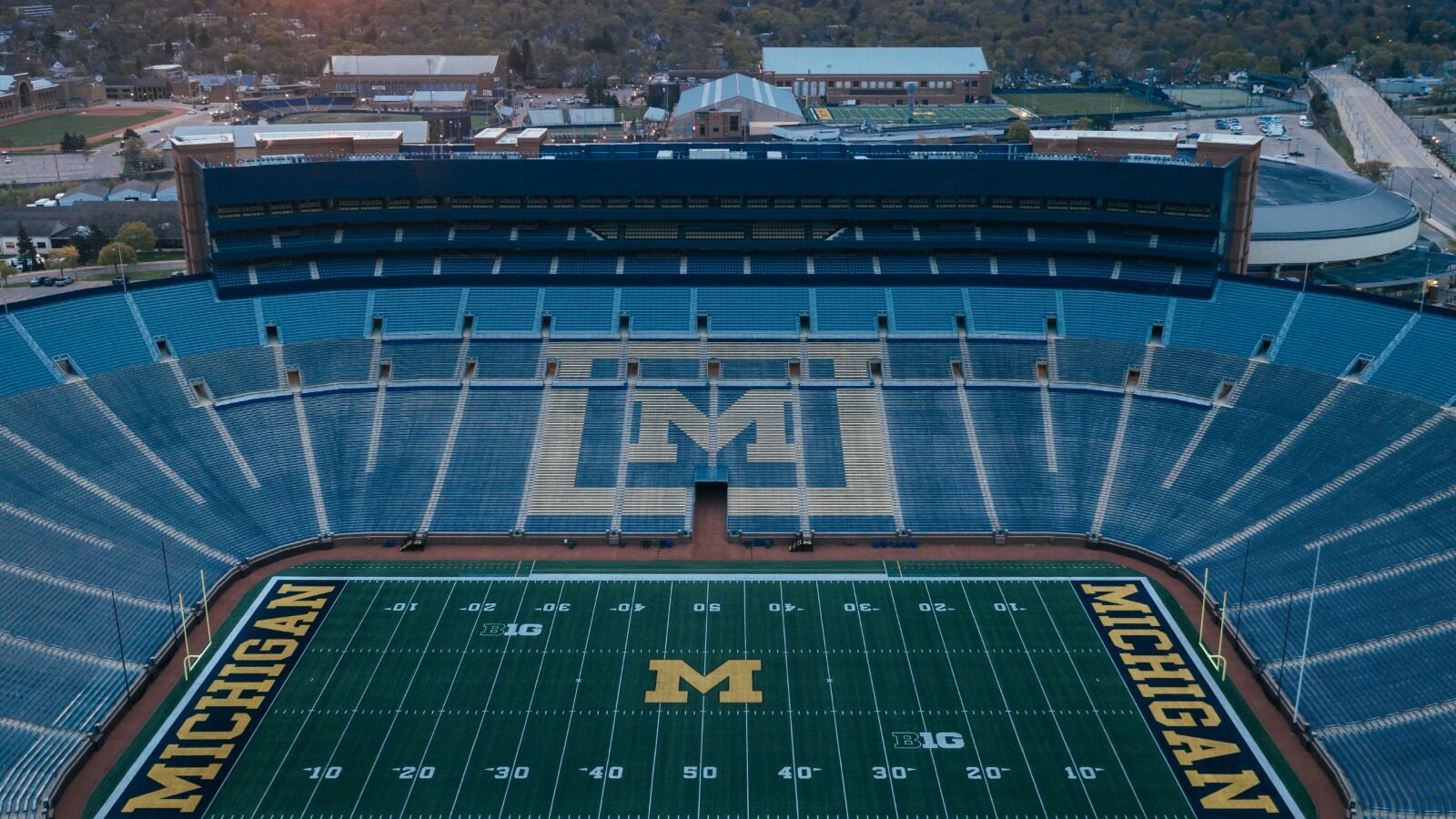
College football was the center of sports news over the weekend after No. 16 Michigan beat Western Michigan on a Hail Mary following a controversial call, and Kalshi incorrectly paid out trades before the game was over. It then took back the money and reallocated it.
According to Yahoo! Finance, the market for the game was $18.6 million before it ended. With Western Michigan leading 12-7, a heave by Michigan quarterback Bryce Underwood went past the end zone with no seconds showing on the clock, and Western Michigan celebrated its upset and Kalshi settled its trades. A replay review ensued, and officials put one second back on the clock. That was enough time for Underwood to lob a 47-yard pass to J.J. Buchanan in the end zone, with the touchdown giving Michigan a 13-12 win.
Kalshi clawed back the original payouts to those who picked Western Michigan and paid out those who had picked Michigan.
Parlays inflate volume
In terms of numbers for the day, parlays accounted for $1.344 billion (58.6%) of Saturday’s volume, as compared to $693.7 million (30.2%) in non-parlay sports contracts and $254.9 million (11.1%) from non-sports contracts. Parlays are usually at long odds and can inflate volume. Kalshi counts both the taker and maker sides of the trade in its volume.
Taker-side volume was $540 million. The platform’s best day in taker-side volume was July 11, when England defeated Norway and Argentina defeated Switzerland in the World Cup quarterfinals.
Parlays also played a key role in Kalshi’s fees Saturday — the company made $14.5 million in fees as compared to the a record $17.2 million on July 11. Fees per contract fluctuate, and they are lower for very long or very short odds. Parlays usually have very long odds.
Taker fees were $12.1 million, while maker fees were a record $2.4 million — Kalshi only started adding maker fees to parlays last month.
LeBron partnering with Polymarket
Early Saturday morning, NBA star LeBron James teased what appears to be a new partnership with prediction platform Polymarket:
Details of the deal have not been disclosed, but NBA rules include restrictions on active players’ financial interests in companies that offer bets or trades on the league. Among the restrictions is a cap on how much of an ownership stake an active player can have.
James is the first big-name athlete to partner with Polymarket, Kalshi’s biggest competitor. NBA player Giannis Antetokounmpo, golfer Bryson DeChambeau, and now retired soccer star Lionel Messi all previously announced deals with Kalshi. More information on James’ deal is expected Tuesday, according to The Athletic.
“With football season around the corner, we look forward to tapping into James’ love for the sport and exploring other ways to bring Polymarket to wider audiences,” Polymarket wrote in a message to The Athletic.
The NBA does not currently have a partnership with Kalshi or Polymarket. The NHL became the first professional league to partner with a prediction market when it made deals with Kalshi and Polymarket last fall. Major League Baseball followed suit in April. Front Office Sports reported last Thursday that “deal terms are on the table” for an NBA-prediction market partnership.
Indian Country to file SCOTUS amicus brief
The Indian Gaming Association, National Congress of American Indians, and Washington Gaming Association are leading an effort to file an amicus brief in support of the New Jersey petition for certiorari filed last Wednesday in the U.S. Supreme Court in its case against Kalshi. A letter circulated Friday to tribal leaders by the law firm of Zimmer, Citron, and Clarke outlines the purpose of the brief and seeks support across Indian Country.
“The purpose of a cert-stage amicus brief is to persuade the Supreme Court to take the case,” the letter reads. “New Jersey’s cert petition covers the standard reasons to grant cert: the courts of appeals are divided over the question, the decision [of the Third Circuit] is wrong, and the issue is important. The tribal amicus brief will focus on the last point and will show the Court that the issue is even more important than the Justices might realize, particularly as it relates to tribes and the tribal gaming industry as a whole.”
Tribes across the country have signed off on amicus briefs in multiple cases between Kalshi and states, focusing on their belief that prediction markets encroach on sovereignty and self-sufficiency. Three tribal groups have sued Kalshi in highlighting these issues and arguing that the Commodities Exchange Act does not supersede the Indian Gaming Regulatory Act.
It’s possible that other non-tribal groups, including the American Gaming Association and the Casino Association of New Jersey, will also file cert amicus briefs. Along with three anti-gambling groups and a coalition of 34 state attorneys general, the trade associations filed amicus briefs when the case was in the Third Circuit.
The deadline for amicus briefs — and Kalshi’s response to the cert petition — is Oct. 5.
Daniel O’Boyle contributed to this report