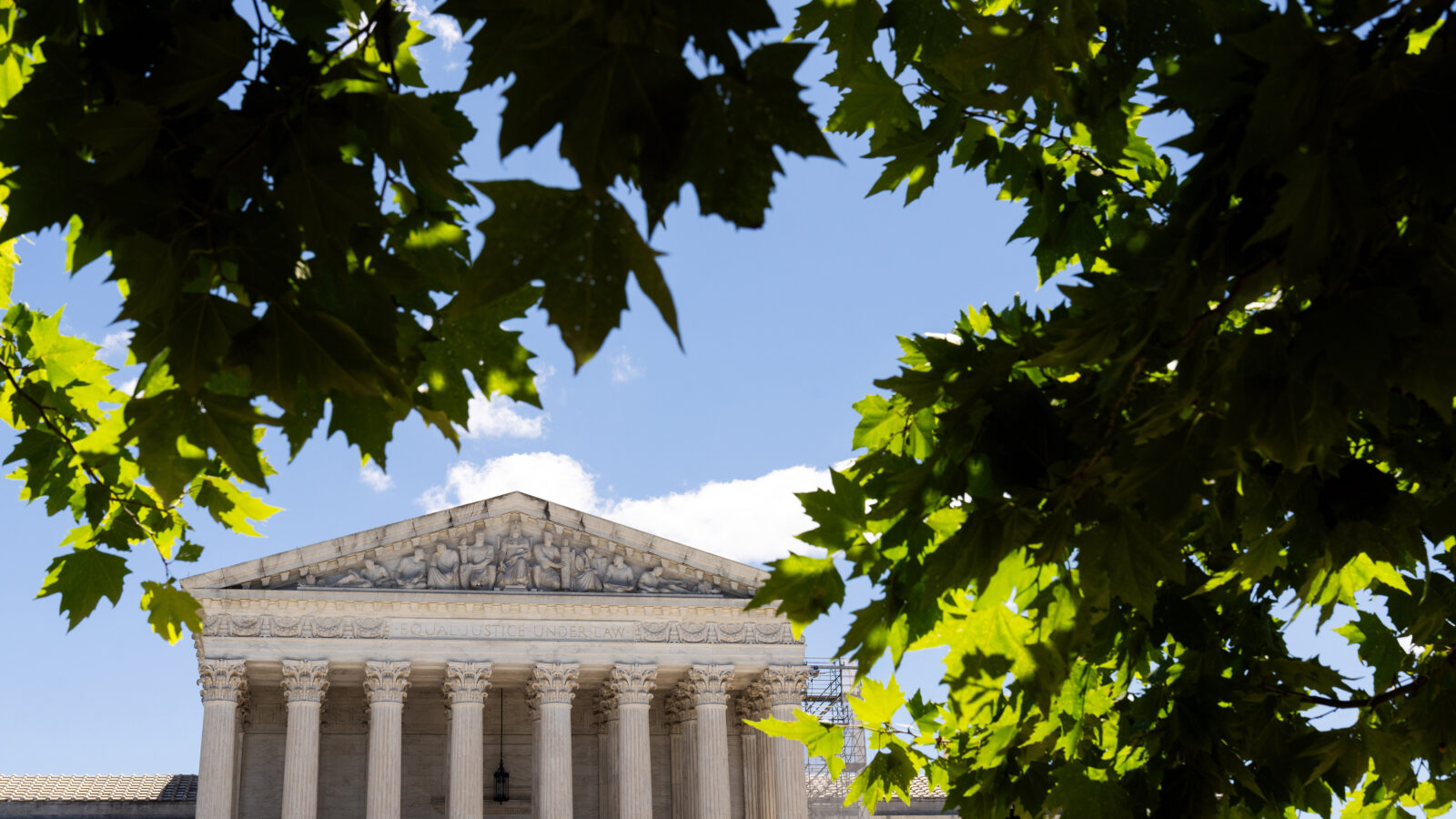
The Supreme Court published its first list of cases it will take up this term Thursday — unsurprisingly, no prediction market cases are on it yet. The court could take one up at some point this term, but probably not in the coming weeks.
The court had been asked to consider two different cases about whether states could apply their gambling laws to sports event contracts. The Third Circuit ruled that New Jersey could not do so, while the Ninth Circuit ruled that Nevada could enforce its sports betting laws. New Jersey asked the Supreme Court to consider its appeal of the Third Circuit ruling, via a petition for writ of certiorari, while Robinhood did the same for the Ninth Circuit.
The court’s first “long conference” of the 2026-27 term, where it chooses what cases to take, was Monday, and its first published list of cases for the term was released Thursday. That initial list of three cases did not include either prediction market case.
This was not a surprise, as responses are still due in both cases. While technically the Supreme Court has the power to take any case where it has been petitioned for certiorari, in practice it is only likely to accept a case without full responses under extreme circumstances. Typically, the court will consider cases a few weeks after all responses are in.
Expect to wait further
While acceptance of the cases could come later this term, it may not be soon. Supreme Court terms run from October until late June or early July. The court takes a summer recess, meaning the last cases it hears are typically in late June.
In the New Jersey case, Kalshi asked for and received an extra 30 days to file its response, giving it until Nov. 8 to do so.
The wait for the Supreme Court to take the case could go on if the court asks the U.S. solicitor general for input on whether it should take the case. As the case concerns a question of federal law, Nova Southeastern University Law Professor Bob Jarvis says it would make some sense for the court to ask for the solicitor general’s opinion.
“In this situation, we know that the Solicitor General will say that the case either should not be taken or should be taken and affirmed, because Trump has made it clear that he wants the CFTC to be in charge of prediction markets so that they can keep operating as they have been doing,” Jarvis told InGame. “Because the Sixth and Ninth Circuits have come out opposite of the Third Circuit, I suspect the solicitor general will say that the case should be taken and affirmed, which would then negate the rulings by the Sixth and the Ninth (and make it clear to all the other circuits how they should rule).”
If that happens, Jarvis said, it may mean that the court chooses to accept the case this term, but it is not argued until next term. That could push a final decision back to 2028.
En banc petition may slow Nevada case
The Ninth Circuit case, meanwhile, is complicated by the fact that while Robinhood is asking the Supreme Court to step in, Kalshi is opting for a different path — asking for a Ninth Circuit en banc panel of 11 judges to hear its appeal. The court may wait until that panel is either granted and decides on the case, or the request is denied.
It is likely that any state-versus-prediction market cases will be combined with the New Jersey case into a single Supreme Court lawsuit. The Sixth Circuit has also ruled against Kalshi, though the prediction market has not yet filed for either an en banc hearing or certiorari. The Second, Fourth, Seventh, Eighth, and Tenth Circuits are also considering cases about the legality of Kalshi’s sports event contracts, and there are further cases taking place in district courts.
Tribal cases could potentially be combined with the state cases too. The Ninth Circuit ruled against Kalshi in its case against the Blue Lake Rancheria and Chicken Ranch Rancheria of Me-Wuk Indians last month. That ruling didn’t immediately ban sports contracts on tribal lands, but it sent the decision back to the district court. If the district court does overturn its original ruling, that may bring the tribal case closer to the Supreme Court. Tribes in New Mexico and Wisconsin are also engaged in lawsuits with Kalshi.