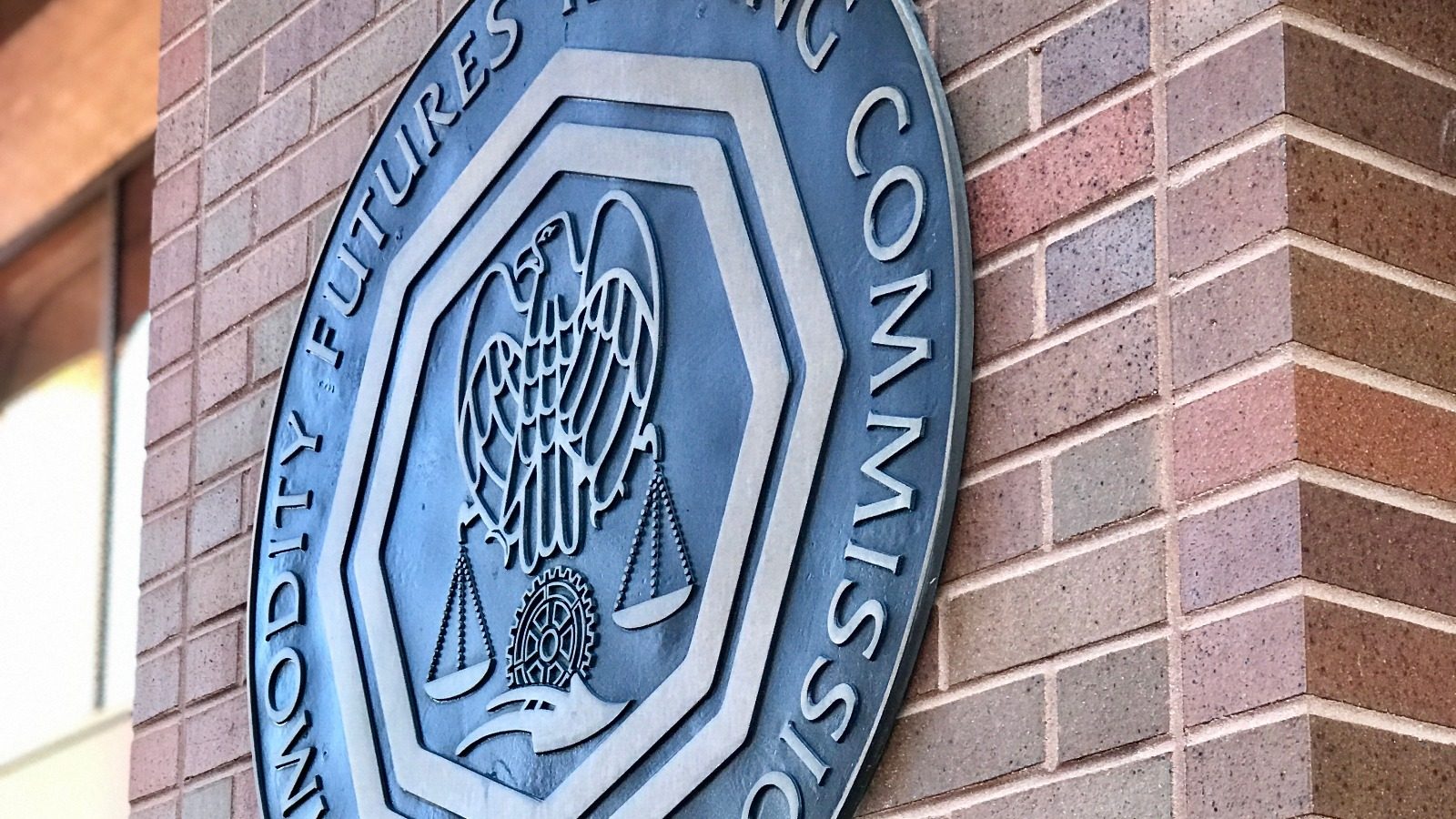
The Commodity Futures Trading Commission (CFTC) says that if a New York court issues an order banning Kalshi, it may step in and require Kalshi to keep offering its contracts, even if it would defy a court order.
The CFTC made those claims in an “emergency order” letter published Tuesday.
OGC_MarketEmergencyDeclarationOrder081126New York sues Kalshi
The order comes in response to the state of New York suing Kalshi in state court last month, after a federal court denied Kalshi protection against a state lawsuit. The state is asking for a temporary restraining order (TRO) that would prohibit Kalshi from “operating a business that offers contracts relating to sports, culture, elections, and other events … within or from New York or to persons in New York.” Kalshi is headquartered in New York.
According to the CFTC letter, Kalshi told the regulator that the order would prevent it from doing business entirely, as the order would encompass all of its contracts instead of just sports.
In addition, the requested order includes a $36 billion fine, as New York law says the state can require illegal gambling operators to pay a fine of three times their gains from their operation, plus $100,000 for every bet from the state. Kalshi’s fee revenue across its entire history is less than $2 billion, and its last completed fundraise was at a $22 billion valuation, so it appears unlikely to be able to pay the fine in full if it is required.
In a press release, CFTC Chair Michael Selig said New York was attempting to destroy the event contract industry.
“New York intends to make event contract derivatives waste away under its iron curtain of state gaming laws before the courts get the chance to issue final rulings,” Selig said. “Congress did not intend for derivatives exchanges to be regulated under a patchwork of state gaming laws.
“These are financial exchanges that offer financial instruments and operate across state lines. They match the bid from a resident of one state with the offer of a resident from another state and submit the trade to a clearinghouse that backstops the transactions of customers throughout the country. New York has no business regulating these interstate financial markets. The Commission is required by law to ensure order in these markets, and that is what we have done today.”
CFTC calls order ‘existential threat’
The CFTC’s letter said that the order was tantamount to shutting down a federally regulated DCM, and so it said it would use its emergency powers to keep Kalshi active if required.
“The Commission finds that New York’s enforcement action and TRO motion constitute an emergency because they constitute a ‘major market disturbance which prevents the market from accurately reflecting the forces of supply and demand’ with respect to event contracts,” the CFTC said.
“The threat of the sudden, unpredictable shutdown of a DCM poses an existential threat to the Commission’s registrants, marketplaces, and regulatory jurisdiction — as well as to the individuals and entities that trade in the Commission’s regulated marketplaces — and thus justifies exercise of the Commission’s statutory emergency power.”
The CFTC added that the TRO would effectively allow New York to act as a nationwide regulator for event contracts.
“If New York’s lawsuit, with the extreme relief it seeks, is permitted to continue, then a single State will effectively become the nationwide regulator of event-contract swaps on DCMs,” it said. “That is the antithesis of the structure that Congress designed for federal derivatives regulation.”
CFTC says TRO would disrupt market
The CFTC also said that if there was a serious risk of an order like the New York TRO coming into force, then the market would react by effectively putting a “risk premium” on all event contracts, meaning they would no longer trade at prices that reflect their probability.
It said that this risk premium may also differ depending on where a DCM is headquartered, creating more pricing inefficiencies. In addition, it said, “If Kalshi shuts down, there would be an immediate influx of trading activity from Kalshi onto other exchanges. That spike in activity would artificially impact event-contract prices for reasons having nothing to do with the events underlying the relevant contracts.”
If Kalshi is required to shut down in New York immediately, it would also have to liquidate open positions, which the CFTC says would cause even more market disruption.
As a result, the CFTC says that if the TRO is granted, it could direct Kalshi to keep trading.
“Under the Commission’s statutory emergency powers, it may direct Kalshi and its affiliates to continue to perform its functions as an exchange in accordance with the CEA’s Core Principles and its normal practices,” the letter said. “This exercise of the Commission’s emergency authority will give market participants the necessary assurances that a CFTC-registered DCM cannot be shut down by a single State and that the trades they execute will be duly cleared and fulfilled.”
Lawsuit on pause
Currently, the state-court proceedings are on pause while Kalshi attempts to have the case moved to federal court. However, the prediction market has had no success moving any past state-court lawsuits to federal court so far. Such a change requires a higher standard than getting an injunction in federal court, a bar Kalshi already failed to meet in New York. As a result, the request may end up mostly serving to buy Kalshi time before the state court hears the case on the TRO.
Assuming the case does get back to the state court, proceedings could be quick as the state has requested a “special proceeding.” A special proceeding only requires a single written brief from each party, with no hearing or replies.
Three other states currently ban Kalshi’s sports event contracts — Nevada, Washington, and Michigan. In Michigan, the CFTC also issued an order telling Kalshi to ignore a state court ruling. In that case, the CFTC ordered Kalshi to undo the liquidation of trades involving its in-house market maker, which the state had ordered to be liquidated. Kalshi said it could not do so because it had already liquidated the trades.