
The early slate of NFL games was smoldering out in the dark sports pub of a bowling alley in St. Petersburg, Florida. The Tampa Bay Buccaneers would kick off in a few minutes, and most of the locals had chosen to watch at home.
Two men, waiting to bowl and sipping on lagers, struck up a conversation as they tried to make something interesting of a wide receiver’s unfathomable dropped touchdown pass on one of the many television screens.
“This gambling has ruined it,” one said. The other nodded.
It was an otherwise innocuous human error in a season full of them, one that didn’t even have any bearing on the outcome or betting implications of the game. It didn’t matter. The deluge of sports betting scandals besieging American sports fans in recent years has cast every play and outcome under suspicion.
The NFL has been betting-scandal-free for nearly three years, and even the revelations of 2023 unearthed nothing of the game-fixing variety, just (mostly) unaware players breaking rules that were eventually softened.
That didn’t matter to these men and others just like them across the country. The spread of legal sports betting in the United States, in their opinions, has sullied sports and by extension their fandom. They can’t be dissuaded by someone pointing the things that have happened involving illegal bookmakers that never got caught without a regulated integrity system. To some fans, every dropped pass, bounced pitch, stunning upset, or questionable officiating call now is “rigged” for some gambling-related reason.
In light of that current perception, InGame compiled a list of memorable sports moments of the past that would have kept the barflies carping for hours.
Jets 16, Colts 7, Super Bowl III
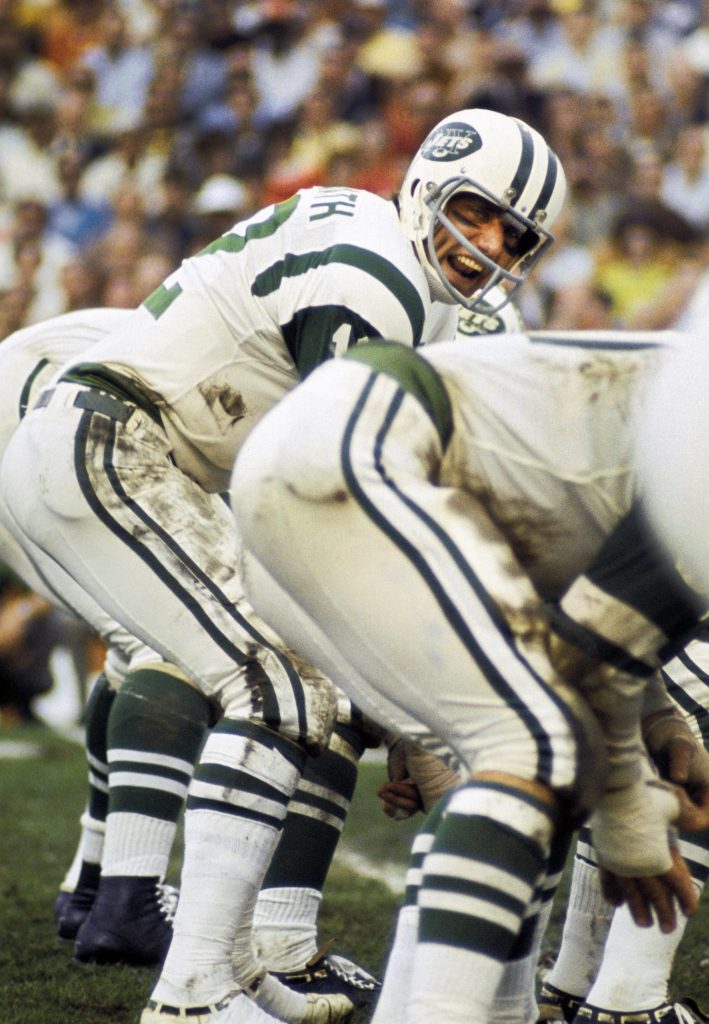
Quarterback “Broadway” Joe Namath assured the gathered crowd at the Miami Touchdown Club of a Jets win against the Baltimore Colts, an 18-point favorite, three days before Super Bowl III on Jan. 12, 1969.
The 13-1 Colts of the National Football League, coached by Don Shula, had won 10 consecutively, four by shutout, behind a ferocious defensive line.
The American Football League’s Jets entered at 11-3, and coached by former Colts boss Weeb Ewbank.
With Namath cleverly avoiding the withering Colts pass rush, the Jets slowly built a lead that felt ever-insurmountable. Shula’s last gasp was to replace quarterback Earl Morrall — who finished 6-for-17 for 71 yards and three costly interceptions — with an injured Johnny Unitas in an attempt to find a spark.
It didn’t work, but Jerry Hill’s 1-yard touchdown rush in the fourth quarter prevented a shutout. The Jets more than covered the spread in what remains one of the most stunning Super Bowl outcomes in history, one that surely would have brought out the conspiracy theorists in the post-PASPA age.
Fred Brown’s un-Worthy pass
North Carolina led the 1982 NCAA men’s basketball final, 63-62, with less than 10 seconds left after Michael Jordan’s 16-foot jumper, but Georgetown was poised for a last retort with guard Fred Brown surveying options.
Eric Floyd was covered. So was Patrick Ewing. Brown went for a third option on the right wing, but the person he thought was Eric Smith was in fact Tar Heels forward James Worthy, who wasn’t really playing defense at all and was actually standing behind him. Worthy raced downcourt with the ball and was fouled.
Here’s where the conspiracy theorists tumble down a rabbit hole together: Brown’s turnover and the subsequent foul of Worthy set the favored Tar Heels up to cover -1.5 at the foul line. But Worthy missed both and the Hoyas covered in a 63-62 loss. Cut to the bowling alley: “They’re all cheating!”
Buckner misses the ball
Boston Red Sox first baseman Bill Buckner’s entire career has unfairly been encapsulated by a two-out, 10th-inning error in Game 6 of the 1986 World Series on Oct. 25, 1986. Granted, it’s one of the most infamous mistakes in sports history, leading directly to a 6-5 Mets comeback win that set up a championship-winning victory in Game 7.
The cynical would have pinned the fix on Buckner (that’s really picking your spot), but Red Sox pitcher Calvin Schiraldi blew late leads in both Game 6 and Game 7 and ultimately held Boston’s fate in his hands more than Buckner did.
‘The Fumble’
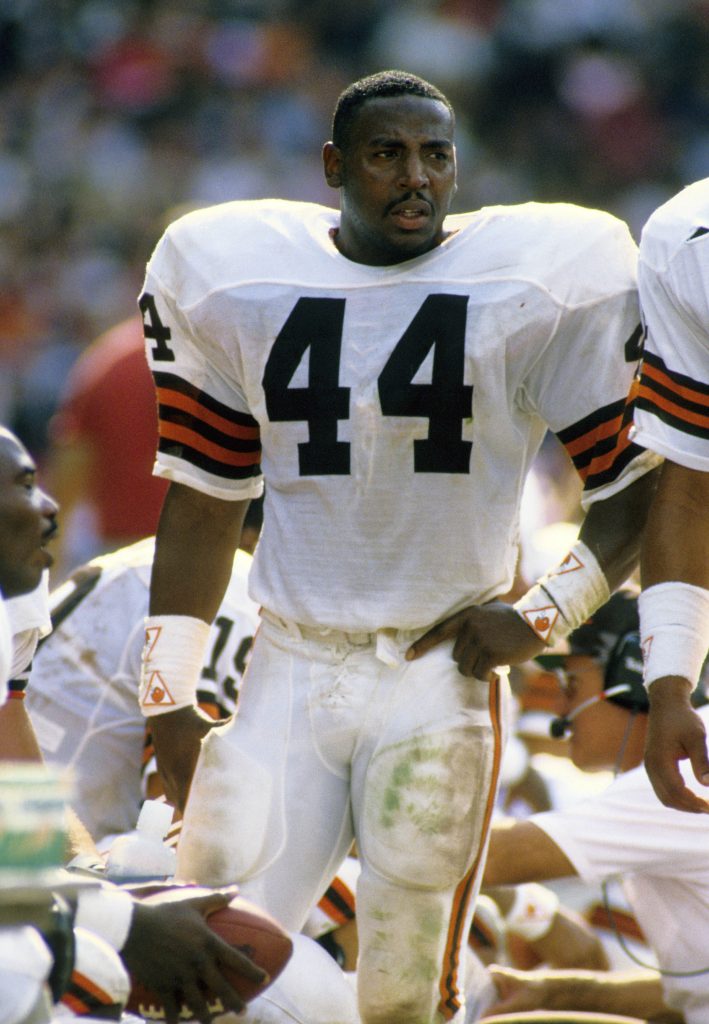
There have been so many fumbles in the history of the NFL. And so many in the putrid history of the Cleveland Browns in the Super Bowl era. But Earnest Byner’s turnover in the AFC Championship game in Denver on Jan. 17, 1988 was singularly epic enough to capture the title “The Fumble” all for itself, forever.
And if it happened today, there would be much wailing.
Cleveland trailed, 38-31, with just more than a minute left when Byner took a handoff around the 8-yard line, tore toward the end zone, but lost the ball after being grazed by defensive back Jeremiah Castille as he was about to cross the goal line. Denver recovered at the 2 and won as the 2.5-point favorite.
Today, in-game bets would have been piling digital cash into sportsbooks’ vaults on that drive, including whether the Browns would have gone for 2 and the win (which was not a possibility back in ’88).
Buster Douglas beats Mike Tyson
Mike Tyson was 37-0 and, at 23 years old, the undisputed heavyweight champion and a terrifying mayhem machine. James “Buster” Douglas was supposed to be the latest tomato can placed in front of him for his momentary amusement.
Not so.
As much as a 37/1 underdog (Tyson went as high as a 42/1 favorite) at the Tokyo Dome, Douglas dominated throughout — other than when he was knocked down in the eighth round, receiving a slow count that became a source of controversy afterward. But Douglas recovered and knocked Tyson out in the 10th. Tyson hadn’t even been knocked down in a professional fight before. The undisputed greatest upset in boxing history still reverberates 36 years later.
Michigan didn’t have any timeouts left
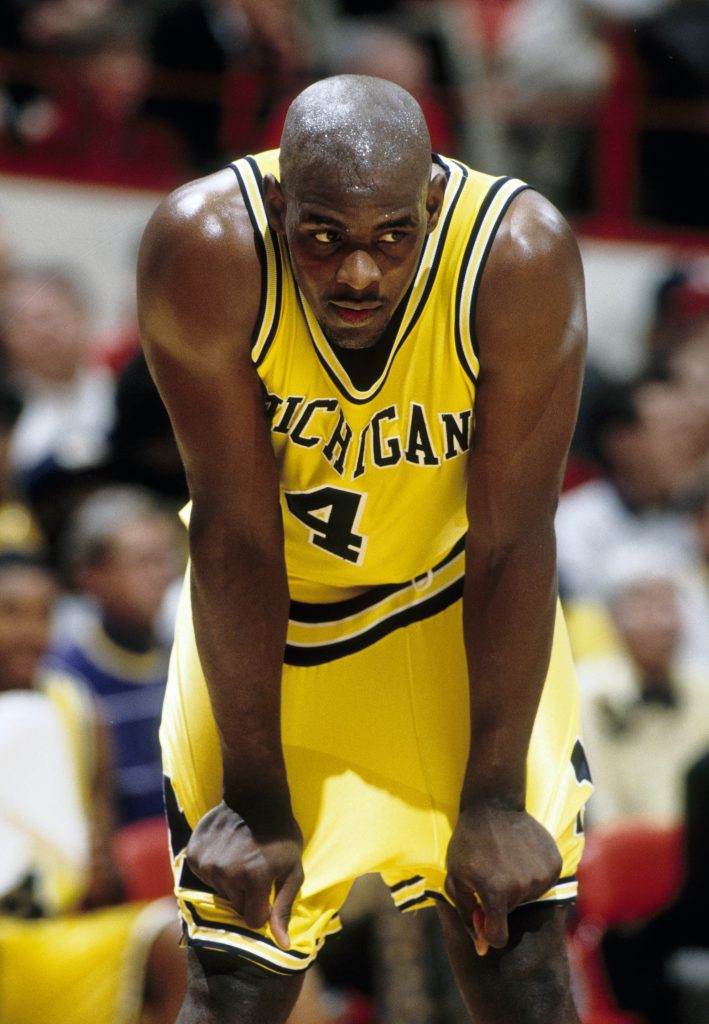
With 20 seconds remaining in the 1993 NCAA men’s basketball championship game on April 5, North Carolina led Michigan, 73-71, after a Pat Sullivan free throw for the Tar Heels. Bettors were certainly cognizant that the Tar Heels were in serious jeopardy of not covering their -2.5 spread, while non-betting sports fans were ready for a thrilling finish.
“Fab Five” forward Chris Webber roared up the court — nearly traveling — before dribbling into a trap along the sideline. Ball cradled in his forearms, he contorted upward to call a timeout with 11 seconds remaining. But Michigan didn’t have any left.
Webber was whistled for a technical foul, the Tar Heels hit both free throws, and then converted two more on the ensuing free possession to win 77-71 and cover with room to spare.
Nick Anderson misses four in a row
The Shaq/Penny Orlando Magic led the Houston Rockets, 110-107, with 10.5 seconds to in Game 1 of the 1995 NBA Finals on June 7.
Nick Anderson, the first-ever draft pick of the expansion Magic, stood at the foul line as a 69% free throw shooter in the regular season. He missed both, but rebounded the second miss — and was fouled again. He missed both, again.
The Rockets’ Kenny Smith scored a game-tying 3-pointer in the waning seconds, Hakeem Olajuwon put in a game-winning tip at the horn in overtime, and the Rockets swept the series after entering as +130 underdogs. Houston opened the playoffs as +1800 to win the title.
Michael Strahan sacks an easy one
In the waning moments of a 34-25 Week 17 win over the New York Giants on Jan. 6, 2002, Green Bay quarterback Brett Favre bootlegged right with no blockers before fluttering to the ground as if trying to keep defensive lineman Michael Strahan from turning a double play. He then meandered by to celebrate with Strahan and his teammates on the field, as they celebrated Strahan setting the single-season sack record.
Favre’s offensive linemen never back-filled his assertion that the play was an audible gone wrong, and as former record holder Mark Gastineau fumed, Strahan bullet-pointed the feat on his Hall of Fame resume.
Phones would have flown toward TVs today, player-prop futures bettors fading a new record summoning the rage that Gastineau harbored for decades. And sportsbooks would have raced to copyright “Sack Back Money Back Free Bet” as a public relations stunt.
Appalachian State 34, Michigan 32
It takes a whole bunch to rig a football game, but the cynical would have pinned this one on the Wolverines special teams for allowing the plucky Football Bowl Subdivision preseason No. 1 to block a potential game-winning field goal at the end of regulation (after blocking another in the fourth quarter).
In the 2007 season-opener for both on Sept. 1, no odds were offered by legal sportsbooks, then all stationed in Nevada. In all likelihood, there would have been a line at today’s sportsbooks — and if not, some prediction market would gladly have offered the prescient a “Yes $.01” on an Appalachian State victory.
Note: One current oddsmaker willing to play along estimates they would have made Appalachian State a +7500 underdog.
No. 16 UMBC 74, No. 1 Virginia 54
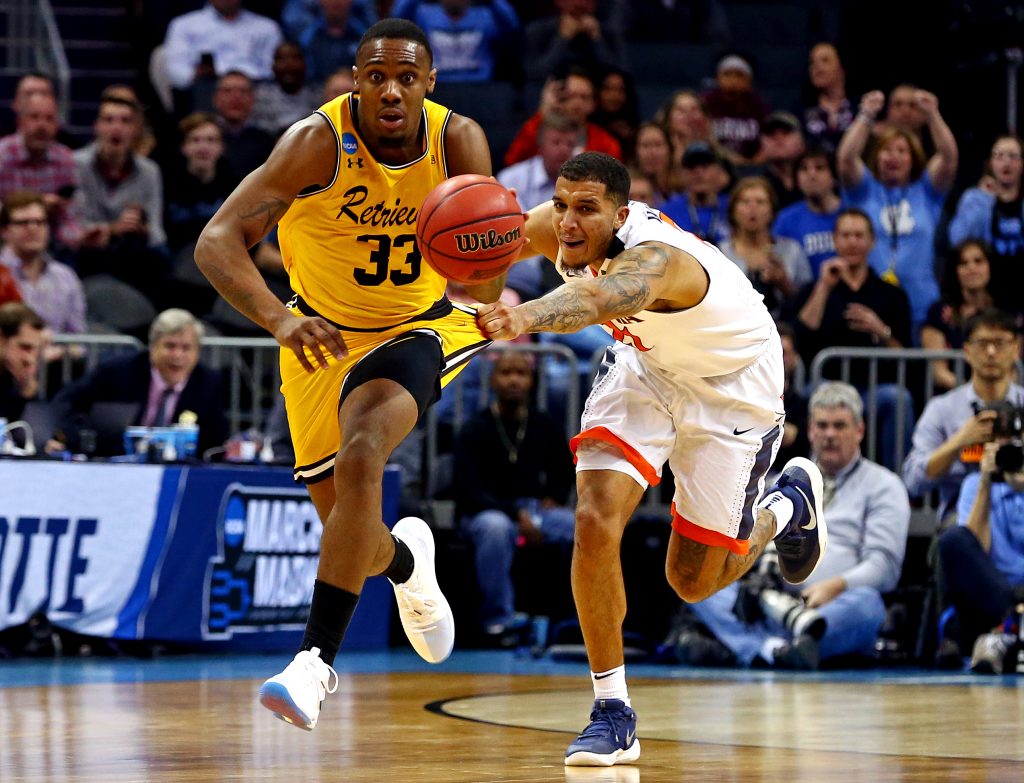
The perceived conspiracy would have had to have been grand and systemic.
A No. 16 seed had never beaten a No. 1 in the NCAA Men’s Basketball Tournament until March 16, 2018, when the UMBC Retrievers thumped the Virginia Cavaliers, 74-54. True, many of the gambling scandals that have beset American sports fandom recently have involved basketball, because gamblers know that getting a guard and maybe a forward is generally enough. Shave some points, earn cash.
But this level of blowout would have required an entire team effort from a 31-2 Cavaliers squad that lost despite being 20.5-point favorites against a Retrievers team that was +2000 on the moneyline.
Bonus: It’s not tied
With Game 1 of the 2018 NBA Finals tied 107-107 with 4.7 seconds left at Oracle Arena in Cleveland, J.R. Smith rebounded a George Hill foul shot miss, giving the Cavaliers the final possession and a chance to take a series lead against heavily-favored Golden State.
With LeBron James pointing, exhorting his teammate to the basket — Smith later said he thought the Cavaliers led and he was waiting to be fouled — the shooting guard did not shoot. Instead, he dribbled out the clock near mid-court. James’ hurt animal combination of indignation and bewilderment crystallized the lasting image of a series where the Warriors cued a four-game sweep with the ensuing overtime win in Game 1.
The nuanced conspiracy theorist might have put forth that Smith was in the bag for the sportsbooks, as the Warriors were a -168 favorite to win the championship.
This game, like the UMBC upset, serves as a bitterly quaint end point to an era when mainstream sports fans considered massive blunders and upsets products of fallible humans. The repeal of PASPA 27 days earlier, on May 14, 2018, would eventually unleash legal sports betting as a national possibility, forever changing how fans engage with and consider sports.