
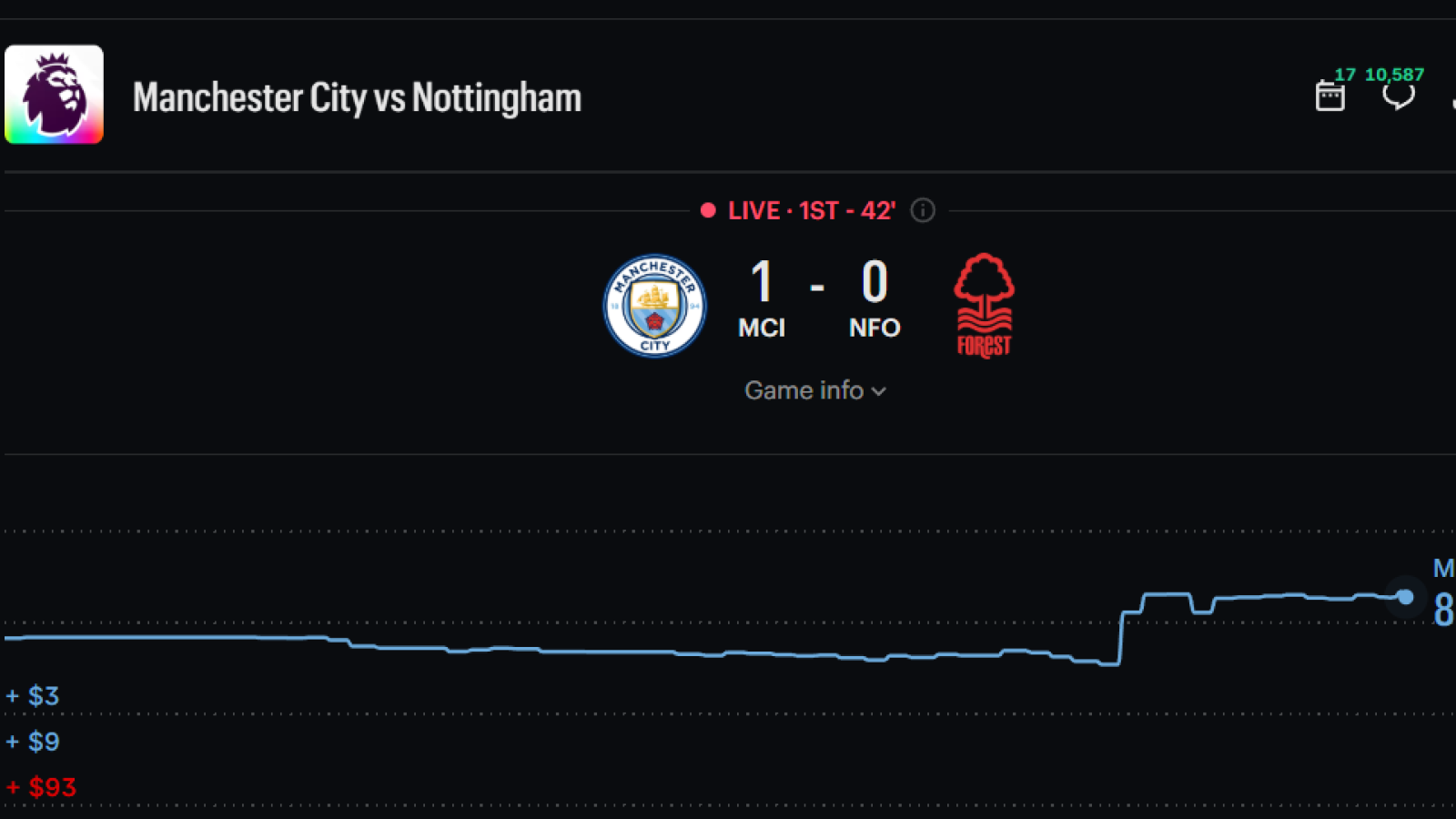
The Michigan Attorney General’s office argues that Kalshi deliberately uses design techniques “drawn from gambling psychology” in order to “encourage impulsive engagement,” in its complaint calling on a judge to ban the prediction market’s sports contracts in the state.
Attorney General Dana Nessel sued Kalshi in state court Tuesday, following the lead of Massachusetts and Nevada in filing state-level lawsuits.
The state’s complaint, signed by three assistant attorneys general and obtained by InGame, noted that Kalshi took bets on sports in Michigan, despite not being a licensed operator or recognized tribe. It noted that Kalshi accepts money with the understanding that money will be paid out contingent on the results of a sporting contest not yet known to be certain, which meets the state’s definition of gambling.
Kalshi-ComplaintIt added that by offering its services in Michigan, Kalshi “induces a person to reasonably believe” that its services are legal.
It added that those bets include player props, spreads, game totals and parlays, and that bets were available on not just major sports but also minor league and international hockey as well as smaller Division I college basketball conferences.
“In each case, the bettor’s return is determined entirely by an outcome outside their control,” the complaint said.
Complaint: Kalshi plays down financial risk
The complaint went on to note specific features of Kalshi’s site that it argues are designed to increase potentially harmful gambling behavior. That tactic mirrors Massachusetts’ initial complaint, which drew attention to Kalshi’s trading volume leaderboard and a “ticker tape” of market activity, in order to argue Kalshi encourages “high-risk behavior.”
The Michigan complaint notes that potential payouts are shown on Kalshi’s website in a “bright green font,” which the complaint says emphasizes payouts.
“Kalshi’s platform employs behavioral design mechanisms drawn from gambling psychology, including features that encourage impulsive engagement, exploit award anticipation, and diminish users’ perception of financial risk,” it said.
The complaint went on to say that Kalshi’s social features, such as user profiles and comments, “reinforce speculative behavior through design choices modeled on gambling platforms, including rapid trade cycling, reward anticipation, and mechanisms known to trigger compulsive engagement loops.”
“This uninterrupted sequence of feedback and engagement contributes to a reward loop commonly associated with addictive gambling behavior,” the complaint said. “Behavioral researchers warn that such mechanisms, modeled after operant conditioning and slot machine dynamics, can bypass rational evaluation and contribute to excessive financial risk-taking.”
Nessel’s office argues that without having the oversight required of licensed sportsbooks in the state, Kalshi could be exposing Michigan residents to gambling addiction
“Kalshi is facilitating gambling in Michigan without all the required responsible gambling features mandated for licensed internet sports betting, and without any oversight by the MGCB [Michigan Gaming Control Board] as to whether its measures are effective, which is exposing residents of Michigan to gambling addiction with few safeguards,” it said.
Kalshi could request move to federal court
The complaint called on the judge — Rosemarie Aquilina, who has been on the bench in the 30th Circuit Court for Ingham County since November 2008 — to issue an order declaring Kalshi’s sports contracts a common law nuisance, as well as a permanent injunction banning the business from “engaging in and advertising Kalshi’s internet sports betting operation.”
Kalshi may aim to move the case to federal court, where its argument that the federal Commodity Exchange Act preempts Michigan’s gambling laws could be treated more sympathetically. However, the prediction market is currently 0-for-2 at convincing federal courts to take its cases, failing to convince judges in Massachusetts and Nevada that it met the standard of “complete preemption.”
Given that its complete preemption arguments have not been effective, Kalshi may attempt to take a leaf from Polymarket’s book and argue that it is acting as a federal officer, and therefore can only be sued in federal court.
Polymarket made that argument in Nevada, with the prediction market’s lawyer saying that the exchange is “acting as a regulator.”
The argument did not work for Polymarket, but Kalshi’s recent disciplinary action against two insider traders may offer an example of how it acts as a federal regulator.
Even if it fails, the federal officer argument can buy time as a decision to reject the federal officer argument can be appealed, whereas most other decisions to send a case back to state court cannot.