
The rise of prediction markets continues to muddy the waters for legal sports betting in Minnesota. The Senate Commerce and Consumer Protection Committee voted Tuesday to advance a bill that would ban contracts on sports events, war, politics, and other topics. Next up was a bill that would legalize online sports betting with the tribes in charge.
But in comments at the end of the hearing, Sen. Zach Duckworth said, “If that [prediction market ban] were to become law in the state of Minnesota, I think that is going to make the decision regarding sports betting or sports wagering online, and it’s going to ensure that it never becomes an option for folks here in the state that want to see it become an option.”
Wagering bill sponsor Nick Frentz acknowledged that his sports betting bill “likely isn’t going anywhere this year,” and he will again be faced with having to rework a bill that has been six years in the making.
The committee approved Rep. John Marty’s SF 4511 and sent it to the Finance Committee. The bill, which was introduced late, passed through three committees before Tuesday’s vote. But it still has a long road ahead to get full Senate and House approval ahead of the May 18 legislative adjournment date. Marty said the bill is among the first to unite all sides of the regulated gambling industry, and that waiting to pass it would be costly.
Traditional futures contracts would remain legal
Jon Anglin, director of the Department of Public Safety’s Alcohol and Gambling Enforcement Division (AGE), gave a primer on prediction markets ahead of the vote. In his introduction, he compared the difference between prediction markets and sports betting to peer-to-peer betting vs. betting against the house. Prediction markets, he said, argue they offer peer-to-peer betting and are regulated by the federal Commodity Futures Trading Commission. He said they are exploiting a loophole in Minnesota law.
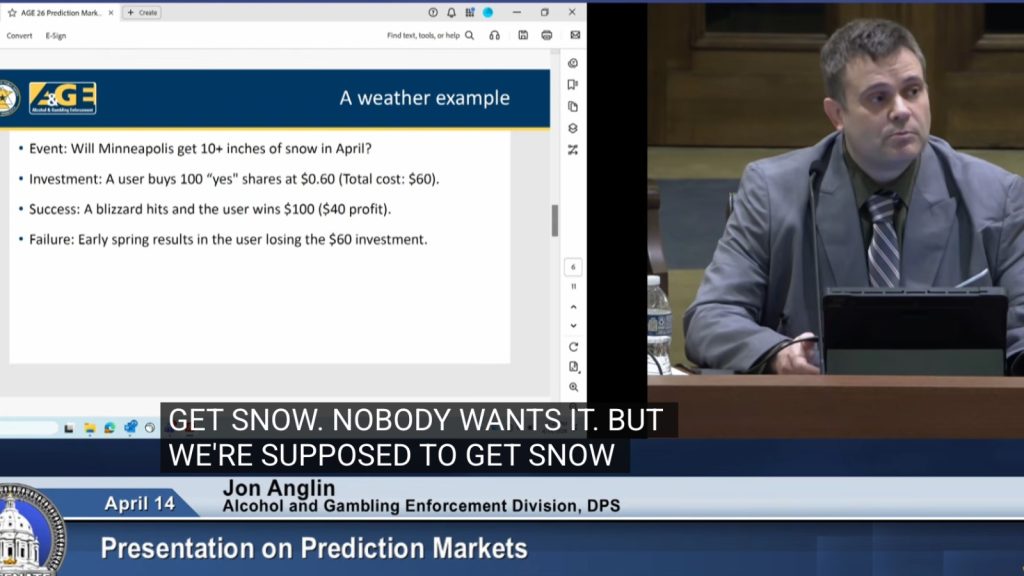
Anglin’s agency is in a sticky spot as it tries to determine — without a state law to back it — what is gambling and what isn’t, he said. If prediction markets are gambling, his agency would investigate complaints. If not, that task would fall to the financial crimes division. But without clear direction, the AGE is making case-by-case determinations.
Marty, who introduced the bill in March, previously acknowledged that it would have to move fast to beat adjournment. The proposal would alter current state law by removing certain prediction market contracts from an existing futures-market exemption clause. Committee members asked for clarity on whether or not contracts on commodities like soybeans or grain would remain in a state where agriculture is so prominent that the state Democratic party is called the Democratic-Farmer-Labor party.
“I’ve seen bets on military action … and I believe without this action saying this is violating our laws, we are going to have huge problems,” Marty said. “We would allow futures, but spell out what is not allowed.”
No sports betting the new Prohibition?
When it came time for Frentz’s SF 4139 to be discussed, it was clear that some committee members were flummoxed at the idea of banning prediction markets but considering legal sports betting. In his opening comments, Frentz attempted to address the issue by saying, “I do not think the federal government should be able to tell us what to do.”
Frentz also drew a comparison to Prohibition, which he said “did not go well” and “gave organized crime the biggest boost in history.” Saying Prohibition “encouraged lawlessness,” Frentz suggested that like Prohibition, a ban on sports betting is not what Americans in general or Minnesotans in particular want, so the industry would continue to exist and cause harm without regulation.
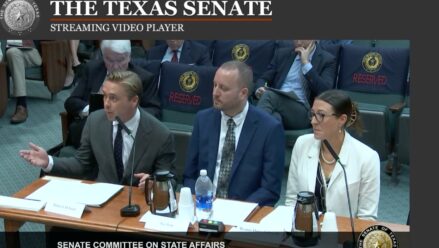
Minnesota Indian Gaming Association (MIGA) Executive Director Andy Platto, Sports Betting Alliance (SBA) lobbyist Cameron Onumah, and Scott Ward of Orrick, Herrington & Sutcliffe on behalf of a handful of commercial operators all testified in favor of the bill. The proposal would put the tribes in charge and would allow for partnerships with companies like bet365, BetMGM, DraftKings, Fanatics Betting & Gaming, and FanDuel, all SBA members.
Platto said Indian Country believes the best way to safeguard Minnesotans from gambling harm is to put protections in place and said that “MIGA tribes know that the status quo is failing.”
Onumah said that a 2025 study showed that between $1.5-$3.8 billion was being bet illegally in Minnesota annually while Ward showed committee members various offshore sports betting sites. Onumah said the question isn’t whether or not sports betting exists, but whether or not to bring it into a regulated market so the state could reap the tax benefits.
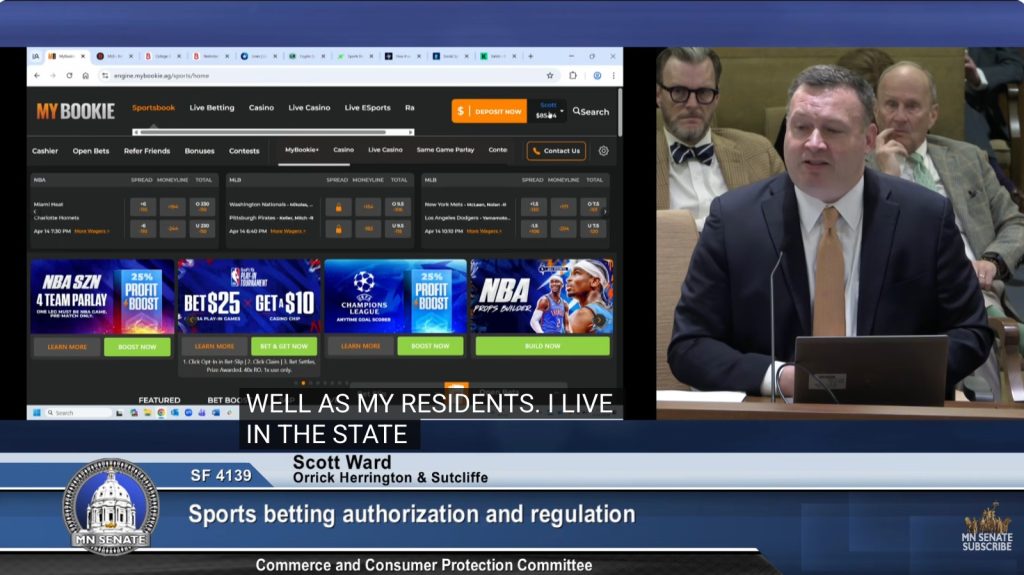
In his presentation, Ward logged into an offshore account, which he said he signed up for using a Minnesota zip code. He also said he put in a birthdate that would have made him a minor, and rather than get locked out, he was just asked to put in a birthdate that would meet the over-18 requirement. He then went on to show how to place straight bets and parlays, and then jokingly said, “I did not push the bet button because I have been advised that it is a misdemeanor” in Minnesota.
Rebecca Delahunt of the Minnesota Family Council testified in opposition, saying that “addiction caused by the design of online sports platforms causes community breakdown” and that often it is families, church groups, or the state that bear the cost.
Sen. Jordan Rasmussen, clearly opposed to a gambling expansion, shared that he’s seen research that shows that legal betting does not banish the illegal market, and that the incidences of problem gambling rise in a legal market.
How is a lawmaker to tell difference?
Duckworth asked the pair how a state would make the distinction between online sports betting and prediction markets — or if it was even feasible to do so.
Ward replied that there are multiple cases in federal and state courts across the U.S. trying to answer that very question. He also said, “In states where sportsbooks are operating and there are also prediction markets, people prefer sportsbooks. But prediction markets are running rampant in those states without regulation.”
Ward failed to mention that three members of the SBA — DraftKings, Fanatics, and FanDuel — all offer prediction markets with sports event contracts. All three are live in Minnesota.