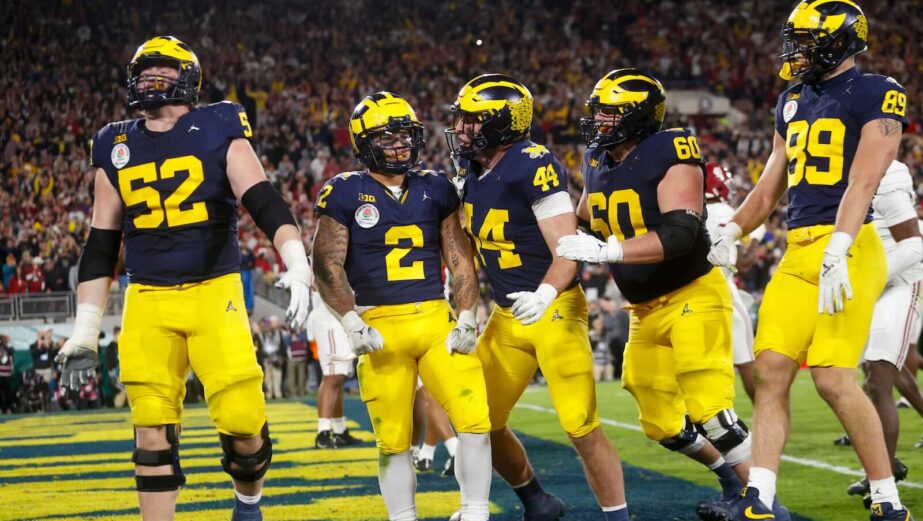
The NCAA on Thursday announced it has joined a newly established “Bad Actor” program aimed at detecting and combating online harassment, abuse, and threats directed at college athletes, coaches, and officials on social media and other platforms.
The Bad Actor program launched in June as a collaboration between Signify Group, IC360, and Fanatics Sportsbook. Fanatics, the first legal sports betting operator to join, committed to suspending or permanently closing customer accounts when evidence shows abusive, threatening, or harassing conduct toward athletes, coaches, or officials.
The NCAA’s involvement builds on its 2024 study with Signify, which monitored social media accounts of participants in seven Division I championships and the College Football Playoff title game. Of the more than 5,000 abusive posts and messages verified, the study found (emphasis added):
- Sexual abuse was the most common category, at 18% of all abuse, targeting both male and female athletes.
- Betting-related abuse accounted for 12%, or more than 740 messages, and rose to 19% in men’s basketball and football, the sports with the deepest betting markets. The NCAA said betting likely also drove some abuse that was classified in other categories.
- Racist content made up 10%, and homophobic or transphobic content 9%.
- Violent content made up 6%, or roughly 380 messages.
- March Madness accounted for 80% of the abuse. Women’s basketball players received roughly three times as many threats as men’s players.
The ubiquity of social media has given anyone with a phone a direct line to athletes. That access, combined with few consequences for online threats, has made the problem particularly acute in college sports.
Sports betting-related threats color 12%-20% of the observed messages, so while it is clearly a theme, the overall scope of abusive and threatening messages is much broader.
Pressing problem
“I met with about 1,000 college athletes … and [online harassment] was the number one issue they were talking to me about then,” NCAA President Charlie Baker told Capital News Service. “That was three years ago.”
The NCAA also partners with Venmo to identify and disrupt betting-related harassment on the payment app. It is not uncommon for college athletes to receive Venmo requests from strangers claiming the athlete’s performance cost them a bet.
In an effort to reduce the incentive for that kind of harassment, the NCAA has lobbied state legislatures, regulators, and Congress to eliminate player prop bets tied to individual college athletes. Roughly 15 states with legal sports betting now prohibit them. Arizona, Colorado, Massachusetts, New York, Pennsylvania, Tennessee, and Virginia have barred them for years, while Louisiana, Ohio, and Maryland removed them at the NCAA’s urging.
The campaign hasn’t worked everywhere. In June, the Indiana Gaming Commission unanimously declined the NCAA’s request for a ban, saying the decision belongs to the legislature.
Last week, InGame reported that Kalshi has opted to omit college player props from its sports event contract menus, citing risk of manipulation. Other licensed exchanges, including DraftKings with its DKeX platform, continue to offer them in certain jurisdictions where they are not prohibited.
Criminal consequences for betting-related harassment are rarer still. Washington appears to be the only state to make it a specific crime. SB 6137, which took effect in June, allows wagering on in-state college teams at tribal casinos. It also makes it a gross misdemeanor to threaten an official, coach, or participant in a sporting event when the threat is related to a wager. Anyone convicted is also barred from sports betting in the state.
Other states rely on administrative penalties. Ohio, West Virginia, Wyoming, and Louisiana let regulators place harassers on involuntary exclusion lists that bar them from legal sportsbooks. Ohio used that authority for the first time last week, banning a bettor accused of threatening Toronto Blue Jays manager John Schneider during the World Series.