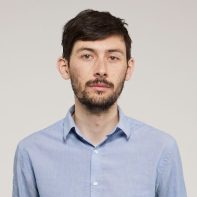

EK, 26, told me he made a few hundred grand trading on prediction markets over the last month or so.
And when he’s out and about in New York, where he lives, and people ask him what he does for a living, he tells them he’s … unemployed.
“The optics of telling someone that you’re betting on sports is still pretty negative,” he said. “And so sometimes I prefer to tell people that I’m just unemployed, because I think that comes off as better than telling them that you’re betting on sports out of your bedroom.”
It is quite a bedroom operation, however. EK works with four screens, can have hundreds of thousands of dollars invested in prediction market positions at a time, and puts quite more time into it than the typical eight hours a day. His parents were skeptical at first, but showing them he’s making significantly more money than he did at his previous 9-to-5 job certainly helps.
Then there’s Noah Poser, 28, who works in financial services technology in New York and comes home to a second shift trading sports, with no immediate plans to quit the first job.
They are two of the so-called garage band market makers, working on their own in markets that attract billions in institutional money, with nobody else to handle the research, tinker with the models, or take over for the evening. Both EK and Poser mix making and taking. Both have technical backgrounds. Neither seems particularly intimidated by the size of the competition.
Which was one of the things that really dazzled me. What makes a guy sitting at home think he can find something the Susquehannas of the world missed?
Worth his time
For EK, part of the answer is that the big players involved might not care.
An opportunity worth another $1,000 in profit is enough to get his attention. A large firm might look at the same opportunity and decide it isn’t worth the trouble. He’s willing to collect a bunch of those, and if his models point him in a different direction, there are no flagpoles up which he needs to run.
“If I’m an individual person, I’m able to go and deploy different strategy changes very quickly and monitor them without having too much overhead,” he said.
He studied math and computer science in college and sees big opportunity in the gap between people who know sports and people who know how to model them. Finding both in the same person, he says, isn’t always easy.
Poser came to this through competitive strategy card games, then poker, then sports betting after New York legalized it. He has degrees in finance and computing, 15 years of fantasy baseball behind him, and a particular fondness for sabermetrics.
“I’d rather make markets in certain baseball stats, because that’s what I’m an expert in,” he said.
Still, I asked, doesn’t seeing other people come in at a different number give you some pause?
“Yeah, a lot of questioning,” Poser said. “I mean, you always have to be looking at the market consensus prices and respecting that.”
He looks for smaller markets where he thinks the assumptions or data are wrong, or where prices haven’t caught up. He also watches his closing line value. Having your own model is one thing; deciding it knows better than everybody else requires some evidence.
Nobody to delegate to
EK starts his day by reviewing the previous day’s trading, including what his competitors did. Most of his time goes into research, with AI agents helping him work through data and test ideas. He may have several experiments running at once.
Of the four screens, one is for live monitoring, two are for development and research, and the other is for messaging.
“I would say most of my time is spent doing stats and research,” he said.
I asked about the occupational hazards of doing this alone: forgetting to eat, never leaving the screens, that sort of thing. He says he tries to eat well and takes walks, sometimes while an AI job is running.
Poser’s routine — at least during the baseball season — begins with the previous night’s opening lines. When he gets home from work, he’s checking what moved, going through lineups and pitchers, and seeing what his models like before the East Coast games start. Then there’s live trading, and a perfectly ordinary Tuesday can turn into a long night.
“It’s definitely a big time commitment after work, but I love it because it keeps me sharp, keeps me engaged, and it makes money,” he said.
He has also written a book about his sports betting methods. As for whether he’d consider doing this full time, he likes having a stable career, especially with the future of prediction markets still unsettled.
“It would be a pretty big leap to fully go in with so much uncertainty,” he said.
Friendly, to a point
Both men know other people doing this. EK chats with friends who run small operations, although anyone hoping to pick up a few profitable ideas in those conversations may be disappointed.
“I think we’re pretty secretive with each other,” he said.
If an exchange changes something, they’ll discuss it. How they’re making their money, less so.
Poser is a little more open to sharing methods and likes having people he can talk to about the work. There are limits, of course. Tell enough people about an edge and you may not have one anymore.
“It could be rather lonely, stressing about the night’s games all alone, without other people that also have some skin in it,” he said.
Those same people are also competing for the same trades. Poser says it’s getting harder, with AI helping more independents get their operations running.
“People are tripping over each other to offer the best price,” he said.
So the Susquehannas of the world aren’t his only concern. There’s also the next guy getting home from work, opening his laptop, and deciding Poser’s price is one he can beat.
For EK, all those competitors give him something to shoot for.
“I almost treat it as if it’s a video game, and I just want to improve my ranking on the leaderboard,” he said.