
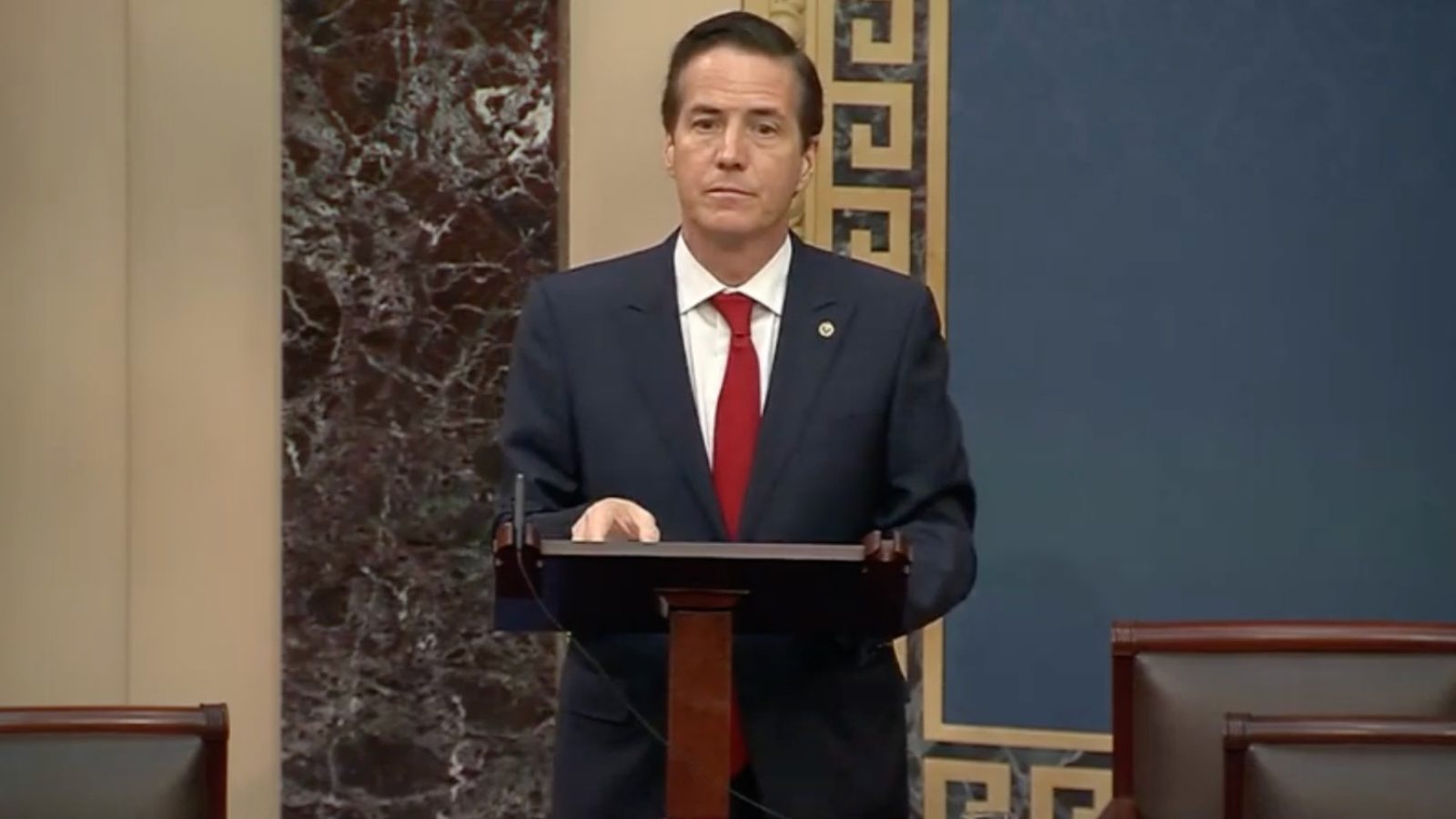
On the same day Congress ended the most recent government shutdown and the stock market shot up more than 800 points, the U.S. Senate passed a resolution Thursday banning its members and staff from using prediction markets. The body unanimously passed the resolution by voice vote, marking the first time either federal legislative chamber has taken definitive action on the platforms.
Per the text of SR 708, which amends the Standing Rules of the Senate:
No Member of the Senate may enter into, or offer to enter into, an agreement, contract, or transaction that provides for any purchase, sale, payment, or delivery that is dependent on the occurrence, nonoccurrence, or the extent of the occurrence of a specific event.
The Senate urged the House to take similar action, according to Business Insider.
“Engaging in any way in a prediction market or trying to place bets where we might have inside information deteriorates the confidence our constituents have in us,” resolution sponsor Bernie Moreno said ahead of the vote Thursday.
The resolution applies to senators and staff.
The American Gaming Association called the move “an important step in addressing one of many concerns surrounding event contracts.”
Kalshi lauds Senate decision
Ohio Republican Moreno introduced the resolution last week. Its passage drew positive comments from Kalshi co-founder Tarek Mansour, who said his company already prohibits congresspeople from the site.
The resolution is one of about a dozen pieces of legislation related to prediction markets that is circulating on Capitol Hill.
Prediction markets like Kalshi and Polymarket allow customers to buy contracts on everything from grain futures to sporting events to political happenings. They are considered financial tools. In recent months, the platforms — particularly Polymarket, which is in limited use in the U.S. — have been in the news for offering contracts and accepting trades on high-profile events including the ouster of former Venezuelan President Nicolas Maduro and the assassination of former Iranian leader Ali Khamenei.
The platforms are regulated by the federal Commodity Futures Trading Commission and currently are not formally considered gambling. The companies have been under fire in the U.S. as states and Indian Country say they encroach on sovereignty and exclusivity by offering contracts that mimic sports betting and other forms of gambling.