It’s been just about three weeks since Gov. Tony Evers signed the law that will make Wisconsin the second state in the U.S. to legalize online sports betting under the Indian Gaming Regulatory Act (IGRA) framework. It is the first state in which this model will be tested in a competitive market.
Under an IGRA model, tribal partners are required to pay 60% of revenue to Indian Country. Florida is the only other state currently operating online sports betting under an IGRA model, and no commercial operator other than the Seminole Tribe’s Hard Rock Bet is live in the state. Under their agreement with the state, the Seminoles provide it a revenue share of $250 million per year for all gaming.
The burning question is what the Wisconsin market will look like. The state has 11 federally recognized gaming tribes, each of which has its own unique situation. Some are large in terms of population or land, but small in terms of gaming revenue. Others are geographically well located, making their retail operations more successful than those of rural tribes.
Though a goal of Indian gaming is to improve living conditions for all tribes, the reality is that some tribes are richer or more successful than others. But online gambling can change that because location doesn’t matter.
Wisconsin’s new law allows for a hub-and-spoke setup, which means bets can be taken across the state as long as they flow through a server in Indian Country. The framework allows for the possibility of small tribes partnering with big operators or for small tribes to partner with bigger tribes and reap more benefit with less cost. But what the infrastructure will ultimately look like is anyone’s guess, and the first step will be for the tribes to work together.
“[All the tribes] are traditionally competitors, but today is a new world, and hopefully we can come together and help each other to be successful,” Oneida Nation Chairman Tehassi Hill said at the Indian Gaming Association conference this month.
Evers has echoed that sentiment and said that he will only sign compacts that are equitable for all tribes.
Operators push back against IGRA model
So far, 34 U.S. jurisdictions including Washington, D.C. and Puerto Rico have launched online sports betting. Wisconsin became the 33rd state to legalize it. Among those that have not are California, Texas, and Georgia, ranked Nos. 1, 2, and 8 in terms of population. Wisconsin’s nearly 6 million people ranks it No. 21.
Last fall, a lobbyist from the Sports Betting Alliance (SBA) told the state Senate Committee on Agriculture and Commerce that commercial operators “could not afford” to operate in Wisconsin under an IGRA model. He also said the market would only have small platforms with few offerings and would “not be robust enough” to tamp down the illegal market. The SBA is composed of bet365, BetMGM, DraftKings, Fanatics Betting & Gaming, and FanDuel.
Tribal leaders saw the testimony as an insult to their ability to regulate gaming, which they have been doing in Wisconsin for more 35 years. The rift raises the questions of whether or how commercial operators and tribes might work together.
On the flip side, tribal stakeholders have argued that the IGRA model benefits tribes because they will get the lion’s share of revenue with little risk. If a tribe partners with a commercial entity to operate its sports betting platform, it is the commercial entity that would be on the hook on a rough sports betting day, not the tribe. A tribe would potentially benefit from the brand recognition of partnering with a company like DraftKings or FanDuel. Though it is not under an IGRA model, one of the smallest, most remote tribes in Michigan partnered with DraftKings, which regularly captures 35% or more in market share.
Studies show that white-label platforms capture smaller market share than well-known brands. And per a January Tax Foundation study, in states with unusual or overly aggressive tax rates, volume and sometimes revenue are lower than in states with smart tax design. Translation? The product in those jurisdictions may be inferior to products in lower-taxed states.
High tax rate becoming more palatable?
Traditionally, operators have balked at high tax rates — 21 states impose a legal online sports betting tax rate of 20% or less, while five tax at 50% or more and three have sliding scales. Until New York legalized at a 51% tax on adjusted gross revenue in 2021, all the states with a tax rate above 50% either had tiny populations, were monopoly states, or both. But since then, Illinois has raised its tax rate from a flat 20% to a sliding scale that tops out at 40% plus a per-wager tax and a city of Chicago 10.25% tax, meaning the top operators pay more than 50%.
In addition, DraftKings and FanDuel entered the Arkansas market earlier this year and agreed to pay 51% of revenue to local casino partners. When the market went live in 2022, there were no big-name commercial operators in the state. But with fewer and fewer new states coming online, it’s possible the equation has changed for operators, which appear to remain profitable even in high-tax situations.
Jefferies analyst James Wheatcroft projects that handle and gross gaming revenue in Arkansas could quadruple now that the two biggest players are in the market. Live for 12 days in March, DraftKings and FanDuel accounted for 60% of handle, which was up 40% against March 2025.
First bets are a long way away …
Evers signed AB 601 into law April 9, and it could be another year — or longer — before those in Wisconsin can place bets on mobile devices. Besides crafting a regulatory framework, which traditionally takes state regulators between six to 12 months, Wisconsin’s tribes must also compact with the state and obtain federal approval for those compacts.
In addition to the administrative tasks that must be handled ahead of launch, Wisconsin’s tribes must find a consensus on how online sports betting will be crafted within Indian Country.
Once the state and a tribe agree to a compact, it must be submitted to the U.S. Department of the Interior’s Bureau of Indian Affairs, which has 45 days from the submission date to approve, deny, or allow the compact to go into effect with no action. Once approved, the compact must be posted in the Federal Register. At that point, wagering could go live.
In the interim, those in Wisconsin can purchase sports event contracts on prediction markets, which the state and tribes are trying to have banned in the state and on tribal land. The Ho-Chunk Nation sued Kalshi late last year, the state attorney general sued multiple prediction markets last week, and Tuesday, the Commodity Futures Trading Commission sued the state.
Location, location, location … doesn’t matter
There are 11 gaming tribes operating 27 gaming locations in the state. What those tribes offer and where they are located differ greatly. For example, per a 2020 state report, the Ho-Chunk Nation operated five gaming locations with about 3,700 slot machines and 52 table games.
The tribe is among the three biggest gaming tribes in the state, along with the Oneida Nation and the Forest County Potawatomi Community, both of which also operate multiple locations, have 2,500-plus slot machines, and offer table games. At the other end of the spectrum is the Red Cliff Band of Lake Superior Chippewa Indians, which has one location with about 250 slot machines and fewer than five table games.
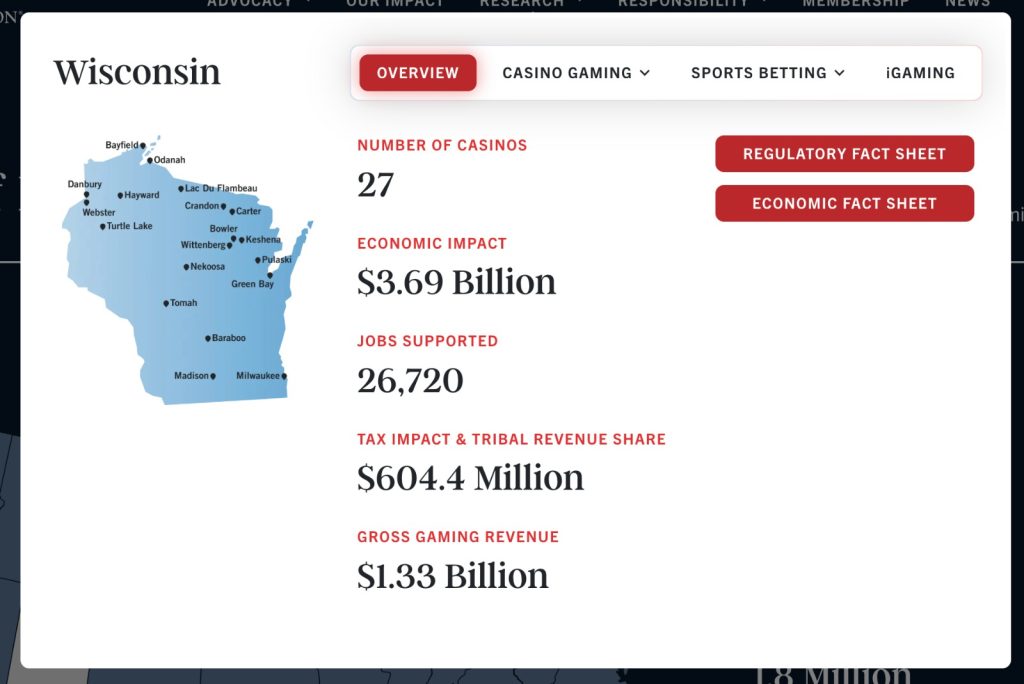
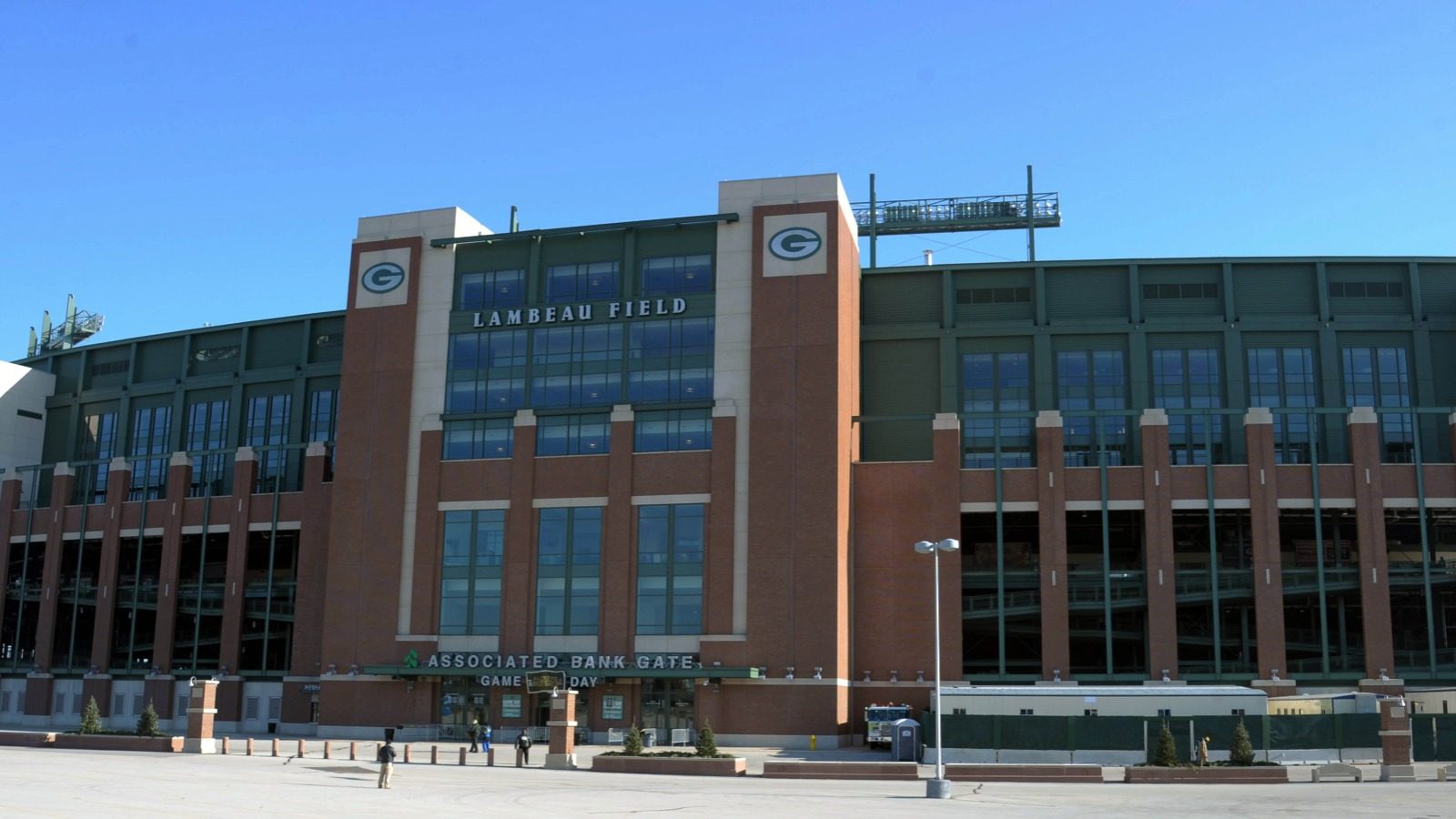
How much the tribes offer in terms of retail gaming — physical casinos have been a part of the state landscape since 1991 — is tied to geography. The Ho-Chunks, Oneidas, and Potawatomis are located in the southern half of the state, and some of their casinos are within easy driving distance of the state’s two biggest population centers — Milwaukee and Madison. The Oneidas also have a retail casino with a sportsbook close to Lambeau Field and can capture the massive NFL crowd that turns out to the see the Packers play on NFL Sundays.
The Red Cliffs are at the far northern tip of the state, on Lake Superior, and the nearest city is Duluth, Minnesota, a two-hour drive away.
In California, two of the richest gaming tribes, the Pechanga Band of Mission Indians and the Yuhaaviatam of San Manuel Nation, are within a one-hour drive of the Los Angeles metro area, and in Arizona, at least part of the Gila River Indian Community is within the Phoenix city limits. The populations of these tribes vary widely — Gila River’s tribal population is more than 14,000 while San Manuel’s population is fewer than 250. The amount of land each tribe has also varies — from Gila River’s more than 350,000 acres to San Manuel’s 800 acres.
As in real estate, location matters for retail casinos. But online sports betting could level that playing field.