As many expected, it rained and poured during the final 48-hour window for submission of comments to the Commodity Futures Trading Commission (CFTC) on the application of existing rules and potential future rules or amendments for prediction markets in the U.S.
On March 16, CFTC Chairman Michael S. Selig announced the April 30 deadline for the Advanced Notice of Proposed Rulemaking (ANPRM), in which the CFTC sought public comment on the need to amend or issue new regulations concerning event contracts traded on prediction markets. Specifically, Selig called for comments “concerning the application of statutory core principles and Commission regulations to prediction markets, the types of event contracts that may be prohibited as contrary to the public interest, cost-benefit considerations related to prediction markets, and other topics.”
Early commenters included U.S. senators, NCAA President Charlie Baker, academics, industry observers, and regular citizens, many of the latter participating in a coordinated campaign of opposition.
Toward the April 30 deadline, comments dropped from the highest-profile stakeholders, the largest and most influential proponents, and some of the most formidable opponents. The opponents view prediction markets as either a competitive threat, a national security risk, a public health hazard, simply illegal based on existing law and regulations, or some combination.
In the final hours before the deadline, comments arrived from Polymarket (Justin Hertzberg, Polymarket US CEO), Kalshi (several including from CEO and co-founder Luana Lopes Lara), Coinbase, CME Group, Robinhood, FanDuel, DraftKings, Fanatics, MLB, NBA, PGA TOUR, ATP, the Futures Industry Association, Coalition for Prediction Markets, a coalition of attorneys generals from 41 jurisdictions (Ohio, Nevada, New Jersey, New York, Tennessee, Utah, 34 other states, and the District of Columbia), Intercontinental Exchange Inc. (ICE), and the Options Clearing Corporation, which are all now in/on the record.
But before we get into some key passages, statutory language, and other observations from the recent commenters, let’s consider what’s next.
Trust the process?
The intention of the process, according to the Administrative Procedure Act (APA), is typically to “outline the issues of concern, potential approaches to addressing these issues, and ask a series of questions related to these issues for the public to comment on.” The window is now closed for this phase.
Next, the commission will take the public’s comments into consideration to determine whether and how to proceed with an NPRM (this is very likely going to happen).
“After [the CFTC] looks at all the comments, the next step would be drafting its own actual changes to the rules, called the NPRM, then they would take comments on those,” said InGame’s business and prediction markets analyst Daniel O’Boyle.
This step will take an undetermined amount of time. But once completed, the subsequent comment period will give members of the public an opportunity to provide views, data, or arguments regarding an agency’s proposed rule or rule amendments. The comment period generally lasts between 30 and 60 days.
From there, the CFTC will potentially make adjustments based on the comments, and then send the rules to the Office of Information and Regulatory Affairs and submit it to the Federal Register.
“I believe that if they don’t try for some type of expedited emergency process, this could all take around a year, and if they try to expedite, it’s possible someone will challenge whether they had grounds to do so,” O’Boyle said.
The ultimate wild card here: To what extent will Selig advance his own and/or the Trump administration’s ideology, versus a more collaborative, long-term approach? Selig has underscored in numerous interviews and public statements his unequivocal position that the CFTC has “exclusive jurisdiction” over prediction markets.
“Some states continue to pursue ever-escalating, illegal enforcement actions against CFTC-regulated exchanges, despite rulings from multiple courts halting those efforts,” Selig said on April 24. “Congress has entrusted the CFTC with the sole authority to regulate commodity derivatives markets, including prediction markets. To any state that seeks to nullify federal law and seize authority over these markets, I say again: We will see you in court.”
So it would seem that the promulgation of new rules or amendments that would constrain prediction markets and event contracts in some meaningful way is a low-percentage position. But who knows? Upsets happen. Selig did signal some openness to the possibility of limiting mutli-leg sports event contracts, better known as parlays or “combos” in PM vernacular.
It’s possible that Selig and his staff will attempt to make certain concessions with a mind toward future-proofing the prediction markets industry against an unraveling by a future administration holding different views about various components of this industry, its operation, and the role of states (if any) in all of this.
With that, let’s home in on some key passages from higher profile commentators as we head toward the next phase of the process, grouped into topical categories. For a macro-view summary of the commentariat and the overall posture of the comments, check this out from PredictionMarketPulse.
What they said: Key passages from the comment record
A. Jurisdiction and preemption: Who’s in charge?
The single most contested question across the comment record is whether the CFTC’s authority over prediction markets is exclusive, and what that means for states and tribal nations.
The PM industry side was fairly consistent on this point. Coinbase’s Faryar Shirzad framed it as a first principle: “It is the CFTC — not any state or other authority — which regulates prediction markets, and the CFTC cannot effectively uphold market integrity or consumer protection standards consistent with the CEA’s framework alongside a patchwork of state-by-state regulation.”
Polymarket US urged the commission to hold firm: “The CEA grants the CFTC ‘exclusive jurisdiction’ over prediction markets, preempting state regulation.” Kalshi’s Luana Lopes Lara wrote that the commission should provide “clear guidance that supports a broad range of event contracts on regulated exchanges, drawing firm lines where appropriate — around terrorism, assassination, war, and casino-style gaming.”
The Coalition for Prediction Markets laid out the legal scaffolding, noting that the CEA’s definition of a “swap” is deliberately expansive because “Congress intended to ensure that an inefficient state-law patchwork did not govern the national derivatives market.” Andreessen Horowitz (a16z) argued that state enforcement actions create an impossible bind: “Requiring a DCM to exclude users from trading in certain of its contracts based on their geographic location arguably requires the DCM to offer access to such contracts ‘in a discriminatory manner.’”
(Many of these arguments have been laid bare in various cases proceeding through the courts; we’re not going to fully address or rebut the arguments here, and instead will focus on the comments.)
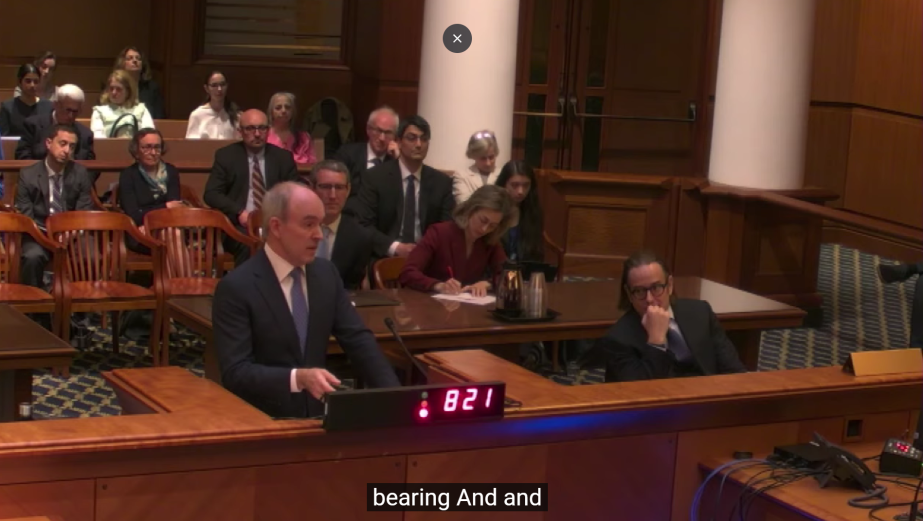
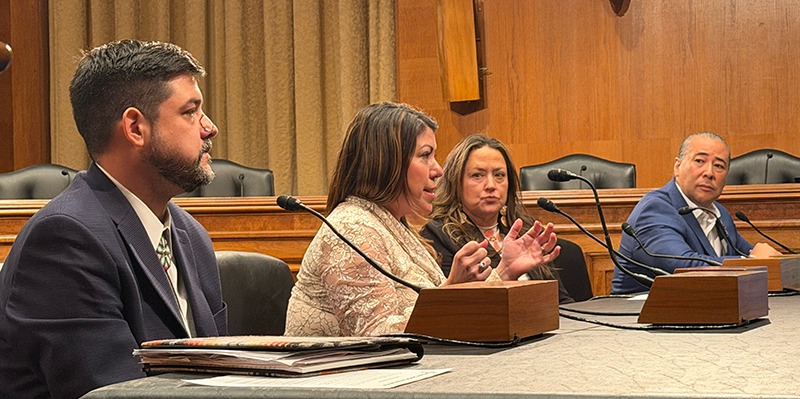
Then there is Blanche Lincoln, the former Senate Agriculture Committee chairwoman representing Arkansas. Lincoln (pictured below, back row, second from right) authored the Dodd-Frank “special rule” in 2010 governing event contracts involving gaming, terrorism, war, and assassination. Lincoln, now a registered lobbyist whose clients have included Kalshi, filed a comment reiterating that “only the U.S. Commodity and Futures Trading Commission gets to decide which futures contracts should be prohibited.” She warned that state-level interference would “breed uncertainty, which is what companies and financial markets dread most and is most dangerous to our overall economic stability.”

Lincoln’s filing is notable for another reason: She specifically cited the Super Bowl as an event with “strong commercial value because they have major impacts on advertising, apparel sales and the hospitality industry.” That marks a conspicuous departure from her own 2010 Senate floor statement, in which she said sports event contracts like the Super Bowl “would not serve any real commercial purpose” and “would be used solely for gambling.”
As InGame has previously reported, Lincoln’s earlier remarks have been widely cited by tribal nations and state enforcers arguing that sports event contracts should be banned, making her current position a head-scratching, perhaps disingenuous reversal, and one that her opponents will not soon forget.
On the other side of the preemption divide, the pushback was fierce and broad. Forty-one state attorneys general, led by Ohio AG Dave Yost and joined by Nevada, New Jersey, New York, Tennessee, Utah, and 34 others plus the District of Columbia, filed a joint comment arguing that “the CFTC lacks exclusive jurisdiction over a broad range of sports-related contracts currently offered as event contracts.”
Yost-CFTC-States-Filing-April-30-2026The states’ letter went further than most other opponents, contending that sports event contracts are not swaps at all, writing they fall outside the CEA’s reach entirely because “a sports bet does not hedge against any financial risk — it itself creates the risk.” The states invoked the major-questions doctrine and the federalism canon, arguing that Congress never intended to hand the CFTC control of a $150-billion-a-year industry long regulated by states. They also quoted former former CFTC Chair Gary Gensler, who said he “never once ever heard a member of Congress or their staffs suggest that the law they were writing, acting upon, and voting on was for our little agency, the CFTC, to have oversight over sports betting.”
The states’ letter also goes on the record regarding public health. It cited Lancet data showing gambling disorders could affect up to 8.9% of adults and 16.3% of adolescents who use sports betting products, and the letter noted that a Citizens Bank report found nearly a quarter of Kalshi’s users are under 25, compared to 7% for state-regulated sportsbooks.
Elsewhere, the National Congress of American Indians wrote that “event contracts that circumvent IGRA’s regulatory framework undermine Tribal sovereignty by allowing external entities to influence gaming activities without appropriate oversight or accountability.” The Chickasaw Nation warned that the commission’s failure to enforce the CFTC’s own gaming prohibition (17 CFR 40.11) “could lead to the development of an unlawful nationwide and unregulated online casino industry.”
The Pechanga Band of Indians argued that sports event contracts “directly threaten the Tribe’s sovereign authority to regulate gaming on its Indian lands, the value of the Tribe’s bargained-for rights under California’s tribal-state compacting system, and the governmental revenues that fund the Tribe’s core sovereign functions.” And the California Nations Indian Gaming Association cast the entire ANPRM as premised on a false assumption: “By seeking comments on the regulation of these sports-related event contracts, the CFTC presumes that such contracts are legal. They are not.”
Sen. Adam Schiff of California, joined by several colleagues, accused Chairman Selig of betraying his own confirmation testimony, noting that Selig went from calling it “irresponsible” to prejudge the gaming question (during a confirmation hearing) to publicly stating he “strongly disagrees” that prediction markets violate the law. The senators argued that this approach “converts a statutory prohibition into case-by-case policy judgments” and “places the commission in direct conflict with state and tribal governments whose gambling laws Congress expressly chose not to preempt.”
B. Insider trading and national security
If the jurisdiction fight is the most contested theme, insider trading may be the most urgent. The shadow of the trades on Polymarket’s international site involving former Venezuela President Nicolas Maduro and a U.S. soldier charged by the Department of Justice for his trades based on knowledge of the impending operation to capture Maduro hangs over the entire record.
Sen. Catherine Cortez Masto of Nevada argued that this episode raises not just fraud concerns but national security ones, since foreign adversaries could use prediction markets tied to military operations “to their advantage.”
Columbia Law’s Joshua Mitts and the University of Haifa’s Moran Ofir added some context. Their study screened more than 210,000 suspicious wallet-market pairs and identified approximately $143 million in “aggregate anomalous profit.” Traditional surveillance tools are poorly suited here: “The core difficulty is that an informed trader’s activity can resemble ordinary price discovery.” The commission should recognize that “prediction market surveillance requires a fundamentally different approach: one that examines the behavioral profile of the trader (timing, sizing, directionality, deviation from personal baseline) rather than the price impact of the trade.”
Dartmouth’s Eric Zitzewitz acknowledged the controversies but urged perspective: “A soldier may have put his colleagues at risk by trading with insider knowledge of an operation in Venezuela, and someone may have tampered with a weather station at an airport to manipulate the outcome of a contract on the daily high temperature.” But “these potential issues should be kept in perspective because the vast majority of economically useful prediction markets do not suffer from them.”
Rutgers’ Harry Crane proposed a framework distinguishing between “information advantage” and “outcome control,” and advised that the CFTC “should establish that policing inside information is the responsibility of the entity where the information originates, not the market operator.” In his view, “trading based on information advantage is the primary mechanism by which prediction markets achieve accuracy and by which market participants are incentivized. Prohibiting trading based on information advantage would devolve these markets into vehicles for pure speculation and gambling.” The regulatory target should be the ability to directly control the underlying event, not simply know about it.
Coinbase acknowledged the problem but argued the enforcement toolkit works, pointing to the CFTC’s insider trading charges connected to the Maduro trades as proof that “public confidence in prediction markets is contingent on the knowledge that market misconduct will not be tolerated.”
C. The ‘gaming’ definition and sports integrity
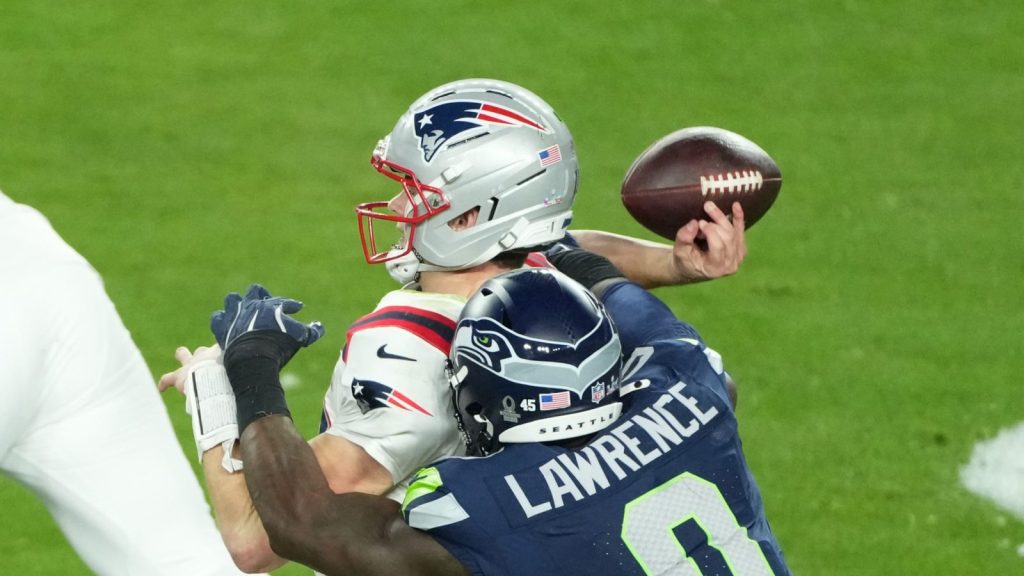
No single word in the Commodity Exchange Act generates more disagreement in 2026 than “gaming.” The ANPRM memo asked whether and how to define it; the answers ranged from categorical prohibition to creative redefinition.
Better Markets’ Benjamin Schiffrin offered a challenge to the PM industry’s foundational premise that all event contracts are swaps under the CEA. Many aren’t, Schiffrin argued, because they lack the required “financial, economic, or commercial consequence.” His examples: “Whether or not the Lakers cover the spread in their game against the Knicks does not itself result in a financial, economic, or commercial consequence.” Schiffrin noted that Kalshi once told a federal court in prior litigation that elections are “not remotely analogous” to “sporting events” because, “unlike games,” elections “carry significant economic consequences in the real world.” The CFTC must “distinguish event contracts that are legitimate financial instruments from event contracts that constitute gambling.”
The 41 state attorneys general made a version of the same argument. Their letter walked through the CEA’s six-part swap definition and argued that the word “event” must be read narrowly, as a “noteworthy” happening distinct from a mere “occurrence,” and that the surrounding parts of the definition all refer to financial instruments, indices, or measures. Sports bets, the AGs wrote, do not involve events “associated with a potential financial, economic, or commercial consequence” because the consequences flow from the bet itself, not from the underlying game.
Smarkets CEO Jason Trost proposed cutting through the definitional gridlock by looking at the structure of the thing. Rather than sorting contracts by subject matter, he offered a structural test: “Gaming is a contract structure in which one counter-party has a systemic structural advantage over the other.” Under this definition, an exchange-traded, fully collateralized, anonymously matched event contract wouldn’t qualify, but a traditional sportsbook offering would.
DraftKings, filing as owner of the Railbird Exchange DCM, argued that the commission “should not treat ‘gaming’ as categorically contrary to the public interest” and “should not read ‘gaming’ so broadly that it captures contracts tied to sporting events merely because those events are colloquially described as games.”
CME Group: “CME Group questions whether issues that have arisen in the last year with respect to event contracts are less reflective of gaps in the regulations themselves than of unequal adherence to those regulations across DCMs.” The message: “The failures of the few should not result in a new, prescriptive regulatory scheme for all.”
The leagues homed in on sports integrity; no surprise there. The NBA’s Dan Spillane called for DCMs to “affirmatively block athletes, along with game officials and other league and team personnel, from trading any contracts on their league’s games or events” and demanded that “functionally anonymous trading of sports prediction contracts” be eliminated.
NCAA President Charlie Baker proposed mandatory suspicious-activity reporting to governing bodies, geolocations of trades, mandatory cooperation in investigations, and a uniform definition of prohibited traders encompassing “student-athletes, athletic personnel, and officiating staff like referees.” Baker flagged an age-eligibility gap: Most states restrict sports wagering to 21-plus, while prediction markets allow participation at 18, which is a disparity that “presents a significant risk of inducing college students — and potentially even high school students — to engage in these markets.”
FanDuel urged that operators be required to “join an integrity monitoring association” and “enter into information-sharing arrangements with relevant sports governing bodies.”
Sportradar offered its surveillance infrastructure as a model, noting its monitoring in 2025 “covered more than one million sporting events across 70 sports worldwide and identified 1,116 suspicious matches.”
D. The Rule 40.11 fight: Discretion vs. prohibition
CFTC Rule 40.11 and the way it interacts with the CEA remains a big center of gravity, as noted earlier in this article. As InGame has reported, the rule has already emerged as a potential case-breaker in federal court: At oral arguments in the Ninth Circuit on April 16, Judge Ryan Nelson appeared skeptical of the prediction markets’ position, telling their lawyers “this can’t be a serious argument” when they tried to read 40.11 as something other than a blanket prohibition. “No one has come up with a coherent, English reason why that shouldn’t be the rule,” Nelson said. “It says you cannot self-certify and post it.”
The backstory: In 2010, the Dodd-Frank Act added Section 5c(c)(5)(C) to the Commodity Exchange Act, a.k.a. the “Special Rule” for event contracts. That provision says the commission “may determine” that contracts involving terrorism, assassination, war, gaming, activity unlawful under state or federal law, or “other similar activity” are “contrary to the public interest.” The operative word is “may.” Congress gave the CFTC a two-step process: First find that a contract involves an enumerated activity, then separately determine it is contrary to the public interest.
When the CFTC codified this into Rule 40.11 in 2012, the second step dropped out. The rule reads as a categorical prohibition: A registered entity “shall not list for trading” any contract that “involves, relates to, or references” the enumerated activities. No public interest determination required.
That gap between the statute’s “may determine” and the rule’s “shall not list” is a fault line running through the comment record. And it may be more than academic: As our Daniel O’Boyle has reported, because 40.11 is an implementing rule carrying the force of law, any fix would likely have to go through notice and comment, which is a process that could take more than a year. The CFTC could theoretically invoke the “good cause” exception under the APA, potentially bolstered by a Trump executive order directing agencies to repeal “unlawful regulations,” but invoking emergency authority more than a year after the rule became inconvenient would invite its own legal challenges.
The PM industry position: Amend the rule
The argument is uniform across the industry. CME Group: “The statute provides discretion, but the regulation provides a categorical prohibition.” CME urged the commission to “amend CFTC Regulation 40.11 to address this omission.”
Coinbase called on the CFTC to “withdraw and re-propose Rule 40.11” entirely: “when Rule 40.11 was codified by the CFTC in 2012, it was done in a flawed manner that confuses the actual authority granted to the CFTC by Congress in the CEA.” The statutory language “says that the CFTC ‘may determine.’ It does not say ‘shall determine’ or ‘must determine.’ The language grants the authority, and defers to the CFTC to exercise the authority. It does not bind contracts involving the five categories as per se prohibited.”
The Coalition for Prediction Markets contended that Rule 40.11(a) “has been misunderstood to categorically and in one broad stroke prohibit five types of event contract” … “overly prescriptive, contrary to a principles-based approach, and goes beyond the authorization of CEA § 5c(c)(5)(C).”
Kalshi’s letter engaged the Special Rule more than any other commenter, with 37 references. Lopes argued the burden runs in the right direction: The commission must affirmatively find a contract contrary to the public interest. The “special rule does not require DCMs to prove a contract is in the public interest.”
DraftKings urged the commission to reconsider whether “gaming” should remain in Rule 40.11 at all “in light of the materially changed landscape since 2010.”
Robinhood called for defining “gaming” narrowly as “playing a game of chance for stakes.”
The FIA encouraged the commission to “clarify how the public interest determination is intended to operate for enumerated categories and to harmonize CFTC Regulation 40.11 with the CEA to reduce ongoing uncertainty.”
The FIA also cited former CFTC Commissioner Brian Quintenz’s 2021 statement that “Regulation 40.11 somehow missed this, and violates the APA both for being contrary to the statute and for fumbling the ‘reasoned decision making’ test.” Quintenz is a current Kalshi board member and had been nominated to lead the CFTC before his nomination unraveled, leading to Selig’s appointment.
The opposition: Enforce the rule as written
The tribal nations, state regulators, 41 state attorneys general, and several senators (among others) argued that Rule 40.11 already prohibits sports event contracts and that the commission’s failure to enforce it is the problem.
The California Nations Indian Gaming Association wrote that “Regulation 40.11 unequivocally provides that a registered entity ‘shall not list for trading’ any contract or swap that ‘involves, relates to, or references’ gaming” and that prediction market exchanges “are operating in violation of Regulation 40.11.” The Pechanga Band noted that “two federal district courts have recently expressly confirmed that Regulation 40.11(a) prohibits the listing of contracts involving gaming.”
The 41-state AG letter cited 40.11 directly, noting that “the CFTC already has a binding rule prohibiting DCMs from listing any contract ‘that involves, relates to, or references … gaming’” and that “unlicensed, unregulated, and untaxed ‘sports event contracts’ offered on DCMs are per se unlawful activity under the state laws discussed here.” The states reminded the commission that “agencies, after all, have an obligation to follow their regulations issued through notice-and-comment rulemaking.”
Chickasaw Nation went further toward solving the definitional problem. Its letter, prepared by special counsel Stephen Greetham, proposed specific regulatory language for a revised 40.11.
The Chickasaw Nation called for a workable definition of “gaming” and procedural reforms requiring commission pre-approval of gaming-related products while giving tribal and state regulators a role in the review process. The proposed language for a new subsection 40.11(b) would define “gaming” as any activity “prohibited or regulated under the Indian Gaming Regulatory Act or state law” that involves staking something of value upon “the occurrence, non-occurrence, or outcome of a contest, game, match, or competition involving skill or chance conducted primarily for entertainment, amusement, or sport” along with in-game events and individual player performances.
The letter grounded this in the administrative record. The commission itself “agreed that the term gaming requires further clarification” back in 2011 but deferred to case-by-case review, a process the Chickasaw Nation argued has been “ineffective,” producing only two final determinations in over a decade while hundreds of event contracts were self-certified. It cited both dissenting commissioners from the CFTC’s withdrawn 2024 proposed rule: Commissioner Summer Mersinger, who agreed a definition was “long past time” but found the proposed version “much too broad,” and Commissioner Caroline Pham, who warned against the commission becoming a gaming regulator.
The Chickasaw Nation also quoted Kalshi’s own litigation position from the 2023 D.C. District Court case, in which Kalshi argued that elections “are not remotely analogous to casino games, lotteries, bingo, or even sporting events” and that “gaming” under the CEA means “betting on games.” The Chickasaw Nation noted that while Kalshi is now one of the leading DCMs for sports betting event contracts, its position in court little over a year ago was that such event contracts would qualify as gaming “under common usage.”
E. Market structure, consumer protection, and the big picture
Beyond the headline fights over jurisdiction and gaming, the record contains a debate about how prediction markets should work day-to-day and who should be protected.
Robinhood Derivatives wrote: “Certain key customer protection rules currently applicable to FCMs do not apply to DCMs, even though many DCMs now also directly serve retail customers.” Customers “should be afforded the same protections regardless of whether they access the market through an FCM or directly on a DCM.” DraftKings made the same point: Retail-facing prediction markets “should not be treated as though the absence of an intermediary is a customer benefit in itself.”
Per the National Council on Problem Gambling: “It is clear to NCPG that purchasing event contracts is functionally gambling.” The organization called for “robust responsible gambling standards that prioritize customer health” and urged the commission to prohibit retail customers from trading on margin, equating it with gambling on credit.
Smarkets: “The same individual participant who can be harmed by speculative event-contract trading can be harmed by leveraged options, zero-day-to-expiration index options, margin-funded equities, unregulated cryptocurrency products, and retail FX.” Their recommendation was not less regulation but consistent regulation: cross-operator self-exclusion, default deposit limits, affordability checks, and advertising standards across all speculative trading.
The institutional plumbing providers weighed in as well.
The Futures Industry Association called for retaining the traditional DCM/FCM/DCO market structure for any leveraged event contracts and questioned whether the self-certification process gives the commission adequate time to assess novel risks. FIA suggested leveraged event contracts may warrant “a separate and fully siloed default fund, distinct from default resources supporting traditional futures and swaps.”
The Options Clearing Corporation argued that the non-intermediated clearing model used by most prediction market DCOs “provides inferior risk management” and that “any margin trading for event contracts should be limited to intermediated markets.”
ICE flagged a surveillance blind spot: Prediction market DCMs currently have “limited visibility” under the commission’s reporting framework.
Risk Labs proposed that every event contract specify two resolution paths: “a ministerial source path” for clear-cut settlements and “an independent non-ministerial path for contracts where settlement requires interpretation, material judgment, source selection, evidentiary review, or resolution of a qualifying pre-finality dispute.”
George Mason’s Robin Hanson framed prediction markets as an information institution on par with journalism and academia, arguing they should be “approved by default, especially when they can inform topics that matter, and only restricted when we see clear evidence of harm.” Meanwhile, Cathie Wood of ARK Invest argued that prediction markets “could evolve into a multi-trillion dollar asset class” and that “restrictive or unclear regulatory frameworks risk pushing innovation offshore.”
Kalshi concluded with the framing that captures the industry’s central pitch: “The right response to manipulation risk, integrity risk, and customer protection concerns is not to narrow the universe of permissible contracts, which would push volume offshore (like the origin of the London Eurodollar market), but to ensure that DCMs and DCOs are doing the work the Core Principles already require them to do.”
In closing
This article is plenty long already, so let’s wrap it up with this: The 40.11 question will almost certainly be at the center of whatever NPRM the commission drafts.
The prediction market industry wants the rule rewritten to match the statute’s two-step framework, while the tribal nations and the states want it enforced as written or strengthened with a clear gaming definition.
When the NRPM lands, search+find 40.11 will be the first order of business.