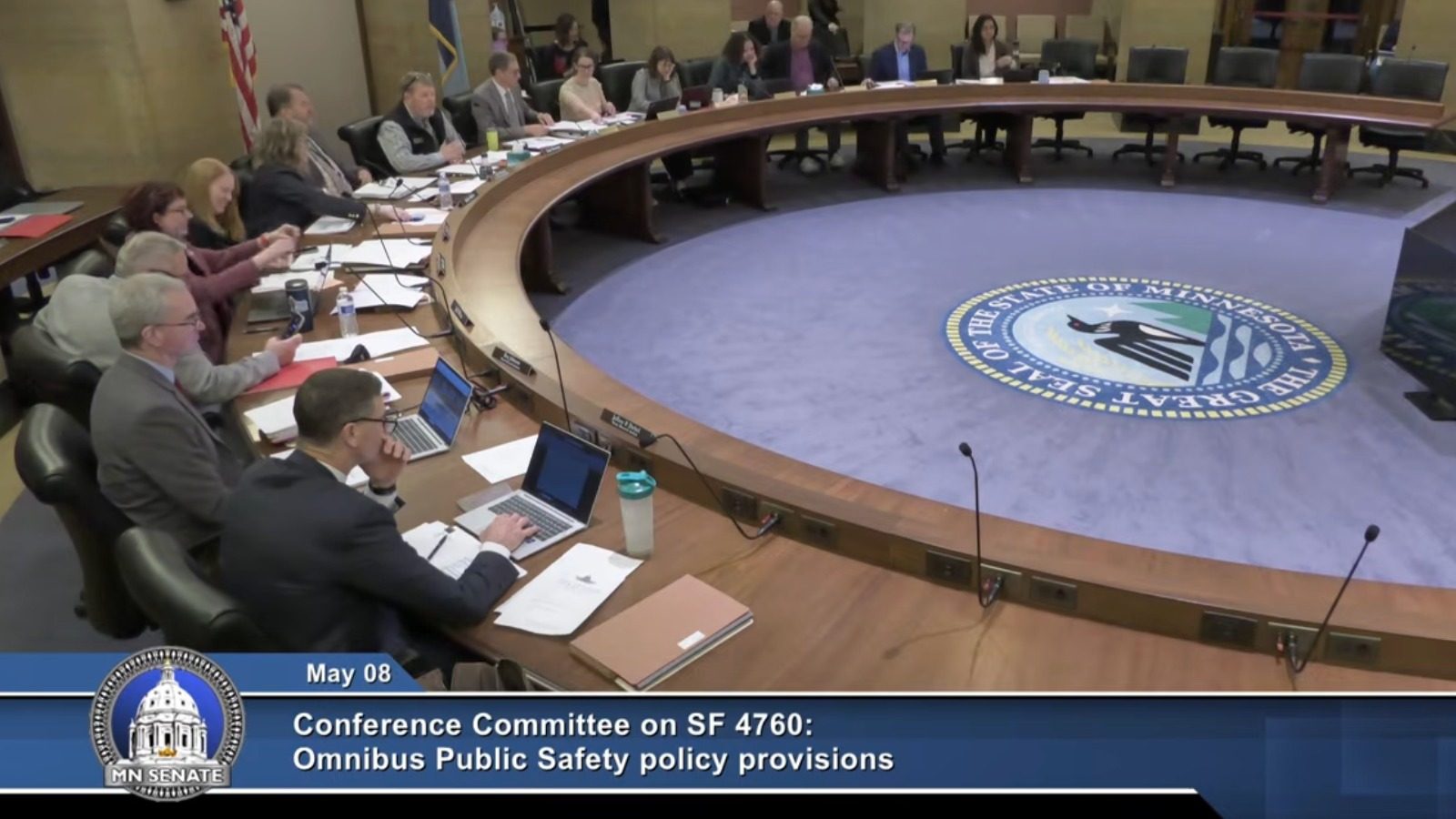
A Minnesota joint conference committee approved Friday morning an amended omnibus public safety bill that includes a prediction market ban and sent it back to both legislative chambers for votes. Should the bill pass and Gov. Tim Walz sign it, the state would be the first to have a law banning the platforms.
SF 4760 was sent to the seven-member bipartisan conference committee on Tuesday. Friday morning, during a two-hearing meeting, amendments were offered to several sections of the bill, but the prediction prohibition remained intact. From here, the bill cannot be amended on either chamber floor. Should it get out of the House and Senate, it will be sent to Walz, and if he signs it, the law would go into effect Aug. 1.
Semafor reported earlier this week that should Minnesota ban prediction markets, the Commodity Futures Trading Commission, which oversees prediction markets, will likely sue. Chairman Michael Selig is “monitoring” the situation. The agency is already in court with the state of Arizona.
The idea for a prediction ban originated with SF 4511, brought by Sen. John Marty in mid-March. That bill passed out of the Senate April 30, but rather than take it up, the House put the language into HF 4760, which had already passed both chambers in different forms and was headed for conference committee.
The conference committee was made up of Republicans Sen. Warren Limmer, Rep. Paul Novotny, and Rep. Jeff Witte and Democrat-Farmer-Labor (DFL) party members Rep. Sandra Feist, Sen. Ron Latz, Rep. Kelly Moller, and Sen. Clare Oumou Verbeten.
The legislative session is set to adjourn May 18.
In other news …
Below are updates on other bills — and one regulatory proposal — moving forward across the U.S.:
Colorado: SB 131, which would ban some push notifications and set a cap on deposits, began its march through the House after passing the Senate April 28. The House Finance Committee advanced the bill, 9-2, Monday, and the House Appropriations Committee sent it to the Committee of the Whole on an 11-0 vote Thursday. The legislature is set to adjourn Wednesday, meaning the House has three session days remaining to act on the bill.
Iowa: SB 2470, the bill that would have put a regulatory framework around prediction markets, died in the House when Iowa’s legislature adjourned May 3 — which was 12 days after the expected adjournment date of April 21. The bill passed out of the Senate March 31 and would have imposed a $20 million licensing fee and required prediction market platforms to pay taxes either on “adjusted revenues or amounts traded.” The proposal would have made the tax rate on either 20%.
Missouri: A bill that would have more than tripled the online sports betting tax less than six months after wagering launched was amended to remove the increase. During a House Crime and Public Safety Committee hearing Tuesday, lawmakers said they would like to get more than a few months worth of data before determining if an increase is appropriate.
Ohio: The Ohio Casino Control Commission Wednesday announced that it is proposing to ban credit card funding for gambling accounts. A public comment period is open until 5 p.m. ET May 15, and stakeholders can send comments to [email protected].
Should the rule pass, Ohio would become the 11th U.S. jurisdiction to ban credit card funding. In the last year, most national operators have stopped taking credit cards to fund online accounts, including bet365, BetMGM, Caesars Sportsbook, DraftKings, and FanDuel. Fanatics Betting & Gaming has not allowed credit card funding since its inception.