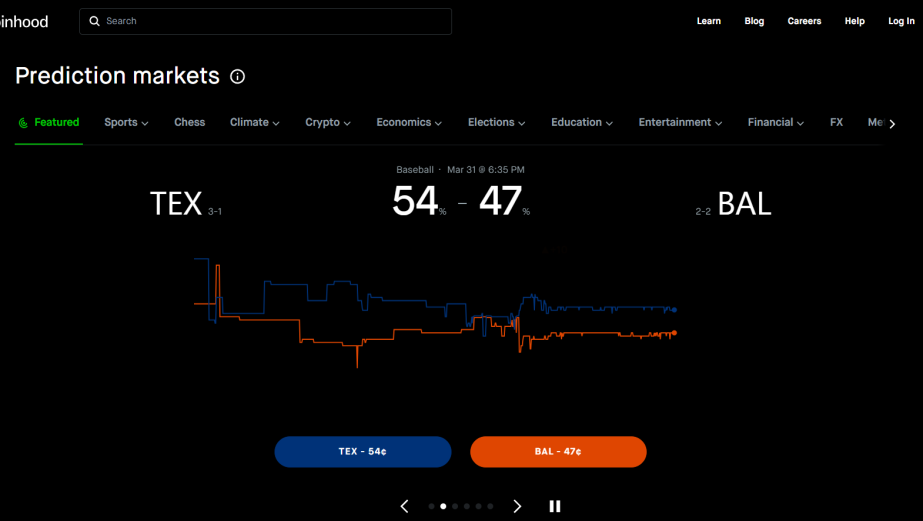
It looks like ForecastEx has become the first Commodity Futures Trading Commission-registered exchange to throw in the towel on sports event contracts, as the prediction market has not offered any contracts on sports for 10 weeks.
ForecastEx stopped its sports contracts the same way it self-certified and launched them: quietly, with nobody noticing until weeks later.
InGame in October first reported that ForecastEx had self-certified sports contracts. It certified the product under the vague name “Success Forecast Contract” in September. Details buried within the self-certification document revealed it was for sports.
In November, ForecastEx started offering sports contracts, but this again went virtually unnoticed for four weeks, by which point sports was the platform’s largest category on Sundays.
Now, the contracts are gone.
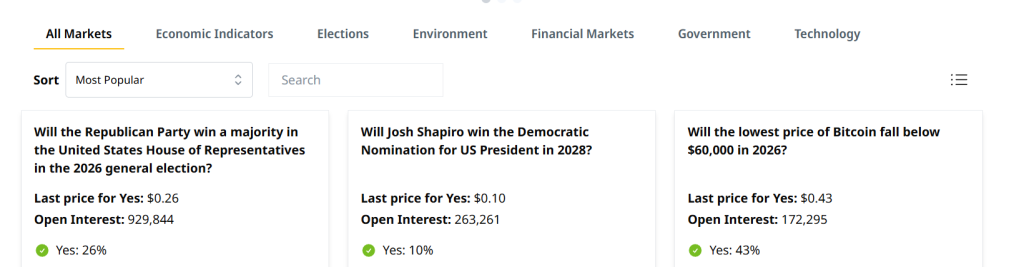
According to ForecastEx’s data, the last sports contracts listed on the platform were the March 3 slate of NBA games. These contracts, as well as those in the previous two and a half weeks, did zero volume. There is no longer a sports tab on the ForecastEx website.
A spokesperson for ForecastEx did not respond to InGame’s request for comment.
Last actual bet was on Feb. 13
The last time anyone placed a bet on a ForecastEx sports contract was Feb. 13. That day, ForecastEx had one of its biggest days ever, and by far its biggest day for NBA volume. The unusually high volume was almost certainly due to stock trading giant Robinhood directing its customers toward ForecastEx contracts for three games instead of its usual routing toward Kalshi contracts.
“ForecastEx has essentially no organic sports users, so it’s not unreasonable to assume that every contract on ForecastEx that night was a Robinhood order,” 5c(c) Capital co-founder Adhi Rajaprabhakaran wrote of the surge in volume in his Fifty Cent Dollars newsletter in March.
But a similar day, or even something remotely close, never happened again. It offered bets on 206 NBA games between Feb. 14 and March 3, but none received any volume.
Robinhood is preparing to launch Rothera, its own designated contract market, reducing its reliance on both ForecastEx and Kalshi, in the coming weeks. While Robinhood does not currently have plans to abandon either partner when Rothera goes live, it will be even less likely that the app pushes its users toward ForecastEx for major sporting events.
Last month, on Robinhood’s first-quarter earnings call, the stock trading app’s CEO Vlad Tenev said there were too many exchanges with “not a lot of differentiation.” He said he expected an era of consolidation to come soon.
Users traded $251.3 million on sports
Users on ForecastEx traded $251.3 million worth of sports event contracts while they were available. ForecastEx prices contracts at $1.01 each, taking the extra cent as its fee, meaning that 248.8 million contracts were traded. The largest single sports markets on Kalshi — the 2026 Super Bowl, NCAA Men’s College Basketball Tournament, and Masters winners — all exceeded that total in volume on their own.
ForecastEx only ever offered contracts on NBA and NFL game winners, despite self-certifying contracts that would have covered player props and arguably parlays.
ForecastEx’s sports volume was almost entirely due to a few select events where it appears that Robinhood directed at least some of its contracts to the exchange. Virtually all of ForecastEx’s total sports volume, 99.96%, came on just 39 games – 35 in the NFL and four in the NBA.
The 13 biggest trading days on the platform made up 93.7% of its total lifetime sports volume. A further three days made up an additional 2%, with the remaining 4% split across 61 days. There were more than 100 days on which sports contracts were available but did no volume.
Given that it takes one cent in fees for every contract, ForecastEx made $2.5 million in fees on sports contracts over the history of the product. Parent company Interactive Brokers made $1.67 billion in net revenue during the first quarter of the year.
The change now leaves ForecastEx only offering non-sports markets, with weather contracts — where Robinhood still regularly routes users to the platform — its greatest strength.
Despite being an early mover in CFTC-regulated prediction markets, launching in August 2024, ForecastEx’s volume remains low. Over the last month, it is behind not just Kalshi in volume, but also Polymarket US, Crypto.com, and even CME, which launched in December and itself appears to have started slowly.
ForecastEx’s sports contract journey made so few waves that Polymarket continues to list ForecastEx as an unresolved strike for its “Which DCMs self-certify sports event contracts?” market. That is despite the fact that ForecastEx self-certified the contracts, listed them, took $250 million in volume on them, and then stopped offering sports event contracts.
A contract with a March 31 expiration date erroneously resolved to “No.”