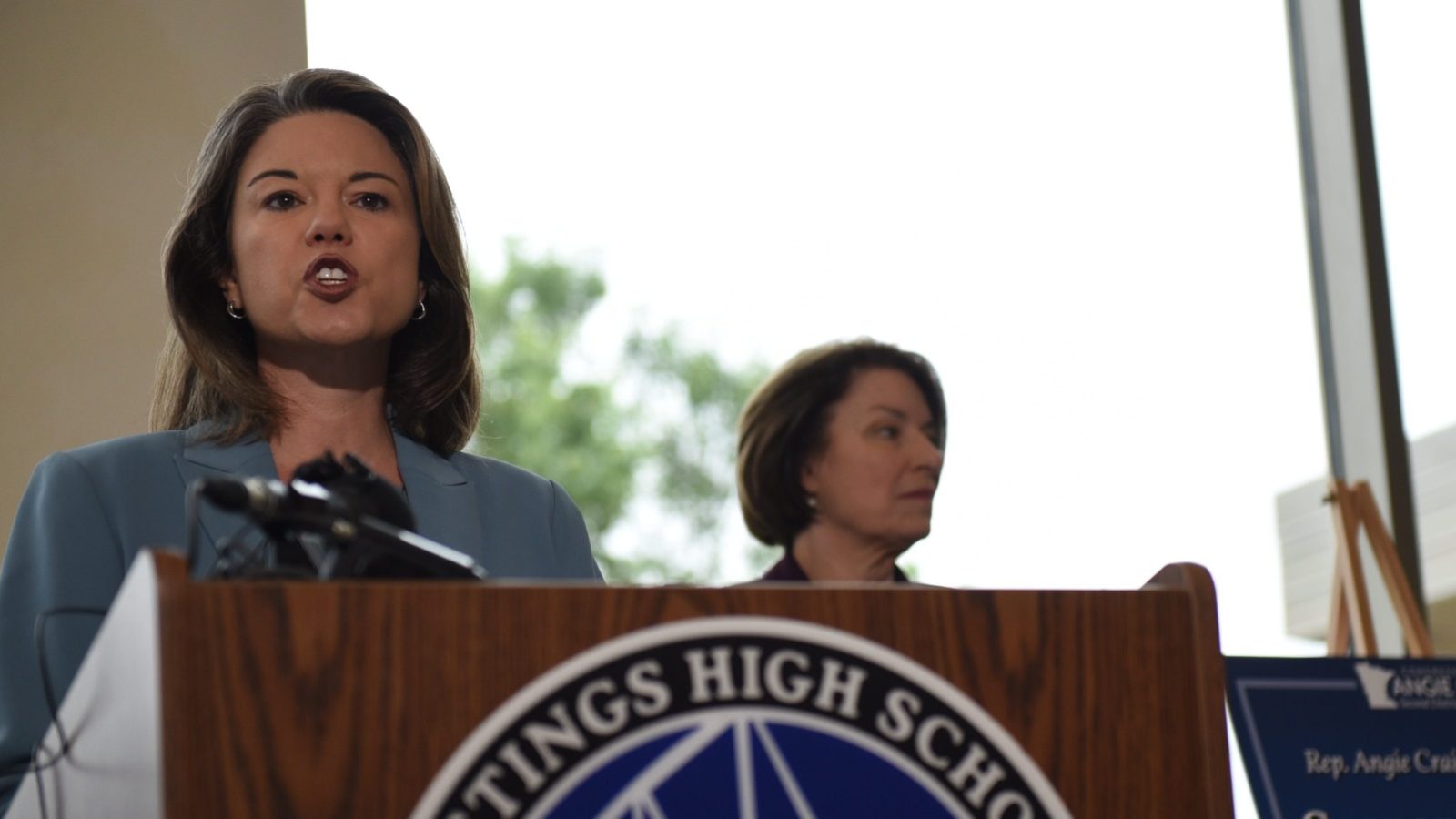
With legislation that would ban prediction markets sitting on Minnesota Gov. Tim Walz’s desk, U.S. Rep. Angie Craig — a candidate now for U.S. Senate — may not be in alignment with what state lawmakers want.
Craig, who represents the Twin Cities metropolitan area, last year received $15,000 in individual donations from employees or founders of Kalshi, the most well-known prediction market live in the U.S.
Three Kalshi executives, including both co-founders, made donations to Craig in 2025, according to the Federal Election Committee (FEC) website. Founder Tarek Mansour gave $7,000 in contributions to Craig’s “Angie Craig for Minnesota” campaign last year between July 8-Sept. 2, while co-founder Luana Lopes Lara gave $7,000 on Sept. 2 and Head of Corporate Development Sara Slane gave $1,000 on Sept. 4.
At the time of the contributions, the bill that would prohibit prediction markets had not been filed. All forms of online gambling were — and remain — illegal in the state, but Kalshi’s platform was live as the state’s key sports betting stakeholders were working to come to a consensus to legalize wagering.
The FEC platform is updated through March 31.
Craig, who has served in Congress since 2019, is making a run for an open Senate seat against Lt. Gov. Peggy Flanagan in the Democratic primary set for Aug. 11. Both are members of Minnesota’s Democrat-Farmer-Labor (DFL) party. Multiple media outlets say the race is between an “establishment” Democrat in Craig vs. a progressive in Flanagan. The most recent Public Policy Polling and New York Times polling show Flanagan with a double-digit advantage.
Indian Country supports Flanagan
The race has piqued the interest of Indian Country as Flanagan is a member of the White Earth Nation of Ojibwe. She is currently the highest-ranking Native woman holding an executive office in the U.S.
In Minnesota, the road to legal sports betting goes through Indian Country. The state’s 11 gaming tribes have been offering in-person casino gambling since the 1980s, and the tribes were the first in the U.S. to compact for gaming after the Indian Gaming Regulatory Act (IGRA) passed Congress in 1988. IGRA allows tribes the sovereign and exclusive right to offer and regulate gaming on their land. The Minnesota Indian Gaming Association, which backed a legal sports betting bill that failed to gain traction during the legislative session, opposes prediction markets being allowed to offer sports event contracts.
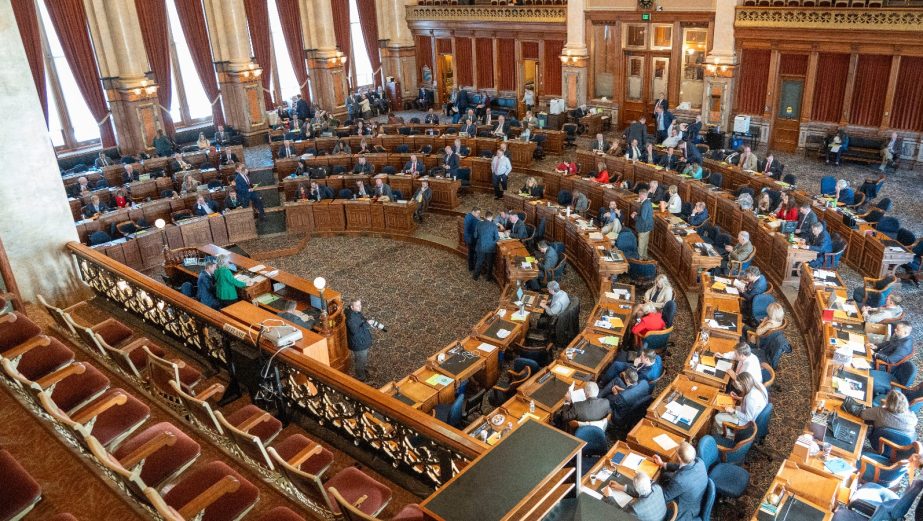
Last week, following the recommendation of a conference committee, the Minnesota House and Senate approved SF 4760, a sweeping public health bill that includes language prohibiting prediction markets. Should Walz sign the bill, Minnesota will be the first state with such a ban, and the expectation is that the law will immediately come under fire, including lawsuits from the Commodity Futures Trading Commission (CFTC), Kalshi, or other prediction operators.
Craig, the ranking Democrat on the House Committee on Agriculture, joined committee Chair Glenn Thompson in sending a letter to President Donald Trump Friday that called for him to fill the four remaining CFTC seats. The CFTC, which oversees prediction markets, has been without its full complement of commissioners for more than a year. Chair Michael Selig is currently the sole commissioner.
Craig has also been vocal about banning members of Congress from using insider information to trade on prediction markets. The Senate has already imposed such a prohibition on itself.
While neither Craig nor Flanagan appear to have publicly weighed in on whether prediction markets should be allowed to offer sports event contracts that mimic traditional sports betting, Craig has not signed on to any of the House bills that would ban sports event contracts.
On her Peggy Flanagan for U.S. Senate website, Flanagan wrote that Trump is “ignoring treaty and trust obligations and threatening tribal gaming rights.” And tribes in the state have long felt they have an ally in Flanagan on gaming and many other issues.
Per the FEC website, Flanagan’s campaign has not accepted any donations from individuals associated with Kalshi or any other prediction platform.
Other Minnesota prediction predicaments
Craig isn’t the only Minnesota politician with a link to prediction markets. State Sen. Matt Klein, who is one of the sponsors of the original Senate bill that would ban prediction markets, was suspended by Kalshi in April. Klein was banned from Kalshi — and hurt his congressional election chances — after he took out a $50 contract on himself to win his primary race.
Klein is running for the House seat Craig is vacating, but state Democrats are throwing their backing behind Matt Little after endorsing him at the DFL District 2 Convention May 9.
According to the Minnesota Reformer, Klein said of his activity on Kalshi, “I heard from friends that there was a prediction market site with wagers on my primary race. I had never wagered on a predictions market previously. I was curious about how it worked. I set up an account and bet $50 of my own funds that I would win the primary.
“This was a mistake, and I apologize. My experience, like many other Minnesotans, points to the need for clearer rules and regulations for these types of markets.”
Klein agreed to a fine of $539.85 and a five-year suspension from trading on Kalshi. According to a Kalshi “Notice of Settlement of Disciplinary Action,” the company wrote that Klein violated its rule 5.17(z) that specifies that if a trader is a decision maker in a contract, the trader is “prohibited from attempting to enter into any trade, either directly or indirectly, on the market in such Contracts.”