Seventeen U.S. states are in court trying to keep certain prediction market products from being offered in their states — yet sitting members of Congress from nine of those states have accepted individual campaign donations from Kalshi’s founders or executives.
InGame research on the Federal Election Commission website revealed that Washington, D.C. politicians representing states currently embroiled in litigation with Kalshi and/or its regulator, the Commodity Futures Trading Commission (CFTC), have accepted more than $89,000 from individuals employed by the nation’s most prominent prediction market between Jan. 1, 2025, and March 31, 2026.
Rhode Island late last week became the latest state to become entangled in the the courts with Kalshi when the operator sued the state in federal court, and on the same day, the state sued Kalshi and Polymarket in state Superior Court. The filing is one of many involving a U.S. state or federally recognized tribe in a fight that many believe will end at the U.S. Supreme Court.
Rhode Island joins Arizona, Massachusetts, Michigan, Nevada, Washington, and Wisconsin as states that have sued Kalshi in state court while it also joins 12 other states to be sued by the platform. In addition, the CFTC has sued Arizona, Connecticut, Illinois, Minnesota, New York, and Wisconsin.
Mansour gave $29,000 to NY Dems
Every state currently in litigation is clearly opposed to allowing prediction markets to offer sports event contracts overseen by the CFTC within their borders, but at least 10 sitting representatives and one senator from states embroiled in prediction market court cases have taken money from Kalshi employees since 2025. Every one, except Minnesota’s Angie Craig, represents a state where sports betting is legal.
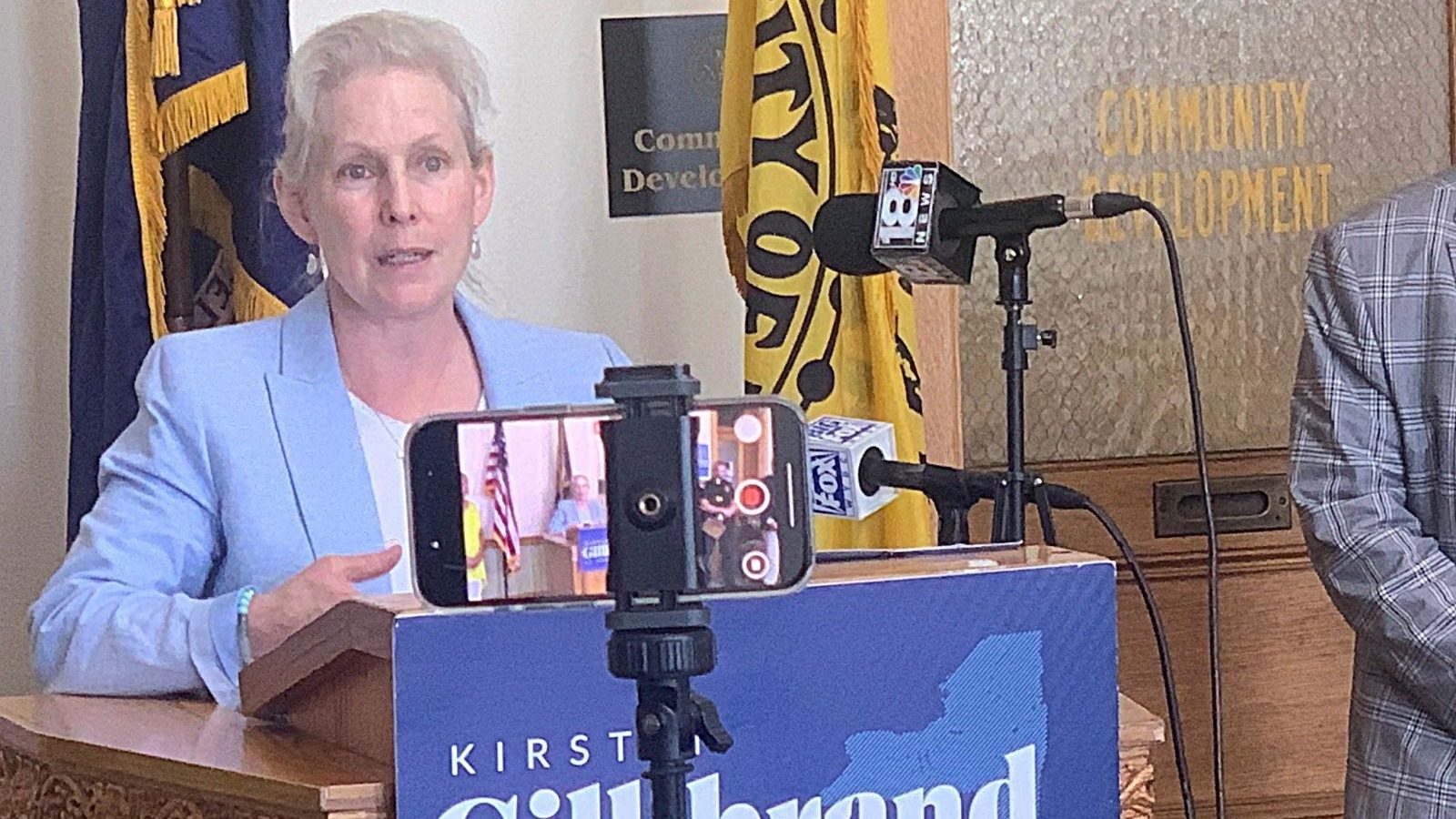
Among those who accepted Kalshi money is New York Democratic Sen. Kristen Gillibrand, whose campaign accepted $11,000 in donations from Kalshi founder Tarek Mansour between Dec. 5, 2025, and Jan. 20, 2026. Mansour also contributed $29,000 to New York Democratic political action committees. Kalshi sued the New York State Gaming Commission in October 2025.
Mansour’s single biggest contribution to an active member of Congress was to Wisconsin Republican Rep. Brian Steil — $22,000 to the Steil Victory Fund, contributed March 31, 2026.
Searches for Polymarket as well as its U.S. subsidiary QCEX, or corporate name Blockratize, Inc., revealed one contribution of $6,818.18 to Republican Rep. Jim Jordan of Ohio from Polymarket Chief Legal Officer Neal Kumar on Oct. 1, 2025.
Politicians can refuse donations, but it does not appear that any of these did.
The money trail
In addition to donations to campaigns of politicians in legal betting states opposed to prediction markets, Kalshi’s founders and employees also made myriad contributions to politicians in non-legal states where stakeholders are opposed. In particular, contributions were made in 2026 to six in Congress from California totaling $42,000.
California’s tribes have exclusivity for Class III gaming and are staunchly opposed to allowing sports event contracts. Three tribes have sued Kalshi, and California Sen. Adam Schiff is a co-sponsor of a bill that would ban sports event contracts or casino-style gaming on prediction markets. Schiff is not listed as having received a contribution from a Kalshi founder or employee.
Here is a look at contributions to politicians in legal wagering states opposed to prediction markets from Kalshi founders or employees.
Illinois: The CFTC sued the state April 2. The Illinois Gaming Board in October 2025 sent Kalshi a cease-and-desist letter to prevent it from operating in the state. Democratic Rep. Jonathan Jackson’s campaign received two contributions from Mansour totaling $7,000 on Feb. 4, 2026. Democrat Rep. Subramanian Raja Krishnamoorthi’s campaign received a $500 donation from Kalshi CFO Saurabh Tejwani on Jan. 31, 2026. Online sports betting has been live in Illinois since June 2020.
Maryland: Kalshi sued the state in April 2025 in a case that is now in the Fourth Circuit, the regulator sent a cease-and-desist letter to Kalshi and others in April 2025, and the regulator last November sent a letter to stakeholders in which it wrote that it considers sports events contracts “illegal activity.” On Feb. 4, 2026, a campaign fund for Democractic Rep. April McLain Delaney received two contributions worth $7,000 from Mansour. Online sports betting has been live in Maryland since November 2022.
Massachusetts: The Bay State was the first to sue Kalshi in state court, and it won a critical victory when the company was rebuffed in trying to get the case moved to federal court. The case is now with the Massachusetts Supreme Court, which heard oral arguments May 4. Democratic Rep. Lori Trahan’s campaign accepted two contributions totaling $7,000 from co-founder Luana Lopes Lara on March 30, 2026. Online sports betting has been live in Massachusetts since March 2023.
Michigan: Rep. Kristen McDonald’s campaign received two contributions for a total of $7,000 from Mansour on Feb. 4, 2026, and a month later, state Attorney General Dana Nessel sued Kalshi in state court. McDonald, a Democrat, has banned those who work for her from using prediction markets. Online sports betting has been live in Michigan since January 2021.
Minnesota: Democratic Rep. Angie Craig, who is running for Senate, received $15,000 in individual donations from employees or founders of Kalshi in 2025. Mansour contributed $7,000 to Craig’s campaign between July 8, 2025, and Sept. 2, 2025, while co-founder Lara gave $7,000 on Sept. 2, 2025, and Head of Corporate Development Sara Slane gave $1,000 on Sept. 4, 2025. The CFTC has since sued the state after it passed a law to ban certain prediction market offerings, including sports event contracts.
Craig represents Minnesota’s 2nd District, which includes the Twin Cities as well as the Shakopee Mdewakanton Sioux Community and Prairie Island Indian Community. The Shakopees own and operate the biggest casino in the state, the Mystic Lake Casino Hotel, and the Prairie Islands own the Treasure Island Resort & Casino. No form of sports betting is legal in Minnesota.
New Jersey: The case against New Jersey is now in the Third Circuit, which last month became the first federal court to rule in Kalshi’s favor. New Jersey is one of the first states Kalshi sued. Kalshi initially filed a complaint in U.S. District Court in April 2025. Democrat Rep. Josh Gottheimer’s campaign received two donations from Mansour on Jan. 2, 2026. Online sports betting has been live in New Jersey since June 2018.
New York: Besides the contributions to Gillibrand, the New York Majority Fund, and the New York Democratic Committee, Democratic Rep. Tom Suozzi’s campaign accepted two donations totaling $7,000 from Mansour on Feb. 4, 2026. Gillibrand is sponsoring a consumer protection bill for prediction markets, but she has not signed on to any bill that would ban the platforms or sports event contracts. Online sports betting went live in New York in January 2022.
Washington: Attorney General Nicholas W. Brown sued Kalshi in state court March 27, and three days later, Democrat Rep. Emily Randall’s campaign accepted two donations totaling $7,000 from Lara. Online sports betting is not legal in Washington state, and Indian Country has exclusivity for gaming. Tribal casinos have been taking in-person sports bets since September 2021. Randall represents Washington’s 6th District, which includes the Olympic Peninsula and 12 federally recognized tribes. Among those tribes is the Puyallup Tribe of Indians, of which Indian Gaming Association Chair David Z. Bean is a member.
Wisconsin: Steil’s campaign received the contribution from Mansour just days after state lawmakers approved online sports betting and a month before the CFTC sued the state. Besides the state’s action, Wisconsin’s Ho-Chunk Nation has been in court with Kalshi since August 2025. On May 11, a federal district judge offered a ruling that the tribe not only can move forward with its lawsuit under the Indian Gaming Regulatory Act, but that it has a good chance of winning. Steil represents Wisconsin’s 1st District, which includes Kenosha and Racine but does not include any of the state’s 11 federally recognized Indian tribes.
Indian Country has exclusivity for gaming in Wisconsin, and the first in-person sports bets were taken at the Oneida Nation’s casino in November 2021.