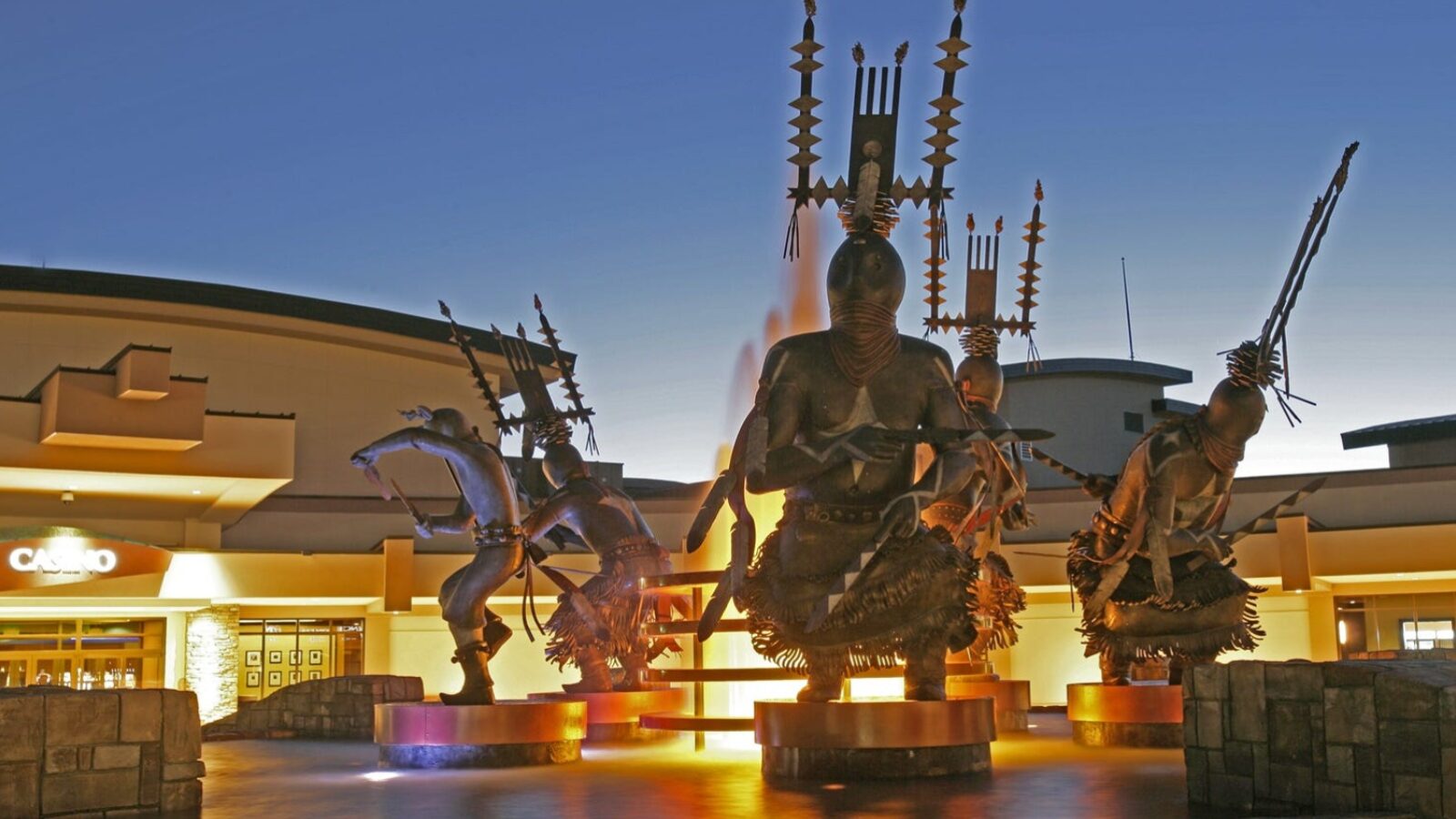
Arguing that it doesn’t fall under tribal jurisdiction because it is a not a member and federal law preempts tribal law, Kalshi filed a motion June 24 to dismiss a case against it brought by New Mexico’s Mescalero Apache Tribe. In addition, Kalshi claims that “no tribe can enforce tribal laws that are preempted by federal statute.”
The choice of words — “tribal laws” and “federal statute” — is of interest because the Indian Gaming Regulatory Act (IGRA) is the federal statute that allows tribes exclusivity for gaming on their land. The issue of whether one federal law preempts another has come up in several lawsuits, and the issue has not been resolved. But Kalshi argues that the tribe is attempting to “convert tribal ordinances into federal law” and cannot enforce its laws on nonmembers.
Kalshi, the biggest prediction platform in the U.S. offering sports event contracts, also addressed the Unlawful Internet Gambling Enforcement Act (UIGEA), writing that it does not include financial transactions on derivatives platforms, making a state or tribal prohibition irrelevant. Finally, the company claims that it is not — in fact, cannot — violate a compact because those are made between states and tribes, and since Kalshi is part of neither, a compact would not apply.
Prediction markets are regulated by the federal Commodity Futures Trading Commission (CFTC).
Kalshi’s latest motion to dismiss is the third among lawsuits brought by Indian Country.
In California, Kalshi used similar arguments, but the court never ruled, as the case was stayed and is now on appeal to the Ninth Circuit. In Wisconsin, a federal judge denied a dismissal request in which Kalshi argued that Congress allows for trades on designated contract markets (DCM) to be exempt from tribal gaming law. In his decision, Judge William M. Conley wrote that it is clear that the tribe can argue its case under IGRA, though he did dismiss parts of the complaint brought under the Lanham Act and Racketeer Influenced and Corrupt Organizations Act (RICO).
In both the California and Wisconsin cases, federal judges are allowing Kalshi to continue operating as the cases move forward.
Kalshi is in court with more than a dozen states and tribes over its right to offer its product in certain jurisdictions. States and tribes, for the most part, are arguing that sports event contracts mimic sports betting and should fall under state gambling law. This week, a state court in Michigan ruled that Kalshi cannot operate there.
In the Mescalero Apache case, Kalshi’s lawyers wrote that should the court find in the tribe’s favor, it would create “piecemeal regulation [that] would be intolerable for an exchange that operates throughout the United States under the oversight of a federal regulator. And it would undermine the uniform scheme governing the nation’s derivative markets that Congress established decades ago.” Kalshi has argued in several cases that Congress intended — through the Commodity Exchange Act (CEA) and again through the Dodd-Frank Act — for sports event contracts on prediction markets to be permissible.
The latest argument
Kalshi’s latest argument leans on the 1981 Montana v. United States decision, which states that “[t]he inherent sovereign powers of an Indian tribe do not extend to the activities of nonmembers of the tribe.” Per the brief, there are two exceptions, and Kalshi says the second is relevant. That exception says that a nonmember can be held accountable if an action “threatens or has some direct effect on the political integrity, the economic security, or the health or welfare of the tribe.”
Kalshi argues that the exception would only come into play if the action in question is “on or relates to” Indian Country. The company goes on to say that as a New York-based entity, the exception is not relevant.
Kalshi lawyers go on to reiterate previous arguments related to IGRA and UIGEA and also argue that the Dodd-Frank Act strengthened the already existing CEA. The lawyers wrote that the Dodd-Frank Act clearly added “swaps” to the purview of the CFTC, and further that the agency “may” — but is not required to — ban swaps that are considered “contrary to the public interest.”
The CFTC recently posted new proposed rules, which Kalshi says also support its argument. Essentially, the proposed rules state that the agency will consider sports event contracts to be gaming and will allow them, although the CEA stated gaming “may” be banned.
Taken individually or as a group, Kalshi lawyers wrote, these arguments support a dismissal because the Mescalero Apache Nation has no jurisdiction or authority over the company and federal law supports Kalshi’s position. The company leans heavily into the idea that it is not physically on tribal land. Rather, it is offering an online product from a distance.
Sun, sky, clouds …
At least one person in Indian Country has begun to address this issue.
New Normal webinar host Victor Rocha said in June that unlike in retail gaming, with prediction markets “Kalshi isn’t going to say, ‘I’m going to open a casino next to you.’ They are saying, ‘We are going to take all of the sky above you.’ They’re not talking about the land, they are talking about the sun, the sky, the clouds … so that’s what we’re dealing with.”
In its complaint, the Mescalero Apache also began to explore this issue, contending that Kalshi “reaches onto the Tribes’ Indian lands by allowing anyone there with a smartphone.” Kalshi lawyers dismissed the argument, saying that because the company is based thousands of miles away (which the tribe acknowledges), that the argument doesn’t hold water.
Ultimately, the courts will have decide if the “sun, the sky, the clouds” constitute Indian land.
But in its motion, Kalshi argues, “Kalshi’s online services simply do not implicate — let alone catastrophically threaten — the Tribes’ power to physically exclude nonmembers from Indian land. Plaintiffs’ asserted authority to regulate Kalshi on that basis therefore fails.”