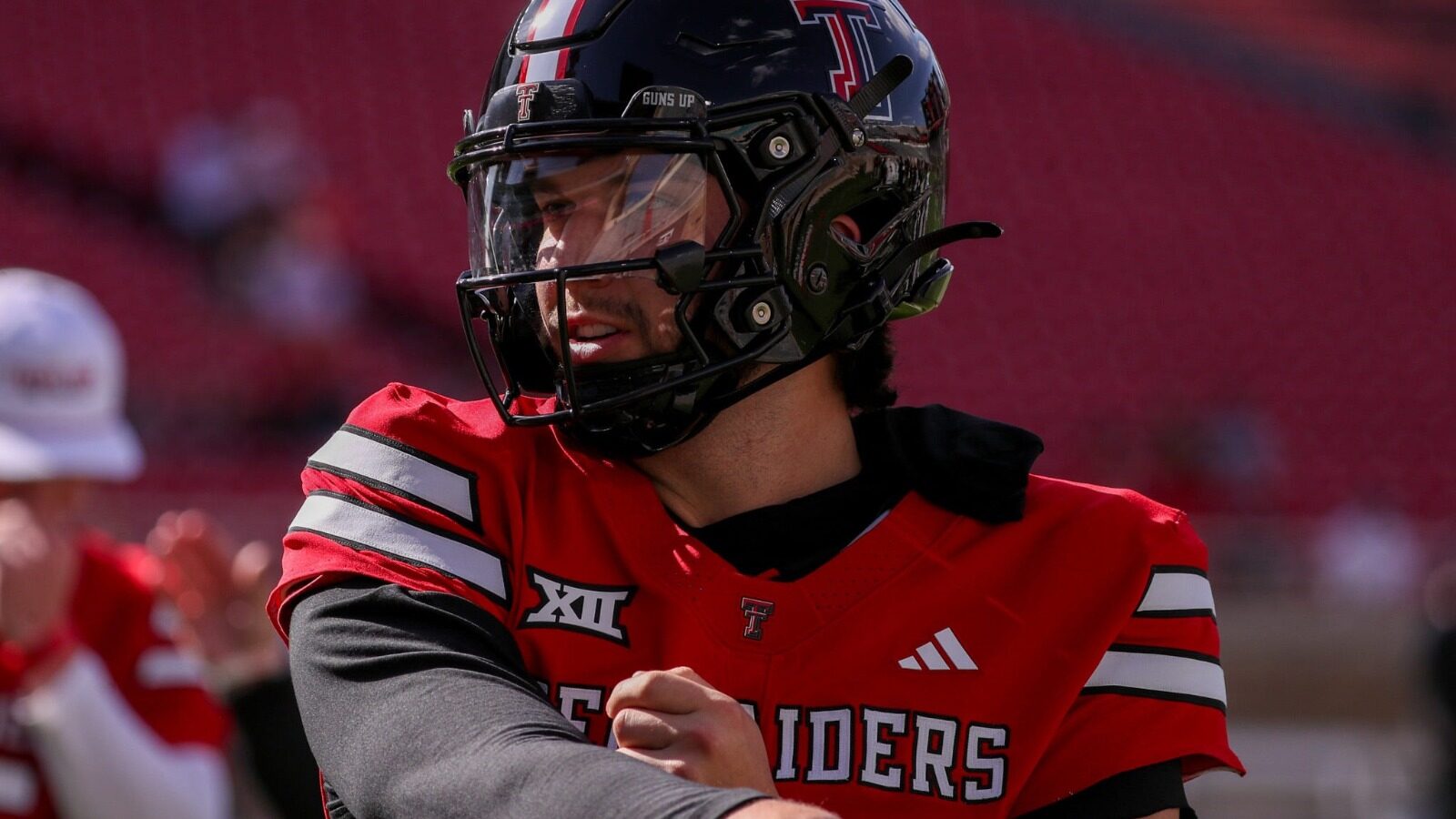
Brendan Sorsby will leave Texas Tech without ever having played a down of football as a Red Raider.
The embattled quarterback, who earlier this year revealed a gambling problem and completed a residential treatment program, Monday shared plans to enter the NFL supplemental draft in July. The deadline to apply is June 22, and the NFL must approve applications for players interested in joining.
Sorsby’s decision puts to an end a raucous and contentious few days during which Texas Tech said it would allow him to play despite violations of NCAA rules after a judge granted an injunction, the Big 12 sued Texas Tech over integrity and “reputational” concerns, and the NCAA appealed a judge’s decision that would have allowed Sorsby to play.
Sorsby, per multiple media reports Tuesday, was set to withdraw his lawsuit against the NCAA, and by deciding to enter the supplemental draft will put an end to his college eligibility. The tumultuous chapter in college football left many more questions than answers, and it’s possible that college football will undergo yet another evolution.
Why take the risk?
Key to the situation is this: Sorsby, per court documents, bet about $150,000 since 2022 himself or via proxy. He bet on his own team, on other college football teams, and on other sports at two of the universities (Indiana and Cincinnati) that he attended. Betting at all is a violation of NCAA rules that results in immediate ineligibility. But Sorsby and Texas Tech pushed for an exception.
The response was swift, negative, and, truly, not unexpected. The NCAA has suspended myriad players for betting already, and the professional leagues have made their stances clear time and again — see Pete Rose, Tucupita Marcano, or Jontay Porter. There was little backlash to the suspensions in either of the latter two cases. Rather, professional sports leagues and legal sports betting operators said the discovery of the betting showed that a legal framework works.
As Cleveland Guardians Emmanuel Clase and Luis Ortiz await their November trial for an alleged pitch-rigging scheme to benefit bettors, they’ve received little empathy or sympathy. And so far, no one is making the argument that former NBA star and coach Chauncey Billups should get a pass for his involvement in an illegal poker ring.
The question for all, including Sorsby, is why put such lucrative careers at risk for what often amounts to pennies on the dollar? Clase may be the most confounding — he’s on unpaid leave from the Guardians, but has a five-year, $20 million contract extension hanging in the balance. Sorsby risked what could amount to tens of millions over the life of his pro career.
Why does Sorsby — or Texas Tech — think this case is different from the others? Sorsby has owned up to his gambling addiction, but questions remain. Did he ever alter his play to accommodate a bet? Did he share information that would have allowed others to win their bets? The NCAA and Texas Tech no longer have to contemplate the answers, but Sorsby should be warned: The NFL suspended 10 players in a single year over betting suspicions.
Don’t expect NFL to be forgiving
Given the history, it seems there’s no question that if Sorsby is caught betting on himself, his team, or the league once he is in the NFL, he will face harsh consequences. But a more interesting and immediate question is what happens with him in the supplemental draft? Sorsby’s situation is unique — no player has entered the draft with known college gambling violations.
The closest comparison is New England Patriots receiver Kayshon Boutte. Less than a year after the Patriots made him a sixth-round pick out of LSU, he was arrested for illegal gambling while in college. At the time he was drafted, it would appear that the Patriots did not know of this history (which calls into question how well the NFL or colleges vet players, since Boutte was under investigation by the Louisiana Gaming Control Board). The NFL did not punish Boutte, and the charges were ultimately dropped.
But whichever team takes Sorsby will know going in that he has a gambling addiction. Sorsby might argue that while he has not been formally punished for that, his punishment is declaring for the supplemental draft rather than getting another year on the field and potentially being an early-round pick in 2027. Will the NFL or the team that drafts him see this as an opportunity to make a statement one way or the other? Hard to say.
Since joining the NFL, Boutte has owned his history and hasn’t been accused of any gambling violations.
Sorsby, too, is owning his history. In his very public fight for the chance to play one more year of college football, he’s gone through a residential treatment program, and the Texas Tech athletic department has been vocal in its support and belief in him. Sorsby’s lawyers offered up a two-game suspension to start the 2026 season, but that will never be imposed. Will the NFL decide to impose some sort of suspension out of the gate for his history of gambling violations?
Texas Tech could have taken different route
In college football, the situation has pitted big-time college football programs against each other. Big 12 members are angry that they have in their midst a program that would even consider allowing a player who violated what many consider the starkest of stark lines to play. Unaffected Power Four programs have also chimed in — officials at Georgia and Nebraska, according to the Big 12 complaint, sent internal memos prohibiting the scheduling of Texas Tech in any sport and reserving the right to cancel already scheduled games.
Texas Tech stood by its man. University officials are on record saying the university supports Sorsby and was making his “health and wellness” a top priority. Kudos to the program for sticking by a player who did not and will not ever play for it.
Texas Tech did and could have continued to support him in other ways. Allowing him to remain at school and finish his education while providing mental health support is one. But as the university learned in the last week, supporting Sorsby in his bid to continue to play was not the answer.
The premium on reputation and integrity are too high.