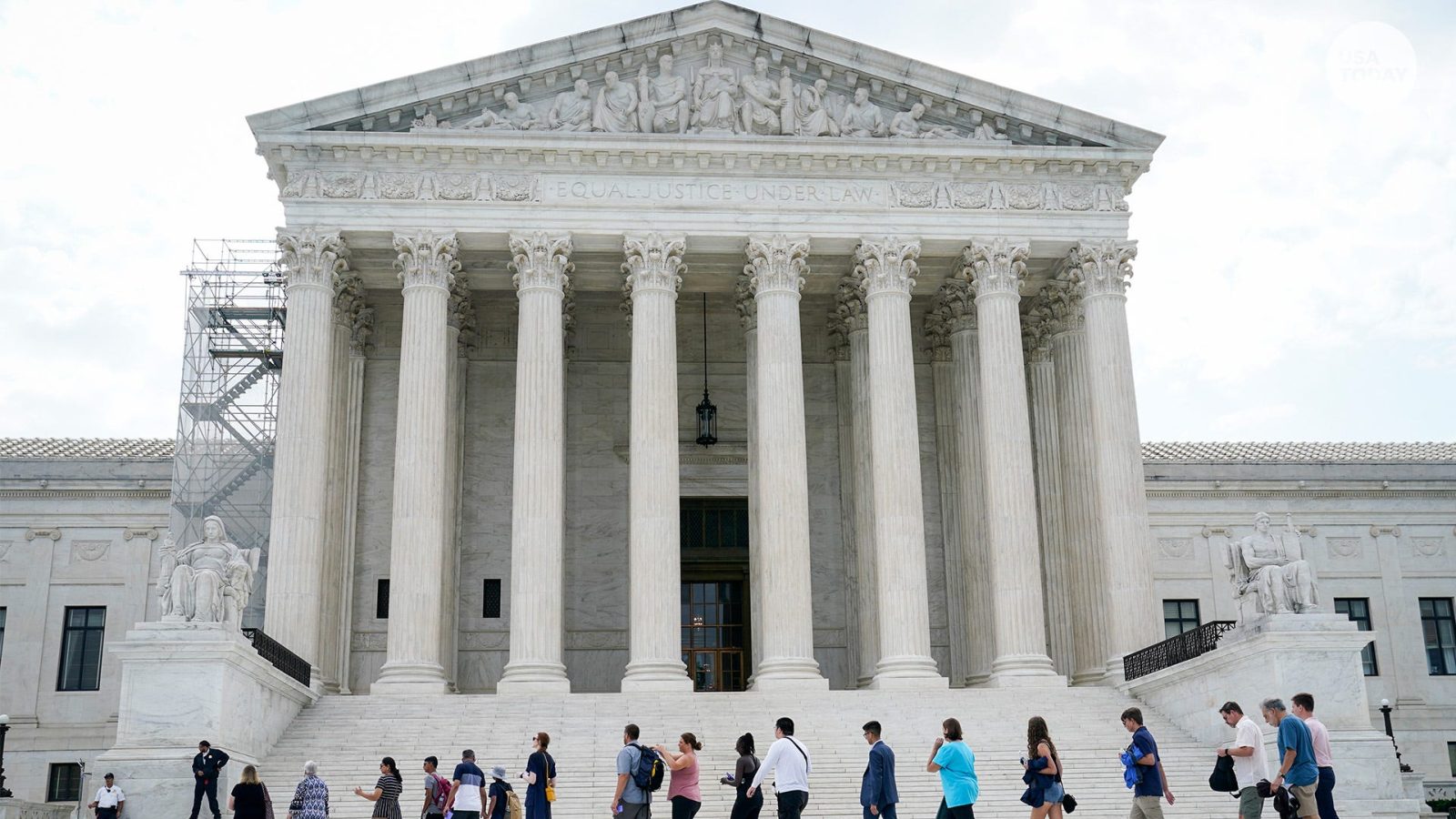
All the legal wranglings over sports event contracts seem to have a clear endpoint: the U.S. Supreme Court.
And at a status hearing last week in the Third Circuit, the state of New Jersey revealed that it was hoping to get its lawsuit against Kalshi in front of the court soon. After defeats in the District Court and Third Circuit, New Jersey aims to bring the case to the highest court possible.
“Defendants have indicated that they intend to seek further review of the Third Circuit’s decision in the U.S. Supreme Court,” the court’s summary of the hearing said. “The parties propose to file another joint status report within 21 days following either a Supreme Court decision denying certiorari or, should certiorari be granted, the Supreme Court’s final disposition of the case. “
Joint_Status-3It takes four out of the nine Supreme Court justices to agree to take on a case, and they have plenty of discretion for when to do: The Rules of the Supreme Court of the United States state it can accept a case if “a state court or a United States court of appeals has decided an important question of federal law that has not been, but should be, settled by this Court.”
So will the high court hear the case?
Probably not right now.
Inevitably, but maybe not soon
Melinda Roth, a professor at Washington and Lee University’s School of Law who studies the prediction market industry, told InGame that it’s “inevitable” that the issue gets before the highest court in the country at some point.
“I think that is the perfect word to describe this mess,” she said.
However, she thinks it probably won’t be in response to the current petition from New Jersey.
The most common trigger for when the Supreme Court decides to take on a case is when two different circuit courts disagree. Despite there being room for discretion, the court’s rules also single out a circuit split as a circumstance where it could take on a case. With only the Third Circuit having actually given a decision, we’re not at that point yet.
“In my own personal opinion, New Jersey’s petition is unlikely to have the same effect as a Ninth or Fourth Circuit ruling against, which would then be the more likely trigger,” Roth said. “The Supreme Court is probably going to let this play out until then.”
However, it looks like a split may come eventually. Oral arguments in the Ninth Circuit suggested that the judges are not so sympathetic to Kalshi’s viewpoint. There are also lawsuits before the Fourth and Sixth Circuits, offering more room for a judicial split.
Go down to the District Court level and the potential for disagreement seems even clearer. Judges seem to have different answers to each individual question at the heart of the case.
The two important questions are whether the federal Commodity Exchange Act (CEA) preempts state law, and whether sports event contracts count as “swaps” — a type of financial instrument traditionally used for hedging risk. Kalshi argues that both of those statements are true, while states say neither one is. Kalshi needs to win on both fronts, while just one victory is enough for the states.
Each question could be broken down further. There are multiple doctrines of preemption that Kalshi says should apply. There are multiple clauses in the definition of a swap that states say do not apply to sports contracts.
The District Court in New Jersey sided with Kalshi based on one type of preemption; its counterpart in Tennessee ruled Kalshi’s way using a different doctrine. In Nevada, the court overturned a previous injunction when it determined sports contracts are not swaps; in Maryland, the court bypassed the swaps question and sided with the state by looking solely at preemption.
What will Supreme Court case look like?
So what will happen when the case eventually does reach the Supreme Court? For one thing, it probably won’t just be one single state’s case against a prediction market. Instead, several will likely be combined.
That will likely include tribes’ cases against prediction markets, too, even though some of the legal questions in those cases are distinct from the questions in the lawsuits involving states. Three California tribes, the Ho-Chunk in Wisconsin, and four tribes in New Mexico are suing Kalshi over sports event contracts.
“I don’t know that anyone knows,” Roth said. “If for some reason the tribes weren’t included, I assume they would file amicus briefs.
“But the issues with the tribes could also be combined, because even if the issues are different, it’s still about which law holds, and it’s still about whether the CFTC has exclusive jurisdiction.”
How would SCOTUS rule?
And when it gets before the Supreme Court, can we predict which way the nine justices might be leaning?
“I think it’s really hard to know exactly which way they’ll fall out,” Roth says. “We’re dealing with a conservative court, there was the president’s post. But before the president’s strong support, this issue has crossed party lines.”
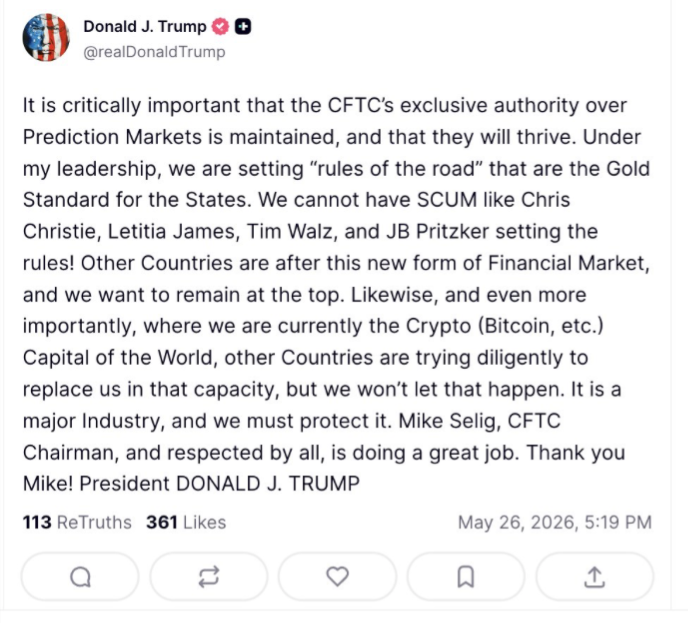
Complicating things further is that while President Trump appears supportive of prediction markets, the topic is in some way a reversal of most partisan legal questions.
“I don’t think you can know for sure which way they will lean because, traditionally, the expansion of federal power has not been a conservative issue,” Roth says.
Despite confidence from some parties on both sides about the merits of their arguments, there’s not much that can be predicted for certain with the various sports event contract lawsuits — except maybe one thing.
“It’s impossible to predict what’s going to happen, with the exception that everyone is going to keep appealing until there’s a Supreme Court ruling,” Roth says.