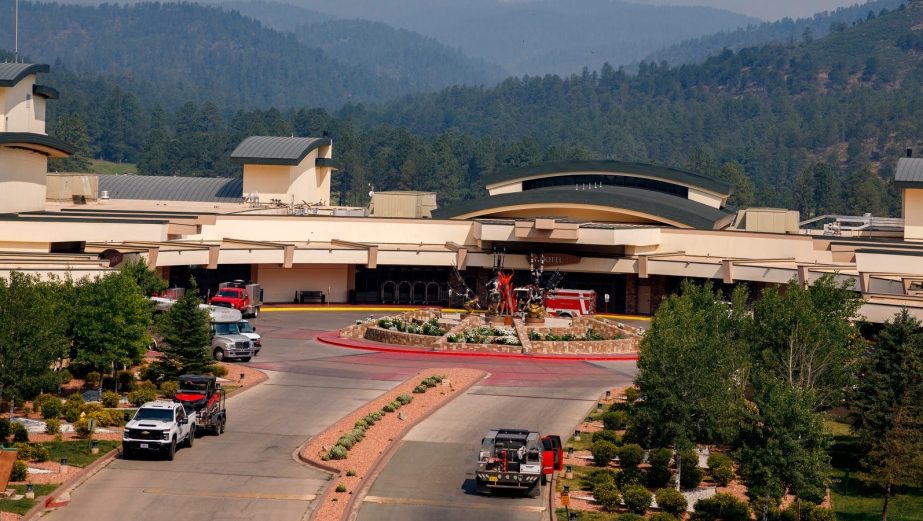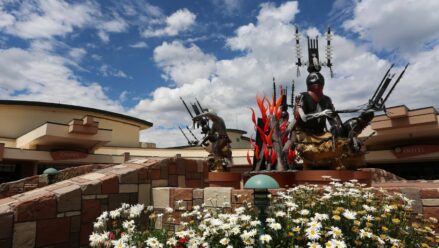
Saying it has “suffered monetary damages” and its sovereignty was violated, New York’s Cayuga Nation filed a complaint in federal court Tuesday against Caesars Sportsbook, in which it claims the company illegally offered online sports betting on its land.
The tribe wrote that Caesars Sportsbook was available from Jan. 8, 2022, to July 15, 2025, and that the company continues to refuse to provide an account of gaming conducted for that time period, including wagers placed and revenue earned.
Legal online sports betting went live in New York on Jan. 8, 2022, but retail sports betting has been live in Indian Country since July 2019. The Cayuga Nation is one of four tribes that has at least one in-person casino on its land.
Under the Indian Gaming Regulatory Act (IGRA), federally recognized tribes have the exclusive right to regulate and operate Class III gaming on their land.
Besides the request for financial documentation, the tribe wrote that Caesars continues to advertise its sportsbook on the reservation, which, it says is a violation of the state’s advertising laws. The tribe is seeking monetary restitution and asking for Caesars to admit that it violated the law.
Caesars has agreed to geofence
Caesars Sportsbook did not respond to an inquiry from InGame Thursday. There are nine platforms live in New York for online sports betting, and several, including DraftKings, confirmed to InGame that they have geofenced the Cayuga and other reservations and do not offer their products there.
In the complaint, which was filed in U.S. District Court for the Northern District of New York, Cayuga lawyers wrote that the tribe sent Caesars a cease-and-desist letter on June 20, 2025. The gaming giant replied July 15, 2025, and agreed to geofence the reservation. On Sept. 2, 2025, tribal lawyers requested a full financial summary from Caesars by Sept. 19. Caesars’ lawyers responded Oct. 14, reiterating that the company had agreed to geofence the reservation, but declining to provide a financial summary.
From the complaint: “Such damages include, but are not limited to, the loss of gaming revenue, interference with the Nation’s exclusive right to regulate and benefit from gaming on its Reservation, and resulting harm to governmental programs and services funded by that revenue.”
The tribe further alleges that Caesars continues to advertise on its land and sells itself as a “fully compliant, law-abiding operator” because it is state licensed. The Cayugas, however, claim that Caesars’ focus on state law and its failure to disclose that it may be “unlawful on Indian lands” is misleading and a that a tribal-state compact is required.
“Defendant’s advertising does not advise consumers that IGRA prohibits Class III gaming on Indian lands absent a Tribal–State compact, that no such compact exists here, or that its New York license does not authorize mobile sports betting within the Nation’s Reservation.”
The first judicial conference is set for Sept. 16.
Arguments similar to those vs. predictions
The tribe’s lawsuit is similar to lawsuits brought by three tribal groups across the U.S. in relation to prediction markets. Those tribes — all in states that currently do not have regulated online sports betting — claim that companies like Kalshi and Polymarket are violating their sovereignty by offering their products, sports event contracts in particular, on tribal land.
None of the cases have been resolved, and so far, a California judge rejected the tribes’ call for an injunction. The tribes contended that Kalshi’s sports event contracts were an unlawful form of gaming under IGRA and that Kalshi had engaged in false advertising, violating the Lanham Act that covered deceptive marketing by promoting the contracts as legal. The tribes have appealed to the Ninth Circuit.
A case brought by the Wisconsin Ho-Chunk Nation has had more early success — a federal court judge wrote in May that the tribe has a valid claim under IGRA, though he did reject a Lanham Act claim. That case continues to move forward in U.S. district court.
New Mexico’s Mescalero Apache Tribe filed a case last month in which it argues that Congress never intended for sports event contracts to be legal financial instruments. Kalshi is expected to file a motion to dismiss next week.