SAN DIEGO — The regulation of prediction markets may not yet be on President Donald Trump’s “radar,” according to former Trump Chief of Staff Mick Mulvaney. While the issue is at the top of the gambling industry’s agenda, and the Commodity Futures Trading Commission (CFTC) is digging in on its stance on clearly allowing sports event contracts, the president himself may well not have an opinion yet.
“I’m very much aware of who the players are,” Mulvaney said after Paul Brodeur of the Massachusetts Gaming Commission questioned his comments. “Certainly, there are members of the administration’s family that are involved at the highest level. But Donald Sr. is not going to roll over just because Donald Jr. has a piece of the action.”
It’s with that insight that the annual National Council of Legislators from Gaming States (NCLGS) summer meeting kicked off at the Hard Rock Hotel Thursday morning.
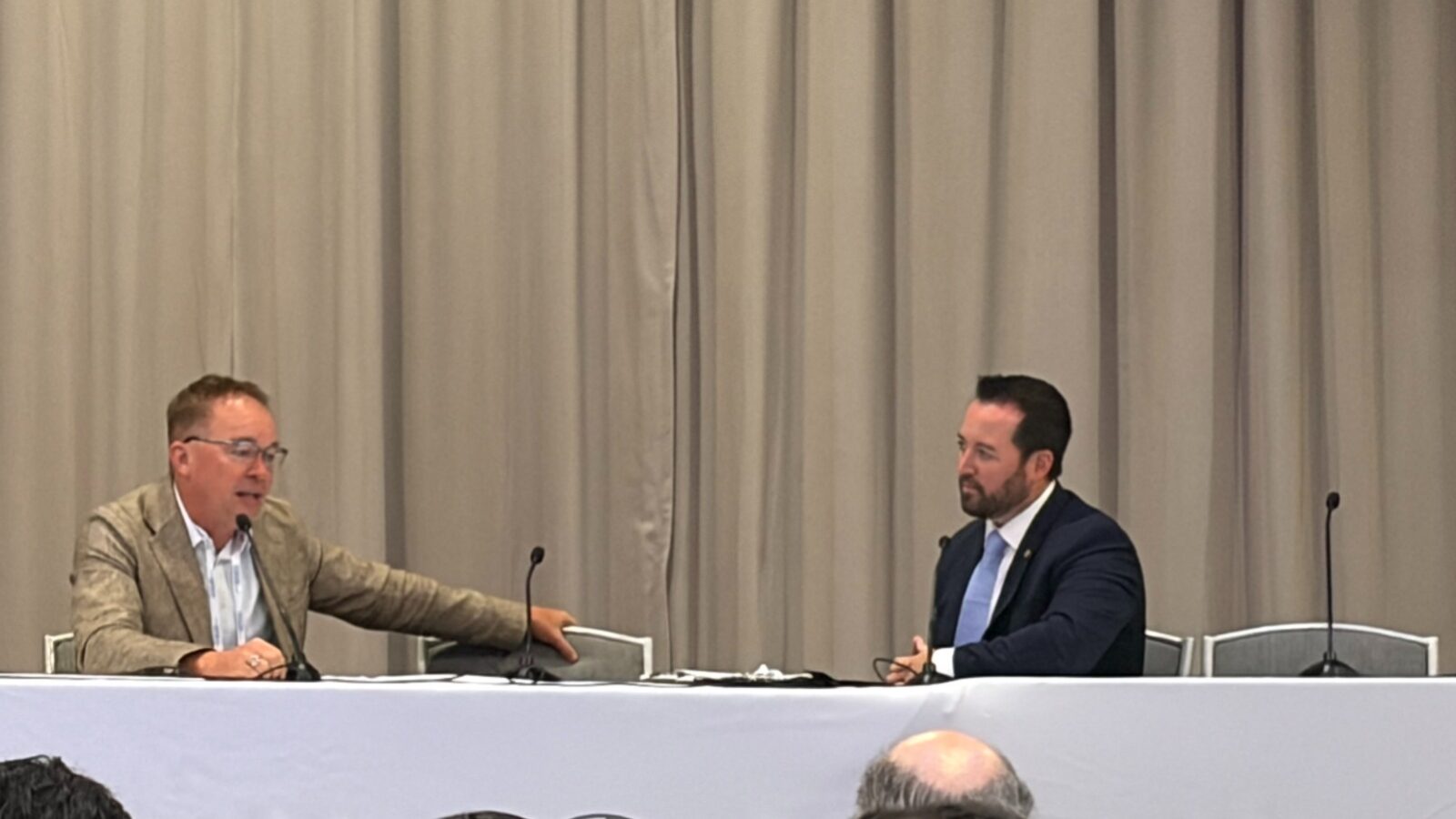
Mulvaney had a one-on-one conversation about prediction markets with NCLGS President Shawn Fluharty ahead of a four-person panel on the issue. Mulvaney, who has experience in Washington, D.C. and as a South Carolina state legislator, is the executive director for Gambling is Not Investing (GINI), which is lobbying to keep sports event contracts and more from being offered.
It would seem unlikely that Trump isn’t at least aware of the fight playing out between states and federal government over who can regulate sports event contracts, particularly after Mulvaney shared that Trump “consumes media the way we eat or breathe.” But in his comments, Mulvaney suggested that just because Trump’s son is a board member for both Kalshi and Polymarket doesn’t mean that Trump supports that position.
“It’s wrong to assume that there is a rubber stamp involved,” Mulvaney said. “That’s not how the family works.”
What can lawmakers do?
At this conference, where the goal is educate to state lawmakers but also give them a road map, Mulvaney was clear in sharing his opinion that congressional clarity isn’t coming, that “the chances of the CFTC changing its mind is fairly low,” and that it will likely be the U.S. Supreme Court that is the ultimate arbiter on the issue.
That said, Mulvaney suggested ways to get in front of Trump, sway the “court of public opinion,” and prepare for the future of the fight.
The best way to get in front of Trump? Through the media, particularly through the print publications (which include The New York Times and The Wall Street Journal) and broadcast media (Fox, Fox Business, CNN, and MSNBC) that he religiously consumes or is regularly made aware of. “There are ways to communicate directly with Donald Trump, and it’s through those publications,” Mulvaney said.
The best way to build public sentiment? Mulvaney isn’t 100% sure it matters, as he argued that if you went door-to-door on the prediction market issue, very few citizens would even know what they are. Mulvaney’s focus, instead, is on lawmakers, educating them on the difference between a sports event contract and traditional sports betting. In particular, his goal is to educate about lost tax revenue and responsible gaming.
The best way to prepare for the future? Stakeholders generally believe the fight between prediction markets and the gambling industry will stretch out over years. There is a fear, vocalized by Fluharty, that companies like Kalshi and Polymarket may become “too big to fail.” Mulvaney said lawmakers should educate and be vocal. He recommended lawmakers submit “substantive, meaningful comments” to the CFTC during its public comment period on its latest proposed rule changes. Mulvaney said being “on the record helps if you want to challenge after the rule is passed.” He also said that flooding a comment period with form letters is ineffective.
CFTC ‘moving so fast … making a mistake’
During the same week that North Carolina lawmakers made a law taxing but not regulating prediction markets and a federal judge in New York ruled that the state could ban prediction market contracts, Mulvaney said that the Trump way is to “move fast and break things.”
“But on this, there are going to be far-reaching implications, and they are not seeing that,” he said. “The CFTC doesn’t need that. There is no reason for it, it’s not something you can go back and easily fix. I think I know why CFTC is moving so fast. … There are very high-placed people in the administration who are invested in this. But they’re making a mistake.”