CASS COUNTY, Michigan — Kalshi has implemented true geofencing for the first time, blocking sports trades in Nevada and Michigan, with Washington on the way soon, but the system in Michigan only works after an app update that is not required.
Kalshi’s sports contracts were banned in Michigan last month, when a state court issued a temporary restraining order blocking it from offering trades that were deemed to be in violation of Michigan’s gambling laws.
The prediction market initially used user’s addresses — provided on registration — to block residents of Michigan, but was required to use a state-approved geolocation provider to geofence the state by the end of Aug. 12. Kalshi is using GeoComply. The geofence works, but only for users who have installed the latest version of the Kalshi app on mobile. Using addresses would only block consumers with Michigan addresses rather than those who are in the state but live elsewhere.
An InGame reporter was able to place bets on sporting events from Michigan, using an account registered to an Indiana address.
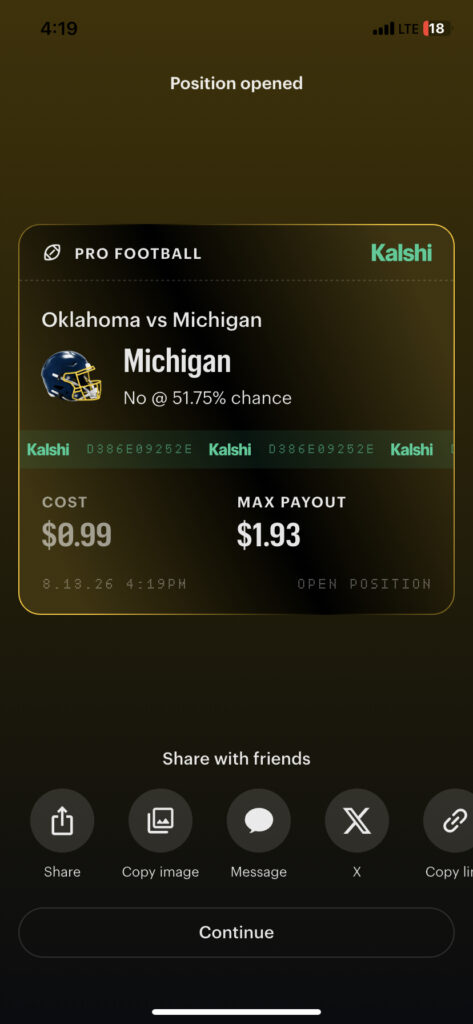
After updating the Kalshi app, geolocation became active and all sports trades within Michigan were blocked, while bets on popular culture, politics, and economics remained available. The blocking of sports markets extended to sports-related trades that were not on sporting events themselves, like MVP awards, as well as parlays, and was in effect even right on the state line. Bets could be placed again after leaving the state.
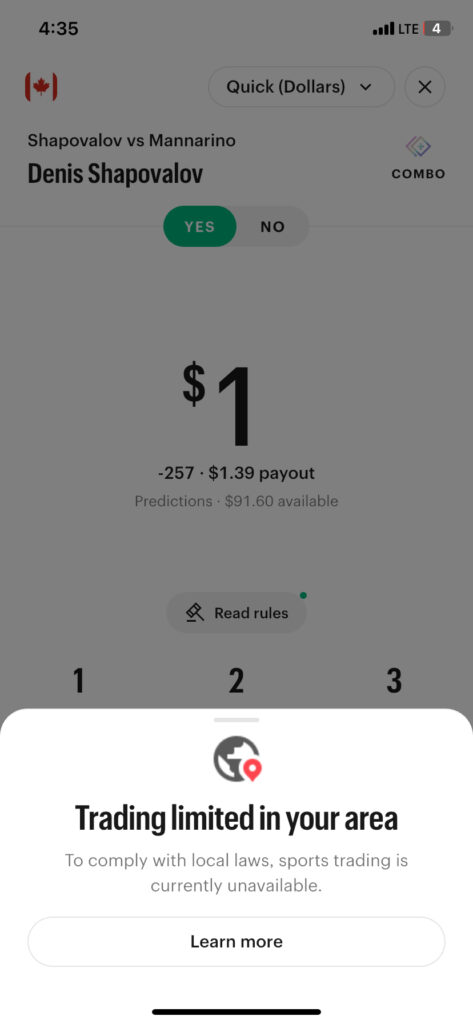
The app did not show a message informing users that an update was necessary.
A Kalshi spokesperson did not respond to a request for comment.
Geofencing in effect in NV, WA next
Elsewhere, Kalshi also had to bring in third-party geofencing in Nevada. The prediction market has been required to geofence the state since May, and before that had banned residents of the state since March, but initially used an in-house solution based on a user’s IP address.
After the Nevada Gaming Control Board argued the in-house solution didn’t work properly, and filed a motion requesting Kalshi be held in contempt, the prediction market agreed to implement geofencing by the end of the day Aug. 12.
In Washington, meanwhile, per a Wednesday docket entry, a state court ordered Kalshi to block event contracts on sports, elections, politics, entertainment, culture, technology, science, and mention markets for residents of the state immediately and then implement geofencing by Sept. 2.
Kalshi also sent a message to users in all states, instructing them that if they use the Kalshi API to trade sports, elections, or entertainment markets, they must “complete a quick geolocation check” by Aug. 19.
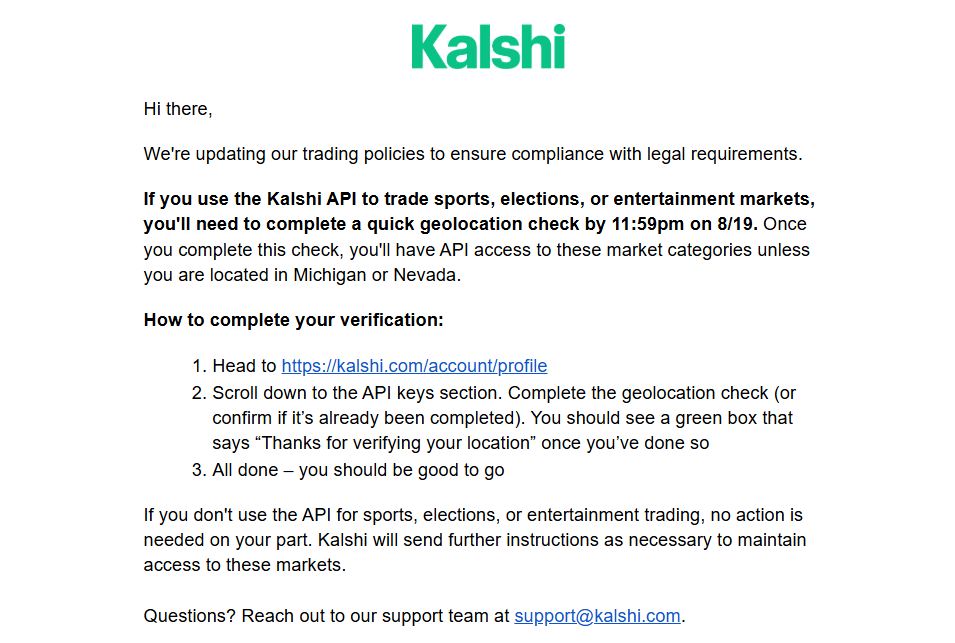
“Once you complete this check, you’ll have API access to these market categories unless you are located in Michigan or Nevada,” the message said.
More state-level blocks could be on the way after a number of states had legal victories in recent weeks that moved them one step closer to banning certain Kalshi markets. In Utah, Wisconsin, Connecticut, and New York, federal courts in the last month have determined that the states are allowed to enforce their gambling laws against Kalshi’s sports contracts.