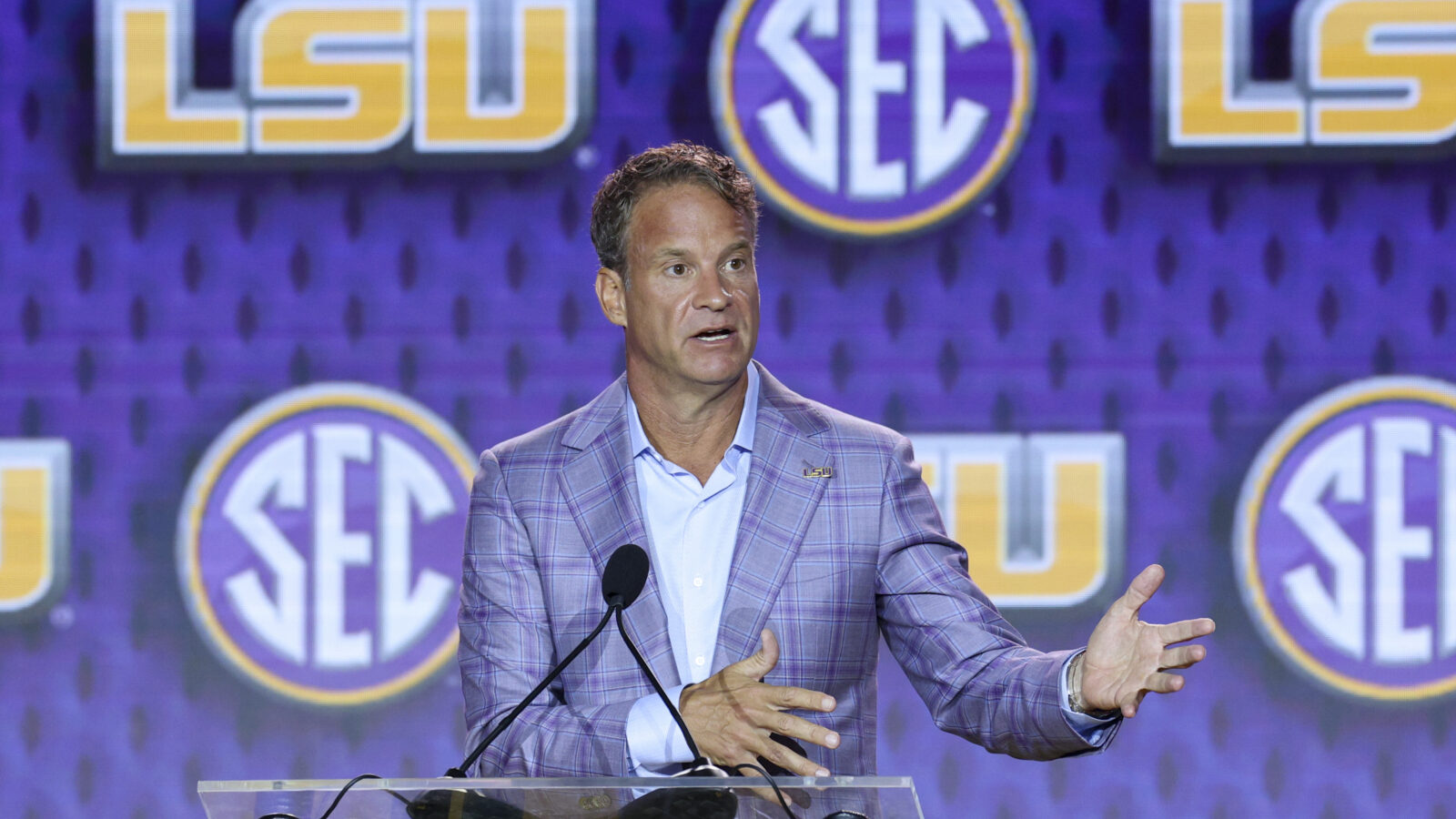
A third party helping Louisiana State University hedge against potential bonus payments to football coach Lane Kiffin used bets on the team’s performance on Kalshi to offset exposure. Similar trades were placed last month on South Carolina’s football team, again from a third party rather than the university, though the exact risk being hedged for those trades is less clear.
Two weeks ago, five “block” trades — trades negotiated off exchange — were placed on LSU to have a successful college football season, worth a combined $3 million.
In July, there were also block trades in two markets concerning the University of South Carolina.
The trades were not placed by the schools. In fact, Kalshi’s trading prohibitions for the market would ban employees of teams involved.
Instead, InGame understands that the LSU trades were placed by a third party that assists with hedging of risks such as coach bonus payments for sports teams.
Large block trades worth between $300,000 and $900,000 were placed on LSU to make it to the College Football Playoff, make it to the quarterfinals, make it to the semifinals, make it to the national championship game, and win the national championship.
The total combined payout of $3 million if LSU won the national championship (causing all five trades to pay out) is exactly equal to Kiffin’s national championship bonus payment. The payout for making it to the playoff or advancing to the quarterfinals, semifinals, or finals are all close to Kiffin’s bonus payment for each round, though never exactly matching.
The taker side, which would be paid in the event LSU makes it to or wins the playoff, put down $662,500. The market maker therefore staked $2.34 million.
For the South Carolina trades, one was on whether the Gamecocks make the playoff and one on whether they win eight or more games. The playoff contract would pay out $50,000 and the wins contract $100,000. The latest version of South Carolina coach Shane Beamer’s contract has not been published, so it is not clear whether the risk being hedged here was related to his bonus. Unusually, the taker side for the playoff trade was on South Carolina to miss the playoff, though it could be possible that the hedger acted as the market maker in this instance, as the roles matter less for trades negotiated off-exchange.
Spokespeople for LSU’s and the University of South Carolina’s athletics programs did not respond to requests for comment.
Bonus insurer known to trade on Kalshi
Game Point Capital is a sports insurance company whose main business is insuring against the risk of a sports team paying out bonuses. Game Point would not confirm or deny whether it was involved with the trades, or whether LSU or South Carolina were clients. The Southeastern Conference, as well as the NCAA’s three other power conferences, are all listed as clients on the Game Point website.
Game Point has insured sports contract bonuses since before the advent of sports event contracts. It previously used specialist reinsurance via marketplaces such as Lloyd’s of London to balance out its own risk, but in February, The New York Times reported that it had started using Kalshi to hedge certain risks.
Game Point continues to use traditional methods unrelated to prediction markets for many of its policies, but some of its large sports trades on Kalshi have already been reported, including at least one trade to hedge bonus risk. The teams that own the insurance policies would notice little difference between whether the risk is ultimately passed off on a prediction market or specialist reinsurer.
In May, Game Point placed block trades on Spanish soccer club Osasuna to get relegated from La Liga, with Susquehanna International Group taking the other side, as part of an insurance policy. Osasuna had agreed to an insurance policy with traditional insurer Howden, which then appeared to have laid off some of its own risk via Game Point. Initial reporting on those trades had mistakenly implied that Osasuna itself placed the trades. Game Point previously used Kalshi to hedge an NBA team’s bonuses.
Susquehanna has been the most prominent market maker on sports-related block trades on Kalshi, and even announced that it was seeking hedging trades on the World Cup and could take $500 million worth of exposure. However, InGame understands that it was not the market maker in the LSU case. The only other market maker known to have provided liquidity for block trades is Jump Trading.
Kalshi block trades
The trades were all reported as block trades, meaning that rather than a market maker putting up a price that was accepted by a “taker,” the contract was negotiated off-exchange and then reported to Kalshi. Block trades can only be placed by financial institutions, regulated insurance companies, investment funds, or people or organizations with more than $10 million in assets.
“By executing off-book, block trades allow large positions to be established without moving the public market price,” Kalshi materials on block trades say.
Kalshi block trades are generally used for hedging risk, not simply large speculative trades.
Kalshi has been keen to promote hedging use-cases of its sports contracts, which potentially help the argument the company makes in court that its contracts are “associated with a potential financial, economic, or commercial consequence,” and therefore are swaps as defined in the Commodity Exchange Act (CEA). The CEA says the Commodity Futures Trading Commission (CFTC) has “exclusive jurisdiction” over swaps, which, in the prediction market’s view, would prevent states from enforcing their gambling laws against the company.
So far, there are few known examples of sports contracts being used to hedge risks that directly involve a team.
Underdog and PrizePicks have both used Kalshi to lay off risks from their fantasy products, while a New York bar used Kalshi to hedge a promotion it ran related to the NBA Finals.