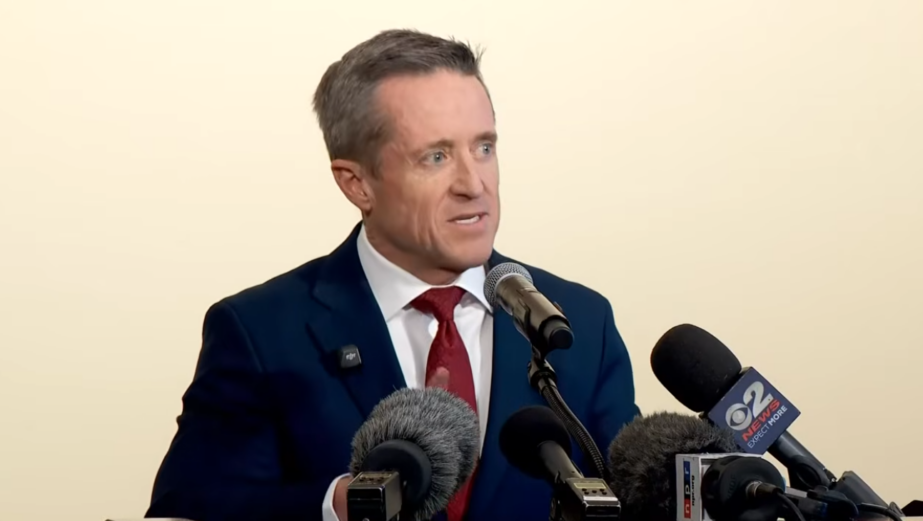

Utah has filed criminal charges against Kalshi as well as its co-founders Tarek Mansour and Luana Lopes Lara, becoming the second state to do so against the company and the first to charge its executives.
With the filing in Utah’s Third Judicial District Wednesday, the state charged Kalshi, Mansour, and Lopes Lara each with one count of pattern of unlawful activity, one count of general gambling promotion, and 12 counts of online gambling promotion.
Kalshi-charges-1A pattern of unlawful activity and online gambling promotion are felonies, while general gambling promotion is a misdemeanor. Utah is one of only two states where all forms of gambling are illegal.
The state said an agent of its attorney general’s office was able to place bets on several sports games through Kalshi in September, “using an undercover name and undercover Visa debit card.”
“Kalshi required Agent Eggerman to confirm his location using location services before he was allowed to place this wager. Agent Eggerman truthfully confirmed his location in Utah,” the brief said.
The filing said that “the conduct was authorized, solicited, requested, commanded, or undertaken, performed, or recklessly tolerated by KalshiEX, LLC’s board of directors or high managerial agents acting within the scope of their employment and in behalf of the corporation or association.” It added that both Mansour and Lopes Lara “acquired or maintained, directly or indirectly, through a pattern of unlawful activity, an interest in or control of an enterprise, Kalshi.”
Utah sued Kalshi last week
The charges follow Utah suing Kalshi in state court last week, which then prompted the Commodity Futures Trading Commission (CFTC) to sue the state in federal court.
Those two lawsuits came after a federal court denied Kalshi an injunction that would have protected the business from the state.
Utah’s initial complaint against Kalshi said that the prediction market “intentionally and knowingly entered the Utah market and offered its gambling bets to the Utah public.”
The CFTC argues that the state’s actions “intrude on the exclusive federal scheme Congress designed to oversee United States commodity derivatives markets.”
Arizona criminal charges were blocked
While many states have sued to ban Kalshi’s sports contracts, Utah is the second state to file criminal charges against the business, following Arizona.
In Arizona, a court granted the CFTC’s request for an injunction, which was issued on grounds that Kalshi itself would not have been able to ask for it. It’s possible that the CFTC’s involvement could save Kalshi from criminal charges again.
The CFTC’s case against Utah is assigned to the same judge that denied Kalshi an injunction.
States side with Utah in Tenth Circuit
Kalshi is currently appealing the decision to deny the company an injunction in the U.S. Court of Appeals for the Tenth Circuit.
On Wednesday, the same day that the criminal charges were filed, 37 states and the District of Columbia submitted an amicus brief backing Utah.
gov.uscourts.ca10.92411.43.0“The States have considerable experience regulating gambling,” the brief said. “The CFTC has no comparable expertise. That makes it unlikely that Congress would have delegated such broad power to the CFTC.”
The brief added that the CFTC’s involvement does not change the merits of the case.
“The CFTC has no special ability to interpret statutes about its authority, and the Court should be skeptical of the CFTC’s new position that exalts its own power,” it said.