A pair of law professors are fighting against the idea that prediction markets need stock market-style insider trading rules.
Jonathan Macey of Yale Law School and Luca Enriques of Bocconi University make their case in a working paper examining insider trading, manipulation, and what they call “corruption-prone event contracts.” Their basic premise is that prediction markets serve a different purpose than stock markets, and the rules should reflect that.
“Lawfully informed traders should remain free to trade,” Macey and Enriques write.
Meaning, anyone who lawfully comes by information that isn’t available to anyone else is free to do what they want with that information. Having an informational advantage — be it via building a better model, paying for private polling, developing a weather forecasting tool, or anything else — is not the issue.
“Adopt no parity rule,” they write. “Neither statute, regulation, nor enforcement improvisation should make possession of material nonpublic information, standing alone, the offense.”
If you sense a “but” coming …
Misconduct matters
But that doesn’t mean anything goes. Macey and Enriques care about where the information comes from.
“The misconduct lies in unauthorized use of the employer’s information,” the authors write.
Meaning, if the information belongs to the employer and the employee is required to keep it under wraps, that employee shouldn’t be trading on it.
The authors take the same approach to classified information and government secrets. Those cases, they maintain, should be dealt with via employment agreements, ethics rules, military law, fraud statutes, and laws protecting classified or confidential material.
Their bigger concern is with a different kind of market — one where the trader can help determine the outcome.
They call those “corruption-prone event contracts,” and they think prediction markets should do away with them yesterday.
A referee can bet on whether he calls a foul. A pitcher can bet on whether his next pitch is a ball. A candidate can bet on whether he drops out of a race. A CEO can bet on whether she says a certain word on an earnings call. And so on.
“The contract converts authority over an event into a privately tradable financial interest,” Macey and Enriques write.
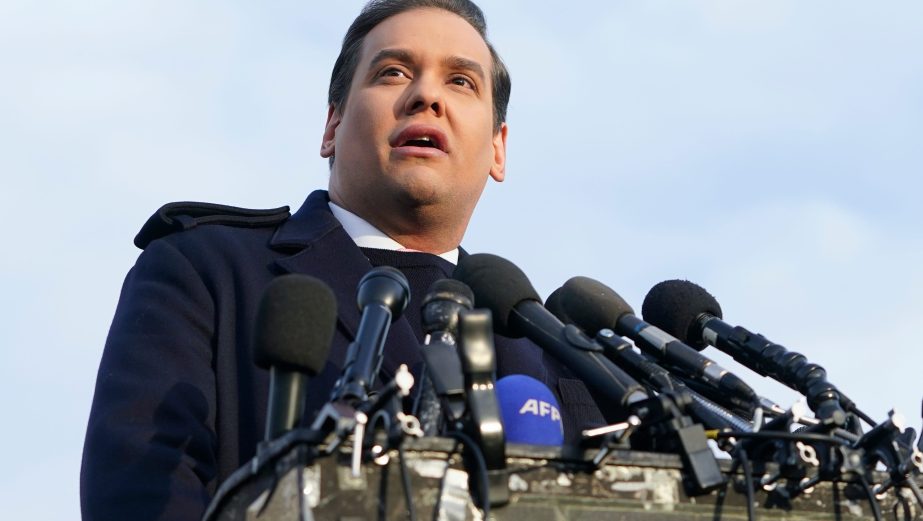
Former Rep. George Santos provides a real-world, objectively hilarious, example.
Santos traded on whether he would attend the 2026 State of the Union address, an option he could decide for himself. According to a Commodity Futures Trading Commission consent order cited in the paper, Santos made misleading social media posts about his attendance plans while trading on the market. He was ordered to return $17,569.98 from the trade, pay a $17,500 civil penalty, and stay out of prediction market trading for three years. He has since been banned from Kalshi.
Thumbs down on mention markets
Mention markets raise the same issue, and authors have a similar way to deal with them. Namely, get rid of mention markets.
A CEO can decide whether to say “Bitcoin,” MrBeast can decide how long a YouTube episode runs, a celebrity can decide what color dress to wear to the Oscars.
For markets where traders can control the outcome, Macey and Enriques don’t want regulators trying to catch every CEO, politician, athlete, or celebrity after the fact. They simply want the contracts stopped before anyone can trade them.
“The sensible response is not to build an enforcement regime elaborate enough to catch the referee, the settlement-source employee, and the mention-market gamesman, but to decline to write contracts on their conduct in the first place,” they write.