The Commodity Futures Trading Commission’s (CFTC) new warning on American-style odds appears to be an effort by the regulator to get its house in order as it takes a more active role than ever in defending what the agency argues is its “exclusive jurisdiction” over event contracts.
The CFTC published its letter, which applies to designated contract markets as well as futures commission merchants and introducing brokers, on Friday.
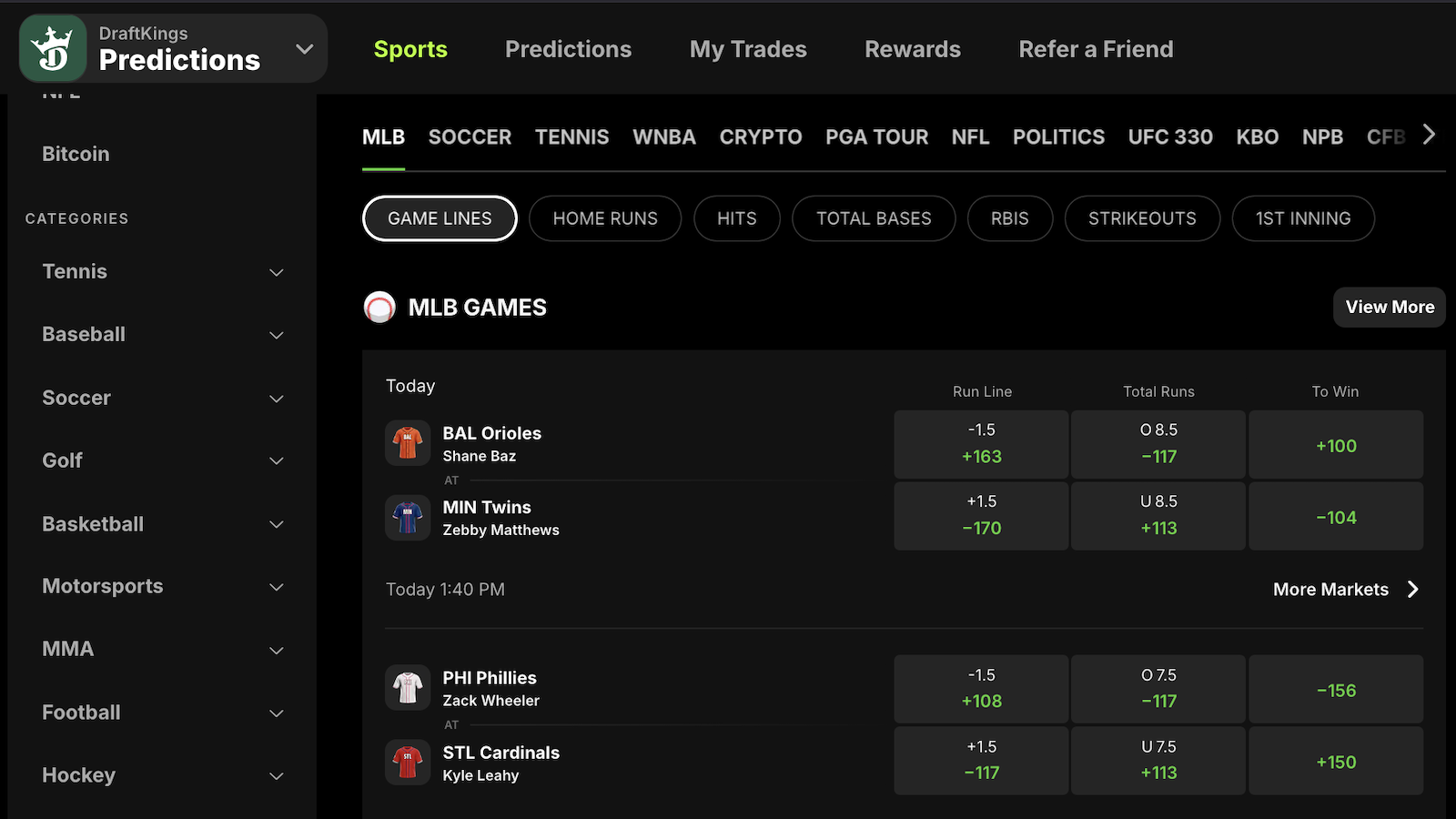
MisleadingDeceptivePractices073026-2DraftKings and FanDuel both show American-style odds as the default on their prediction market apps at the moment, while Kalshi and Polymarket show odds in this style if a user selects a “sports mode” display option. Both DraftKings and FanDuel have indicated they will comply with the letter’s recommendations by the Aug. 31 deadline, InGame has learned.
CFTC: American-style odds are ‘misleading’
The letter makes clear that the CFTC wants to present sports event contracts as distinguishable from sportsbook offerings.
The CFTC cited rules about “manipulative” or “misleading” advertising in the letter. It claims that the use of American-style odds is “likely to mislead market participants about the nature of the transaction into which they are entering and may deprive users of access to indicia of market depth and pricing impact.”
It adds that, “displaying derivative contract prices directly not only provides market participants with accurate and relevant information, it also reflects that the prices of these derivatives products are determined by market forces on a regulated exchange.”
The CFTC argues that American-style odds also hide information, such as the liquidity at a given price, which affect the true value that a customer might get on their trade.
The letter at one point references “nominal or percentage terms that reflect market pricing” as an apparent ideal, but does not specifically mention whether fractional odds or decimal odds, the latter being common on betting exchanges outside the U.S., would be permitted.
More misleading to deny sportsbook resemblance?
Benjamin Schiffrin, director of securities policy for Better Markets, saw things the other way. By presenting event contracts less like other kinds of bets, he said in a press release, customers could be “duped” into thinking that there is a meaningful distinction between the products that isn’t actually there.
“The CFTC’s desire to help prediction markets avoid the inescapable conclusion that their event contracts on sporting events involve gambling knows no bounds,” he said. “As we recently highlighted, prediction markets allow users to see the chances of a team winning a game in ‘American odds’—the same way as they appear in a sportsbook. The CFTC has now told prediction markets to disable this feature in a desperate attempt to dupe people into thinking event contracts on sporting events are not the gambling devices they so clearly are.
“Prediction markets used to advertise themselves as offering the ability to bet on sports, but when they realized that made them sound like sportsbooks, they switched to saying they offer the ability to ‘trade’ on sports. This shouldn’t fool anyone, as nobody trades on sports. People bet on sports, and that is what event contracts on sporting events let people do.”
CFTC getting more involved in courts
The letter comes as the CFTC gets more involved in lawsuits around the country examining whether states can regulate prediction markets under their gambling laws, or if the CFTC has “exclusive jurisdiction.”
In a strict legal sense, there should be little reason why looking more like a sportsbook on the surface would affect how courts rule on those questions if the product is the same.
But in practice, some judges appear to be weighing whether sports event contracts are truly indistinguishable from sportsbook bets. Before the Sixth Circuit, lawyers for Kalshi argued that being “tradable” makes a sports event contract distinct from a sportsbook bet, in an attempt to counter an argument that Kalshi’s interpretation of the Commodity Exchange Act would make all sportsbook bets a form of unregistered commodity trading. Showing nominal prices rather than odds might highlight tradability.
The CFTC’s aim might be linked to its newfound role in the courtroom, giving the agency’s lawyers a chance to point to a transactional difference between how a user engages with a sportsbook bet versus how they engage with an event contract. The agency may be trying to get the licensed DCMs in line to undergird the point.
At the same time, the CFTC is proposing new rules for in-house market makers that also appear to draw a greater distinction between prediction markets and sportsbooks. Under the rules, which are currently out for consultation, market making entities that share ownership with an exchange they trade on must act as “bona fide” market makers, only serving to provide liquidity to markets that need it rather than trying to seek a profit in their own right.
The regulator also looks to be entering a new phase of legal battles, as on Tuesday it issued an emergency order telling Kalshi that if New York hands down an order that would effectively shut the prediction market down, the commission would make Kalshi keep trading. This would put Kalshi in an uneasy if not untenable position of defying either a state court order or the federal regulator.
If the CFTC, rather than the prediction markets, becomes the new leader in litigating for the legality of sports event contracts, it may be looking for ways to avoid giving states easy ammunition. But whether that effort produces changes that go beyond the cosmetic remains to be seen.